

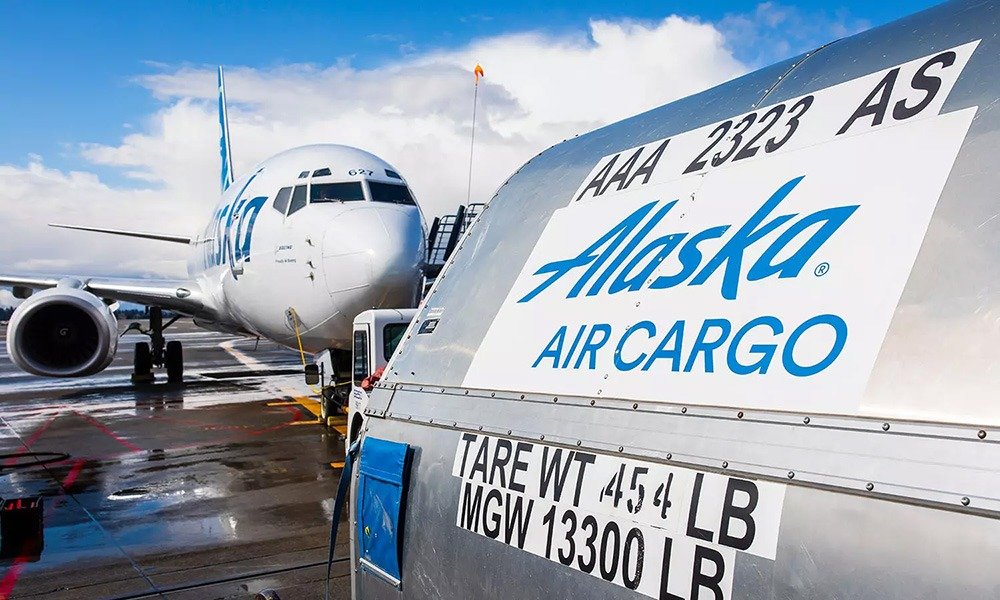
Four additional Boeing 737-800 freighters, expanding international services and stronger connectivity with Hawai‘i will support the group’s plan to more than double its cargo business.
Alaska Air Group is placing cargo at the centre of its next growth phase, targeting $750 million in annual cargo revenue by 2030 as it expands dedicated freighter capacity, integrates the operations of Alaska Airlines and Hawaiian Airlines, and builds a larger international network.
The company outlined its plans at its 2026 Investor Day in Seattle, where it said cargo revenue had grown by approximately 60% since 2024. The business is part of Alaska Accelerate, the group’s long-term strategy to diversify revenue and reduce its reliance on domestic passenger fares.
Related Post


Under the plan, cargo is expected to contribute $150 million in additional annual profit. Four areas have been identified for growth: dedicated freighter operations serving Hawai‘i, mail transportation, international belly-hold capacity and broader network connectivity.
Freighter expansion strengthens Hawai‘i links
A central part of the strategy is the addition of four Boeing 737-800 Converted Freighters (BCFs) through long-term leases. The aircraft will increase Alaska Air Cargo’s dedicated 737 freighter fleet from five to nine, with entry into service expected during the first half of 2027.
The additional aircraft will be dedicated to Alaska and Hawai‘i, with the Hawai‘i-based freighters carrying Hawaiian Air Cargo livery.
Ian Morgan, vice president of cargo at Alaska Airlines, said the expansion would effectively double the capacity of the airline’s dedicated freighter fleet. He said the aircraft would improve service reliability for communities served by the airline while providing greater flexibility in allocating capacity across its network.
The additional lift is also expected to create more opportunities for shipping seafood and other commodities to international markets, alongside essential and time-sensitive goods such as medicines, groceries and household supplies.
Hawai‘i is particularly important to the plan. Honolulu is Alaska Air Group’s second-largest global hub, and additional freighter capacity is expected to support local businesses, e-commerce and logistics providers. The expansion could also give farmers and ranchers more consistent access to markets beyond the islands.
International growth creates more cargo opportunities
The group’s expanding long-haul network is expected to provide another source of cargo growth. Alaska Airlines currently serves international destinations including London, Rome, Reykjavik, Tokyo and Seoul from Seattle. Paris and Athens are planned for spring 2027, with the airline targeting at least 15 intercontinental destinations by 2030.
As international flying expands, additional belly-hold capacity will give the cargo business more opportunities to carry freight alongside passenger services. Alaska Air Group offers belly-cargo capacity across more than 400 passenger aircraft, including Boeing 787 and Airbus A330 widebodies.
The company also operates 10 Airbus A330-300 converted freighters for Amazon Air under a contract inherited through Hawaiian Airlines. These aircraft operate separately from the planned expansion of Alaska’s own dedicated cargo fleet.
Cargo becomes part of a broader strategy
Alaska Accelerate aims to deliver $1 billion in additional profit, including $500 million in merger synergies from combining Alaska and Hawaiian. The group said it had captured roughly two-thirds of that target and remained on track to achieve the full amount by 2027.
The wider strategy is to increase revenue from premium travel, international services, loyalty and cargo. Alaska expects these diversified sources to account for around 60% of total revenue by 2030, compared with 53% currently.
For cargo, the next phase will depend on how effectively the group combines its freighter fleet, passenger network and Hawaiian operations into a more connected offering. The additional aircraft provide near-term capacity, while international expansion creates further opportunities to reach customers and markets.
Alaska Air Group’s $750 million target is ambitious, but its direction is clear: cargo is moving from a supporting airline business to a more significant contributor to the group’s long-term growth and earnings.