
Airlines
Stay updated with the latest news and developments in the airline industry. Cargo Newswire provides comprehensive coverage, analysis, and expert insights on passenger airlines, air cargo carriers, and aviation industry trends
LATAM Cargo Introduces Virtual Reality Trainingfor 550 Warehouse Employees in Miami
LATAM Cargo has introduced virtual reality (VR) training at its Miami air cargo hub, using immersivesimulations to strengthen workplacesafety, improve...

UPS Opens $80 Million Clark Hub to BoostAir Cargo Capacity in the Philippines
UPS has opened a new logistics hub at Clark International Airport in the Philippines, expanding itsregional parcel-processing capacityand strengthening connections...

ACIA Aero Leasing Delivers First ATR 72-600P2F with Large Cargo Door to FedEx
ACIA Aero Leasing has delivered the world’s first ATR 72-600 passenger-to-freighter (P2F) aircraft equipped with a Large Cargo Door (LCD)...
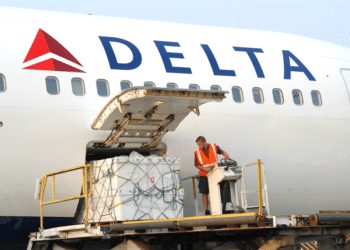
Delta Cargo expands digital booking through CargoWise integration
Delta Cargo has joined the CargoWise Carrier Connectivity Program, enabling freight forwarders to access the airline’s schedules, rates and available cargo capacity, and to manage bookings directly through the logistics platform. Announced by technology provider WiseTech Global, the integration establishes a real-time data connection between Delta Cargo and CargoWise. It is designed to streamline shipment planning, booking confirmation and booking management while reducing reliance on manual processes. Through the integration, freight forwarders can respond to customer enquiries using live capacity and pricing information, tailor bookings by commodity, configure routing options and amend reservations within CargoWise. The connection is intended to improve operational efficiency and give customers greater flexibility when arranging air freight shipments. Delta Cargo operates through the passenger network of Delta Air Lines, connecting more than 300 destinations across six continents. The airline’s investment in digital connectivity aims to make its cargo services more accessible through the platforms freight forwarders already use in their daily operations. Peter Penseel, president of Delta Cargo, said improving access to the airline’s services through customers’ preferred platforms was central to its digital strategy. He added that the integration would provide greater real-time visibility and reliability while creating a more seamless booking experience. Jorre Cobelens, vice president of logistics data, AI and connectivity at WiseTech Global, said the integration creates a direct commercial connection between the two platforms. He noted that freight forwarders would be able to act on current rates and capacity information, while Delta Cargo could benefit from more efficient digital connectivity across its operations. The CargoWise Carrier Connectivity Program links freight forwarders with participating carriers through a single platform integration. WiseTech Global said CargoWise customers include 23 of the world’s 25 largest global freight forwarders, providing participating airlines with access to a broad international forwarding network. North America accounts for almost a quarter of global air cargo demand measured in cargo tonne-kilometres, according to the IATA market statistics cited in the announcement. Delta Cargo’s digital investment is intended to strengthen its ability to serve this major market through faster and more flexible booking processes.

Cirium forecasts 747 new freighters as global aircraft deliveries reach 43,000 by 2045
Cirium’s latest Fleet Forecast projects around 43,000 new commercial passenger and freighter aircraft deliveries worldwide between 2026 and 2045, with an estimated value of US$3.2 trillion. Within that outlook, approximately 747 new freighter aircraft are expected to be delivered over the next two decades, while the global freighter fleet is projected to grow at an annual rate of 2%. Released on 13 October 2026, the annual forecast from Cirium Ascend Consultancy points to sustained long-term demand for aircraft despite production constraints, higher fuel costs and geopolitical uncertainty. The outlook also reflects a more moderate delivery projection than Cirium’s 2025 forecast, which anticipated 46,500 deliveries valued at US$3.4 trillion. The report identifies manufacturing capacity, engine availability and supply-chain resilience as key factors shaping the industry’s ability to meet demand. Certification delays, rising costs and geopolitical disruption are also expected to affect the pace at which airlines can expand and renew their fleets. Stephen Burnside, global head of Cirium Ascend Consultancy, said long-term aircraft demand remained strong, but growth increasingly depended on the industry’s ability to deliver aircraft at the required pace. He highlighted supply-chain resilience, engine availability and scalable production as critical to meeting airlines’ fleet requirements. Air cargo outlook remains resilient Cirium’s assessment highlights the continuing role of e-commerce, high-value commodities and time-sensitive shipments in supporting air cargo demand, even as uncertainty over global trade reshapes established supply chains. The forecast does not eliminate the challenges facing cargo operators. Aircraft production constraints and engine availability could affect fleet expansion and replacement schedules, while higher fuel costs continue to put pressure on airline economics. Cirium expects conventional gas-turbine aircraft to remain the backbone of commercial aviation throughout the forecast period. Improvements in aircraft and engine efficiency, alongside fleet renewal, are therefore expected to remain important to managing fuel consumption as sustainable aviation fuel availability and cost continue to constrain adoption. For the wider aviation sector, the forecast underscores a central challenge: long-term demand for aircraft remains substantial, but the industry’s ability to convert that demand into deliveries will depend on production capacity, supply-chain resilience and the timely availability of engines.

Air Canada appoints FlyUs Aviation Group to support Puerto Rico cargo operations
Air Canada has appointed FlyUs Aviation Group as its general sales and service agent (GSSA) in Puerto Rico, strengthening its cargo sales support between San Juan and Toronto, with a particular focus on pharmaceutical shipments. Under the arrangement, FlyUs will support Air Canada’s cargo capacity on three weekly freighter flights between Luis Muñoz Marín International Airport (SJU) in San Juan and Toronto Pearson International Airport (YYZ), Air Canada’s hub. The service connects Puerto Rico with the airline’s wider cargo network. Pharmaceutical exports are a key focus of the appointment, reflecting the island’s importance as a bioscience manufacturing centre and the need for reliable air freight capacity for temperature-sensitive products. Carlo de Haas, president and chief executive officer of FlyUs Aviation Group, said Puerto Rico’s pharmaceutical manufacturing sector creates significant demand for dependable temperature-controlled air cargo services. He added that FlyUs has experience handling sensitive shipments, including pharmaceuticals, perishables and flowers. The appointment builds on an existing relationship between the two companies. FlyUs already represents Air Canada in Belgium, the Netherlands, Luxembourg, Ecuador and several Central American markets. Matthieu Casey, managing director of commercial cargo at Air Canada, said FlyUs had demonstrated its value through its performance in other markets, making the expansion into Puerto Rico a logical next step. He added that reliable cargo capacity from the island was an important part of the airline’s offering. The new office also forms part of FlyUs Aviation Group’s wider international expansion strategy. The company said it represents 24 airlines across 28 locations, with further office openings planned for the remainder of 2026 and into 2027.
Airlines warn of challenging winter as fuel costs and geopolitical risks mount
Airlines are preparing for a difficult winter operating season as elevated fuel costs and geopolitical uncertainty put pressure on profitability, with industry leaders warning that smaller and mid-sized carriers could face serious financial challenges. The concerns, reported by the Financial Times, come ahead of the first winter season since the outbreak of the Iran war. Higher fuel expenses, disrupted air routes and uncertainty over regional security are adding pressure to airline operating costs and forcing some carriers to reassess capacity. International Airlines Group (IAG) chief executive Luis Gallego warned that smaller operators could struggle to remain financially viable over the coming months. Speaking to the Financial Times, he said some medium-sized and smaller airlines could face severe difficulties, with some potentially disappearing from the market. Several carriers have already adjusted their plans in response to the difficult operating environment. Lufthansa has reportedly reduced capacity in its winter schedule, reflecting the pressure airlines face as they balance demand, costs and operational risk. Fuel expenditure has become a particular concern for US airlines. Figures attributed to the US Bureau of Transportation Statistics in the supplied report put industry fuel spending at US$42.9 billion through August 2026, an increase of US$13.2 billion compared with the same period in 2025. Delta Air Lines has also reported a sharp rise in fuel expenses. According to the report, the carrier’s third-quarter fuel costs increased by 62% year on year, intensifying pressure on its financial outlook. Airline failures and regional disruption add to pressure The industry’s financial pressures have been compounded by the collapse of Spirit Airlines, which began winding down operations on 2 May 2026 after higher oil prices and other business pressures undermined its financial outlook.

FedEx Europe launches digital booking portal for temperature-controlled cargo
FedEx Europe has introduced a digital booking portal for temperature-controlled shipments, aiming to simplify access to specialised logistics services for pharmaceutical manufacturers, biotechnology companies and clinical trial operators ahead of the year-end peak season. The new portal allows customers to onboard, order pre-conditioned packaging, schedule shipments and manage returns through a single digital interface. The initiative is intended to reduce the complexity of booking temperature-sensitive cargo, a process that has traditionally involved multiple manual steps. The launch comes amid growing demand for temperature-controlled logistics to support the movement of biologics, medicines and vaccines. These shipments require carefully managed conditions throughout transit to protect product quality and maintain the integrity of sensitive healthcare products. FedEx’s Temp-Assure Advantage service combines qualified packaging, tested in the company’s packaging laboratory, with its integrated European transportation network. The solution supports three temperature ranges: frozen shipments between -25°C and -15°C, refrigerated cargo between 2°C and 8°C, and controlled room-temperature shipments between 15°C and 25°C. Advanced vacuum-insulated packaging and phase-change materials are designed to maintain the required temperature for more than 96 hours, according to the company. FedEx also points to its CEIV Pharma-certified facilities and standardised processes as measures intended to strengthen shipment control, visibility and compliance throughout transit. Toby Hay, managing director of international marketing at FedEx Europe, said pharmaceutical supply chains are becoming more global and increasingly focused on high-value, temperature-sensitive therapies. He added that logistics providers must combine reliability, compliance and ease of access to meet the sector’s requirements. Hay described the portal as a step towards simplifying access to specialised temperature-controlled services, enabling customers to manage critical shipments more efficiently as year-end volumes rise. The service also incorporates a reusable packaging model in which containers are collected, refurbished and redeployed, an approach intended to reduce waste while maintaining performance standards. According to FedEx’s official announcement, the portal is available for domestic and intra-European, non-freight shipments across 26 European markets.

Cathay Cargo Marks 80 Years with Industry Recognition and a Strong Peak-Season Outlook
Award-winning performance, additional freighter capacity and new AI-assisted compliance tools are shaping Cathay Cargo’s next phase of growth. Cathay Cargo...

Alaska Air Group Targets $750 Million in Cargo Revenue by 2030
Four additional Boeing 737-800 freighters, expanding international services and stronger connectivity with Hawai‘i will support the group’s plan to more...