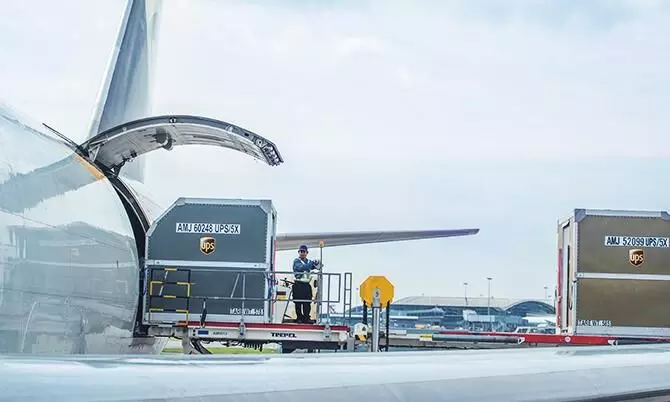
Hong Kong International Airport recorded continued cargo growth in April 2026, handling 423,000 tonnes of freight during the month, representing a 4.9 percent increase compared with the same period last year, according to figures released by Airport Authority Hong Kong.
The latest results reinforce Hong Kong International Airport’s position as one of the world’s leading air cargo gateways despite ongoing geopolitical uncertainty and uneven global trade conditions affecting several key markets.
Cargo flight movements at HKIA also increased during the month, rising 4.3 percent year-on-year to 6,605 flights, reflecting sustained activity across the airport’s freighter and belly cargo operations.
Related Post

Transshipment Traffic Drives Growth Momentum
Airport Authority Hong Kong said April’s cargo growth was primarily driven by strong transshipment activity, which surged 20.2 percent compared with the same month in 2025.
Imports also remained resilient, recording year-on-year growth of 6.5 percent, while export performance showed signs of stabilisation as the decline narrowed significantly to just 0.3 percent.
The data suggests that Hong Kong continues to benefit from its strategic role as a regional consolidation and transshipment hub connecting Mainland China, Southeast Asia and global markets.
Industry observers note that transshipment traffic has become increasingly important for major Asian cargo hubs as airlines and logistics providers continue adjusting supply chain networks in response to changing manufacturing patterns, e-commerce growth and geopolitical trade shifts.
HKIA’s cargo mix also reflected varying regional demand trends during the month.
Growth in cargo traffic linked to Europe and Southeast Asia helped offset softer volumes from North America and the Middle East. The airport authority noted that the Middle East market continues to face operational and demand pressures stemming from ongoing regional conflicts and geopolitical instability.
Cargo Volumes Continue Upward Trend in 2026
For the first four months of 2026, Hong Kong International Airport handled a total of 1.63 million tonnes of cargo, representing year-on-year growth of 3.7 percent.
During the same period, aircraft movements increased 5.1 percent to 135,090 flights, highlighting continued recovery and expansion across both passenger and cargo operations at the airport.
On a rolling 12-month basis, HKIA processed 5.12 million tonnes of cargo, up 2.9 percent year-on-year, while cargo flight movements rose 1.8 percent to 79,475 flights.
The airport also reported notable differences between loaded and unloaded cargo performance during April.
Unloaded cargo volumes increased sharply by 10.4 percent year-on-year to 119,000 tonnes, indicating strong inbound and transit demand, while loaded cargo rose 2.8 percent to 304,000 tonnes.
The figures reflect Hong Kong’s continued importance as a major import, re-export and regional distribution centre for Asia-Pacific supply chains.
Sustainability and Climate Resilience Recognition
Alongside its cargo performance, Hong Kong International Airport also received international recognition for its sustainability and climate resilience initiatives.
The airport was awarded the Platinum Award in the Airports Council International (ACI) Green Airports Recognition 2026 programme for its “HKIA Flood Resilience Studies” project within the category for airports handling more than 40 million passengers annually.
The award programme, organised by ACI Asia-Pacific & Middle East, recognises airports implementing environmental initiatives aimed at reducing aviation’s environmental impact and strengthening climate adaptation capabilities.
This year’s programme focused specifically on climate change adaptation, an increasingly critical area for airports facing rising risks linked to extreme weather events, flooding and infrastructure resilience.
Julian Lee, Executive Director, Finance at Airport Authority Hong Kong, said the recognition highlights the airport’s ongoing commitment to climate preparedness and operational resilience.
“We are honoured to receive this prestigious award,” Lee said. “As Hong Kong faces heavier rain and typhoons, this award affirms AAHK’s strong commitment to climate resilience at HKIA. The project findings further enhanced our climate risk management.”
Strategic Role in Global Air Cargo Continues
Hong Kong International Airport remains one of the world’s busiest international cargo hubs, supported by its extensive airline network, proximity to manufacturing centres in the Greater Bay Area and highly developed logistics infrastructure.
Despite global economic uncertainty, shifting trade flows and geopolitical challenges affecting several international markets, the airport continues to demonstrate resilience through strong transshipment demand and diversified cargo traffic across multiple regions.
Industry analysts expect Hong Kong’s cargo sector to remain closely tied to developments in global manufacturing, e-commerce expansion and regional trade integration across Asia-Pacific throughout the remainder of 2026.