
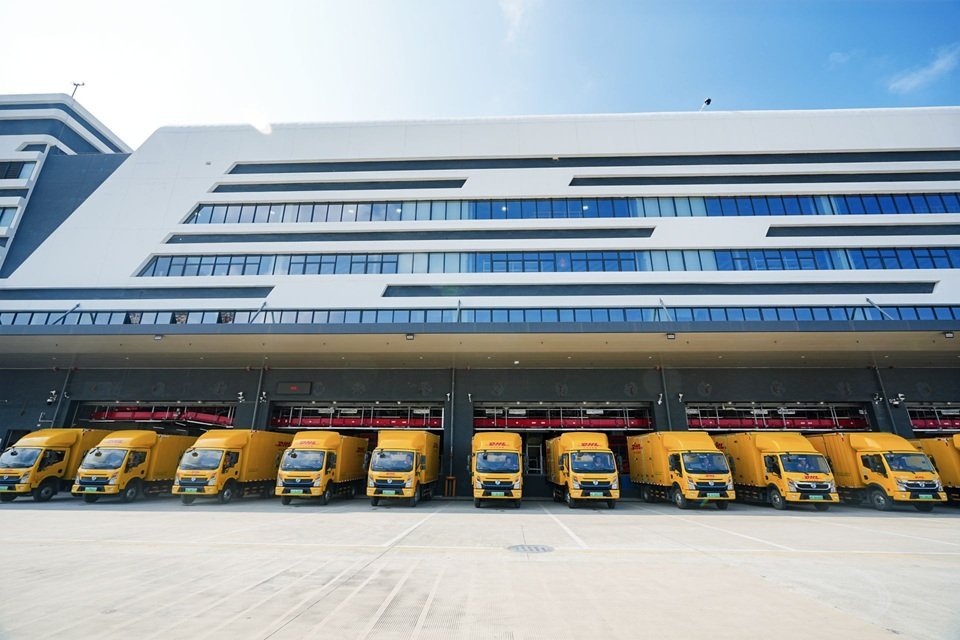
- DHL Express has invested €177 million to expand its Shenzhen “Super” Gateway at Shenzhen Bao’an International Airport, tripling processing capacity to approximately 900 tonnes per day.
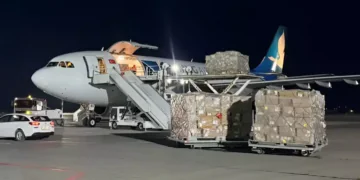
- The company has launched a new dedicated Boeing 767 freighter service connecting Shanghai, Bangkok, Bahrain and Brussels, strengthening links between China, Southeast Asia, the Middle East and Europe.
- The investment targets rising demand from technology, semiconductors, data centres, healthcare, life sciences, industrial manufacturing, new energy and cross-border e-commerce supply chains.
DHL Express strengthens China network with Shenzhen expansion and new freighter connection
DHL Express is significantly expanding its infrastructure and air connectivity in China as it positions its international express network to capture continued growth in cross-border trade and supply chains serving high-value and time-critical industries.
The company has completed a €177 million expansion of its Shenzhen “Super” Gateway at Shenzhen Bao’an International Airport, increasing the facility’s processing capacity threefold to approximately 900 tonnes per day.
At the same time, DHL Express has introduced a new dedicated air route linking Shanghai, Bangkok, Bahrain and Brussels, creating an additional freighter connection between key manufacturing and consumption centres across Asia, the Middle East and Europe.
Related Post


The combined investment in gateway infrastructure and dedicated air capacity underlines DHL Express’ strategy of strengthening its network around major Asian production hubs while providing customers with faster and more resilient international connections.
DHL has continued to identify China as a strategically important market despite ongoing shifts in global supply chains. While companies are diversifying sourcing and production locations, China remains a major centre for manufacturing, technology, innovation and international trade.
Shenzhen gateway capacity triples
The expansion of the Shenzhen Super Gateway represents one of the most significant recent investments in DHL Express’ Chinese network.
Located at Shenzhen Bao’an International Airport, the facility serves as an important gateway for the Pearl River Delta, one of China’s most important manufacturing and technology clusters.
Following the expansion, processing capacity has increased to approximately 900 tonnes per day, three times the previous level.
The additional capacity is designed to support a combination of cross-border trade, e-commerce and time-definite international express shipments.
For DHL Express, the investment provides greater room to accommodate future volume growth while improving the ability to process shipments rapidly through one of southern China’s most important international logistics gateways.
The company’s broader network already identifies Shenzhen as one of its China gateway locations, alongside major centres including Shanghai, Beijing, Guangzhou, Chengdu and Wuxi.
Supporting the Greater Bay Area’s industrial economy
The location of the expanded facility is strategically important.
Shenzhen sits at the centre of one of China’s most concentrated manufacturing and technology ecosystems, with extensive supply chains serving electronics, semiconductors, consumer technology, industrial equipment and new-energy industries.
The region is also deeply integrated with international e-commerce networks.
For express logistics providers, proximity to manufacturers and suppliers can reduce transit times between production sites and international gateways while allowing time-sensitive shipments to enter global distribution networks more quickly.
The expanded gateway therefore gives DHL additional capacity to serve both established export businesses and newer technology-driven supply chains.
New Shanghai-Europe route strengthens Asia connectivity
Alongside the Shenzhen investment, DHL Express has introduced a new dedicated freighter service connecting Shanghai, Bangkok, Bahrain and Brussels.
The service uses a Boeing 767 freighter, linking major commercial centres in China and Southeast Asia with the Middle East and Europe.
The routing provides an additional network connection for international express shipments while giving customers access to controlled air capacity across multiple strategic trade lanes.
The new service also reflects DHL’s broader efforts to strengthen connectivity between Asia and Europe.
Earlier in 2026, DHL Global Forwarding expanded controlled air freight capacity between Asia and Europe by leveraging DHL Aviation and Express assets, including new weekly Boeing 777F services connecting Shanghai with Leipzig and Hong Kong with Liège.
Together, these initiatives demonstrate the wider DHL strategy of using its aviation infrastructure across business units to increase flexibility and resilience on major international trade corridors.
Demand from technology and data-centre supply chains
DHL said the new capacity is being introduced against a backdrop of increasing demand from industries whose supply chains are heavily concentrated across China and Asia.
These include:
- Technology and electronics
- Semiconductor manufacturing
- Industrial manufacturing
- Data-centre infrastructure
- Healthcare and life sciences
- New-energy industries
- Cross-border e-commerce
The growth of data-centre infrastructure is particularly significant.
The rapid expansion of artificial intelligence, cloud computing and digital services is driving substantial investment in servers, networking equipment, semiconductors, power systems and other specialised components.
Many of these products are high-value and time-sensitive, making reliable air transport particularly important when supply chains face production deadlines or shortages.
A delay in the movement of a critical component can have consequences far beyond the value of the individual shipment if it interrupts manufacturing or installation schedules.
DHL’s expanded express infrastructure is therefore aimed not simply at handling more parcels, but at supporting increasingly complex industrial supply chains where speed and reliability have become strategic considerations.
Semiconductors and high-value manufacturing drive logistics requirements
The semiconductor sector presents another major opportunity for express logistics providers.
Chip manufacturing involves highly specialised production networks spanning multiple countries, with components and equipment frequently moving between manufacturing, testing, assembly and distribution locations.
Time-definite transportation can be critical when production schedules depend on the availability of individual components or specialised equipment.
The same applies to industrial machinery and engineering equipment, where replacement parts may be required urgently to prevent production downtime.
DHL’s expansion of its Heavy Weight Express service earlier this year also reflects this shift in customer requirements.
The service allows shipments of up to 1,000 kg per piece and 3,000 kg per shipment to move through DHL Express’ time-definite international network.
The service was specifically designed for sectors including technology, automotive manufacturing, engineering, machinery, life sciences, pharmaceuticals, oil and gas and energy.
The combination of heavier shipment capabilities and additional Asian air capacity gives DHL a broader proposition for industrial customers whose requirements extend beyond conventional express parcels.
China remains central despite supply-chain diversification
DHL acknowledged that global supply chains are continuing to diversify as companies respond to geopolitical uncertainty, trade policy changes and changing production economics.
However, the company maintains that China remains an important hub for manufacturing, sourcing, innovation and consumption.
That position is particularly relevant for logistics providers.
Even where companies establish additional manufacturing capacity in countries such as Vietnam, India or other Asian markets, China remains deeply embedded in regional supplier networks.
The result is a more complex rather than necessarily smaller role for China in international logistics.
Products may increasingly move through multi-country production chains, creating demand for logistics services capable of connecting suppliers, factories, consolidation centres and final markets.
The new Shanghai-Bangkok-Bahrain-Brussels route is well positioned within that environment by connecting multiple production and distribution centres through a single dedicated freighter rotation.
E-commerce remains a core growth market
The Shenzhen gateway expansion will also strengthen DHL Express’ ability to handle cross-border e-commerce shipments.
The sector has become an increasingly important source of international parcel flows between China and overseas markets.
DHL has been expanding its e-commerce capabilities through network investments and targeted acquisitions. DHL Group said in its 2025 results that it had continued to expand its e-commerce network through acquisitions including AJEX, IDS and Inmar.
The Shenzhen investment provides additional processing capacity in a market where large numbers of exporters and online merchants operate.
For e-commerce companies, gateway capacity can be critical during periods of peak demand, when shipment volumes can rise sharply within short time windows.
Higher processing capability gives DHL greater flexibility to handle those peaks without compromising transit-time commitments.
DHL builds flexibility into Asia-Europe logistics
The new freighter service also comes at a time when logistics providers are placing greater emphasis on network flexibility.
Global supply chains continue to face geopolitical disruption, trade-policy uncertainty and changing customer requirements.
DHL has increasingly responded by combining its own aviation resources with capacity across different parts of the group.
Its March 2026 expansion of Asia-Europe air freight capacity demonstrated this approach, with DHL Global Forwarding using DHL Aviation and Express infrastructure to introduce controlled-capacity routes.
The objective is to provide customers with greater certainty over capacity and routing, particularly on strategically important trade lanes.
For time-sensitive shipments, that can be as important as the absolute transit time.
Bahrain gains importance as a logistics bridge
The inclusion of Bahrain in the new freighter routing also highlights the growing importance of the Gulf as an intermediary between Asian and European logistics networks.
The Middle East provides an increasingly important geographic bridge between major Asian production centres and European markets.
DHL has also been strengthening its presence in the region through investments in aviation and sustainable fuels.
In May 2026, DHL Express signed a long-term agreement with SAF One for access to 25,000 tonnes of sustainable aviation fuel annually, or 250,000 tonnes over ten years, from a planned Bahrain production facility.
The agreement is intended to integrate the first SAF production facility in the Middle East into DHL’s global sustainable aviation fuel supply network.
The combination of air connectivity and energy infrastructure reinforces Bahrain’s potential role within DHL’s wider Middle East logistics strategy.
Brussels provides European gateway connectivity
At the European end of the new route, Brussels provides access to DHL’s extensive European distribution network.
The Belgian capital is an established logistics and express hub, providing connectivity into European markets and onward distribution channels.
For shipments originating in China and Southeast Asia, the new service provides another dedicated route into Europe while maintaining connectivity through the Middle East.
The result is a multi-region network designed to provide greater routing flexibility as global trade patterns evolve.
Investment reflects broader DHL growth strategy
The Shenzhen investment forms part of DHL’s wider strategy of continuing to invest in markets and sectors with above-average growth potential.
In its 2025 results, DHL Group highlighted China among the countries where it was continuing to invest, while also reporting investments in sectors including life sciences, healthcare and e-commerce.
The group has also been pursuing additional capacity and resilience across its aviation network.
For DHL Express, infrastructure investment is increasingly being directed towards markets where manufacturing, technology and international trade are expanding simultaneously.
Shenzhen fits that profile particularly well.
John Pearson: network flexibility is becoming essential
DHL Express CEO John Pearson said global supply chains are continuing to adapt to economic conditions, geopolitical disruption and changing customer requirements.
He emphasised the need for logistics networks to provide customers with flexibility, reliability and consistent service quality as production and sourcing patterns evolve.
The Shenzhen and new freighter investments are intended to strengthen those connections between China and international markets.
The strategy is also consistent with DHL’s positioning of itself as a logistics partner for sectors where supply-chain disruption can have significant financial consequences.
A stronger platform for China’s next phase of trade growth
The expansion of the Shenzhen gateway and launch of the Shanghai-Bangkok-Bahrain-Brussels freighter route come as China’s role in global supply chains continues to evolve.
Manufacturers are diversifying production, but China’s extensive supplier base, technological capabilities and domestic market continue to make it a critical logistics hub.
For DHL Express, the response is to increase both physical processing capacity and dedicated air connectivity.
The €177 million Shenzhen investment expands gateway capacity at one of China’s most important manufacturing centres, while the new Boeing 767 freighter service adds another strategic connection between Asia, the Middle East and Europe.
Together, the moves strengthen DHL’s ability to support the next generation of cross-border trade, from e-commerce and semiconductors to data-centre equipment, pharmaceuticals and new-energy technologies.
As global supply chains become more distributed and increasingly time-sensitive, the ability to connect multiple production centres through reliable, high-frequency air networks is likely to become an increasingly important competitive advantage.