
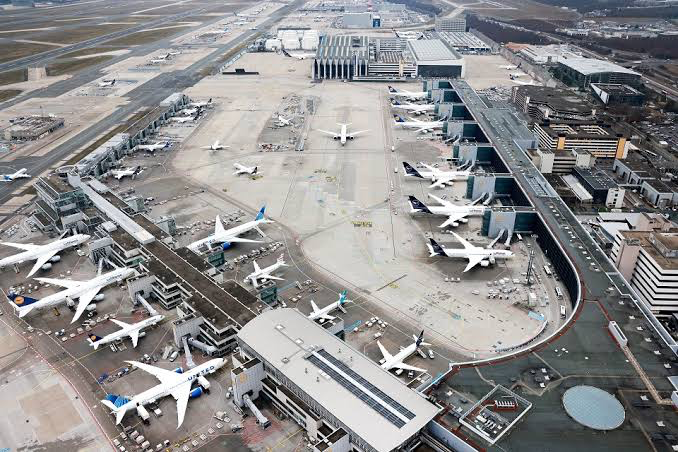
Frankfurt Airport recorded a modest increase in cargo volumes in July, with freight and airmail throughput rising 0.9% year on year to 180,622 metric tonnes, according to figures released by airport operator Fraport.
The increase came as overall aircraft movements at Germany’s largest aviation hub declined, with airlines operating fewer flights but making greater use of available capacity and larger aircraft.
For the cargo sector, the July performance provides another indication of the resilience of Frankfurt’s freight operation amid changing airline capacity, international trade conditions and wider geopolitical uncertainty.



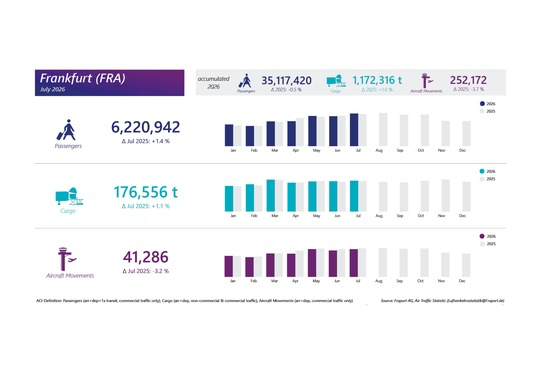
Fraport reported that Frankfurt handled approximately 6.2 million passengers during July, up 1.4% compared with the same month last year. At the same time, aircraft movements fell 3.2% to 41,286, while maximum take-off weights declined 0.8% to approximately 2.6 million tonnes.
Against that backdrop, cargo throughput — comprising airfreight and airmail — increased to 180,622 tonnes, representing a 0.9% year-on-year improvement.
Cargo growth despite lower aircraft movements
The cargo increase is notable because it came alongside a reduction in the number of aircraft movements at Frankfurt.
Fraport said airlines had implemented significant capacity reductions during July. Despite fewer take-offs and landings, passenger traffic increased as a result of higher capacity utilisation and the use of larger aircraft.
The same operating environment is relevant to the airport’s cargo activity, where available belly capacity, dedicated freighter operations and aircraft utilisation all influence the amount of freight that can move through the hub.
Frankfurt is one of Europe’s most important air cargo gateways, serving a large industrial and manufacturing base in Germany and providing connections to major markets across Europe and beyond.
The airport’s cargo operation also benefits from the presence of Lufthansa Cargo and a broad network of international carriers, as well as its established logistics infrastructure and road connections into Germany and neighbouring European markets.
Fraport’s latest figures suggest that freight demand remained sufficiently robust in July to support a year-on-year increase despite the reduction in overall aircraft movements.
Frankfurt’s wider traffic picture
The July cargo performance formed part of a broader month of mixed capacity and traffic developments at Frankfurt.
Passenger traffic reached approximately 6.2 million, up 1.4% year on year, while aircraft movements fell 3.2%. Fraport said higher capacity utilisation and larger aircraft helped offset the reduction in flight activity.
Maximum take-off weights also edged down, falling 0.8% to around 2.6 million tonnes.
The combination of fewer movements and higher passenger volumes illustrates the changing capacity environment at the airport, with airlines making adjustments to their schedules while maintaining demand on key routes.
For cargo operators and logistics providers, such changes can influence the availability of bellyhold capacity and the balance between passenger aircraft and dedicated freighter services.
International demand remains diverse
Although passenger traffic is not directly indicative of cargo demand, Fraport’s July figures show continued international activity across several major markets served from Frankfurt.
Southern European destinations, including Italy, Spain, Greece and Croatia, recorded particularly strong passenger demand during the peak summer travel period.
On long-haul routes, traffic increased noticeably to Israel, China and Brazil, while African markets including Kenya and South Africa also recorded strong demand.
The breadth of the network remains important for Frankfurt’s cargo role. The airport provides access to major economic centres in Europe, Asia, the Middle East, Africa and the Americas, supporting both time-sensitive freight and international supply chains.
China remains particularly significant to European air cargo, given the scale of manufacturing and trade between China and Germany and the wider European market.
Frankfurt remains a major European cargo gateway
The July figures build on Frankfurt’s established position within the European air freight market.
Fraport’s 2025 annual report recorded approximately 2.0 million metric tonnes of cargo at Frankfurt, an increase of 1.8% compared with 2024. The airport operator said the cargo segment demonstrated resilience despite challenging geopolitical conditions, with e-commerce identified as an important growth driver for connections to and from the Far East.
That underlying cargo base gives Frankfurt an important role in European logistics, particularly for high-value and time-sensitive goods.
The airport serves Germany’s major industrial regions and is connected to an extensive road-feeder network, enabling cargo to move beyond the airport to destinations across the continent.
The combination of passenger belly capacity, freighter operations and its location within Europe’s largest economy has allowed Frankfurt to maintain substantial cargo volumes even as airlines adjust capacity according to market conditions.
Fraport’s wider airport portfolio
Growth was not limited to Frankfurt within Fraport’s international airport portfolio.
Across the airports actively managed by Fraport, total passenger traffic increased 2.2% year on year to approximately 23.4 million in July.
Ljubljana Airport in Slovenia recorded one of the strongest increases, with passenger traffic rising 14.9% to 208,638.
In Brazil, Fraport’s airports in Fortaleza and Porto Alegre handled a combined 1.3 million passengers, an increase of 5.9%.
Fraport’s 14 Greek airports collectively recorded growth of 5.4%, reaching approximately 6.9 million passengers. The Bulgarian coastal airports of Burgas and Varna handled a combined 871,379 passengers, up 5.2%.
Elsewhere in the portfolio, traffic at Lima Airport in Peru declined 0.6% to approximately 2.3 million passengers, while Antalya Airport in Türkiye recorded a 1.2% decline to around 5.6 million passengers.
While these passenger figures do not directly translate into cargo performance, they provide an indication of the wider operating environment across Fraport’s international portfolio.
Cargo outlook remains closely tied to capacity
For Frankfurt’s cargo community, the July results underline the importance of monitoring both freight demand and available aircraft capacity.
A 0.9% increase in cargo throughput may appear modest compared with some of the stronger growth rates recorded at European cargo hubs, but the performance came during a month in which aircraft movements at Frankfurt fell by more than 3%.
The result points to continued utilisation of the airport’s cargo infrastructure and available capacity.
The broader European air freight market remains influenced by several factors, including international trade flows, e-commerce, geopolitical developments, fuel costs and changes in airline capacity.
Frankfurt’s established position within the European logistics system provides a substantial base from which to respond to these changes.
With its combination of passenger and freighter operations, extensive cargo handling infrastructure and access to Germany’s industrial economy, the airport remains an important component of Europe’s international air freight network.
The July figures show that, despite fewer aircraft movements, cargo volumes continued to move upwards — a sign that freight activity at the Frankfurt hub remains resilient as the industry enters the second half of the year.