
Key Highlights
- First international expansion: SAL Saudi Logistics Services has entered the Chinese market, establishing operations in Shanghai and Guangzhou as part of its first overseas expansion.
- Strategic partnership with TAM Group: Hong Kong-headquartered TAM Group will support SAL’s growth in China through its local market expertise and extensive global General Sales and Service Agent (GSSA) network.
- Strengthening air cargo connectivity: The collaboration is designed to enhance air freight links between China and Saudi Arabia, supporting growing cross-border trade and logistics flows.
- Supporting Vision 2030: The expansion aligns with Saudi Arabia’s ambition to become a leading global logistics hub under the Kingdom’s Vision 2030 strategy.
- Building closer customer relationships: The new presence in China enables SAL to strengthen collaboration with airlines, freight forwarders, customers and logistics partners in one of the world’s largest air cargo markets.
SAL Saudi Logistics Services Launches Operations in China Through Strategic Partnership with TAM Group
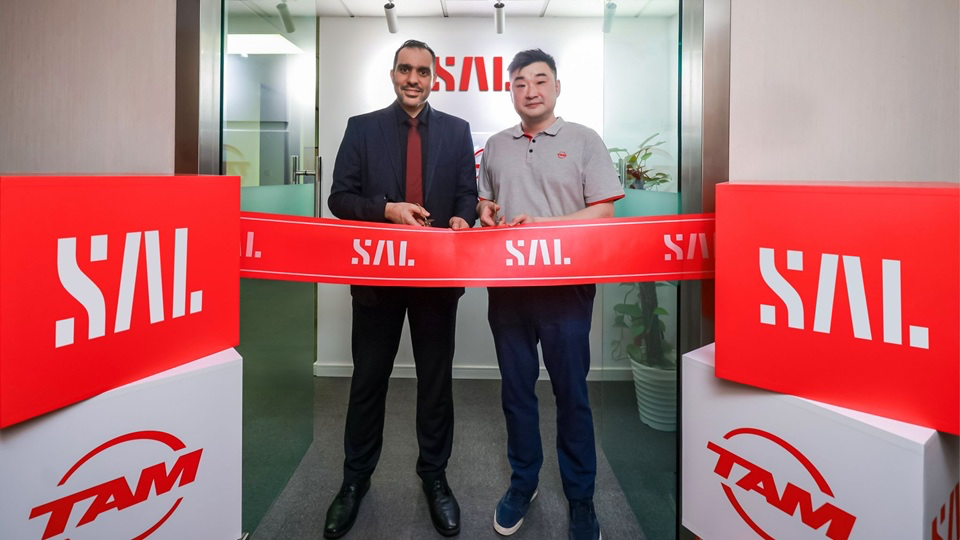
SAL Saudi Logistics Services has marked a significant milestone in its international growth strategy with the launch of operations in China, establishing its first overseas presence through new offices in Shanghai and Guangzhou.
The expansion positions the Saudi-based logistics and supply chain specialist in one of the world’s largest trade and air cargo markets, strengthening connectivity between China and Saudi Arabia while supporting growing cross-border commerce.
To support its entry into the Chinese market, SAL has partnered with Hong Kong-based TAM Group, which will provide local market expertise and leverage its extensive global General Sales and Service Agent (GSSA) network to facilitate the company’s regional development.
Related Post


Strengthening Air Cargo Connectivity
The partnership aims to enhance cargo flows between China, Saudi Arabia and international markets by combining SAL’s logistics capabilities with TAM Group’s established commercial presence across Asia.
In announcing the partnership, TAM Group said the expansion represents an important step in strengthening air cargo connectivity between the two countries while delivering more efficient logistics solutions for customers.
The company noted that SAL’s establishment of operations in Shanghai and Guangzhou reflects the increasing importance of the China–Saudi Arabia trade corridor and creates new opportunities for airlines, freight forwarders and supply chain partners operating across the region.
TAM Group also reaffirmed its commitment to supporting SAL’s continued expansion by providing local expertise and commercial support through its international GSSA network.
Supporting Saudi Arabia’s Logistics Vision
For SAL, the move into China represents a key stage in its international expansion strategy as it seeks to strengthen relationships with airlines, customers and logistics partners in strategically important global markets.
The company said its representation in Shanghai and Guangzhou will enable closer collaboration across the air cargo ecosystem while reinforcing its customer-focused approach to international logistics.
SAL added that the expansion reflects its commitment to trusted partnerships and supports Saudi Arabia’s Vision 2030, which aims to position the Kingdom as a leading global logistics hub connecting Asia, Europe and Africa.
Expanding Global Reach
China remains one of the world’s largest manufacturing, trading and air cargo markets, making it a strategic location for logistics providers seeking to strengthen international supply chain connectivity.
By establishing operations in two of China’s leading commercial centres, SAL is expanding its global footprint while creating additional opportunities to support customers engaged in cross-border trade between Asia, the Middle East and beyond.
The partnership with TAM Group also provides a strong local platform for future growth, combining regional market knowledge with international air cargo expertise to enhance service capabilities and strengthen commercial relationships across key global trade lanes.