
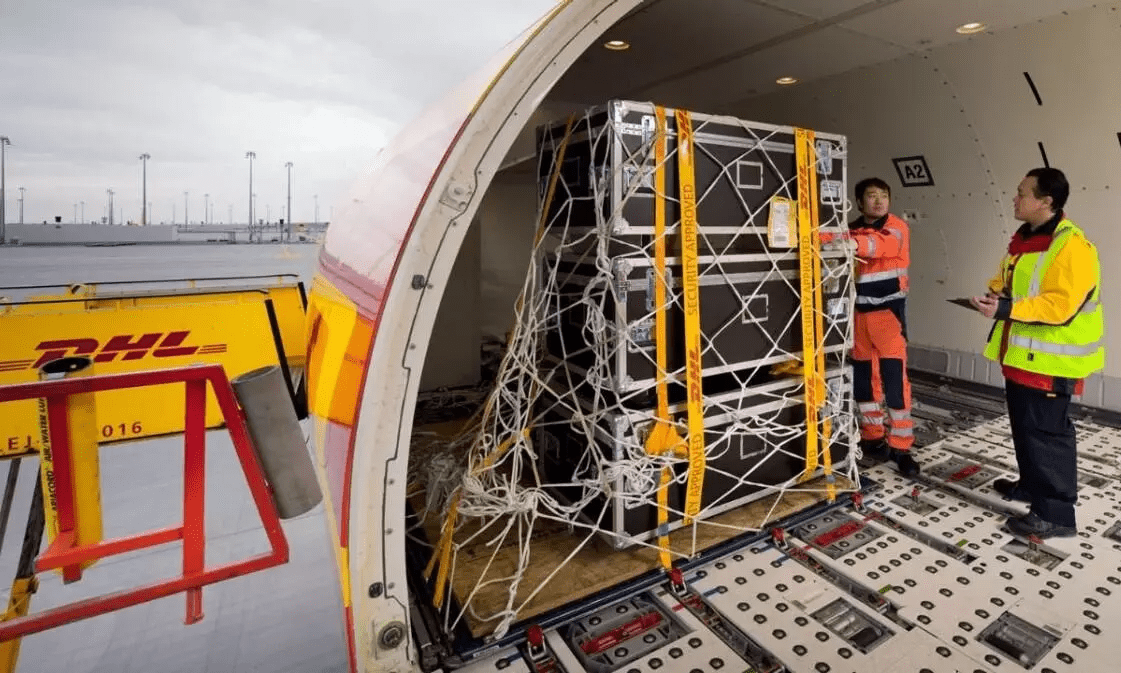
DHL Express is seeing a sharp increase in demand for heavyweight, time-critical shipments across Asia Pacific, with growing volumes of technology, automotive and industrial cargo driving the trend.
The express operator recorded a 16% increase in Time Definite International (TDI) weight per day across Asia Pacific, excluding China, between January and July 2026. The growth follows the introduction of its Heavy Weight Express (HWX) service earlier this year and reflects increasing demand for faster transportation of heavy and critical components, machinery and industrial equipment.
DHL said the wider heavyweight market has gained momentum as businesses reassess supply-chain strategies in response to trade disruptions, manufacturing bottlenecks and changing demand patterns. Industry research cited by the company estimates that around 10.2 million tonnes of heavyweight shipments move annually across Asia Pacific, excluding China.
Related Post



Time-Critical Cargo Drives Demand
The increase suggests that companies are increasingly using express networks for shipments where delivery timing can have a direct impact on production and operations.
“Businesses are shipping heavy when timing matters and when it’s critical,” said Ken Lee, CEO for Asia Pacific at DHL Express.
Lee said speed and reliability are becoming increasingly important considerations as companies manage greater uncertainty across their supply chains. DHL positions HWX as a solution for helping customers reduce the risk of production downtime, protect working capital and maintain operational continuity when supply chains face disruption.
Launched globally in May, Heavy Weight Express supports shipments of up to 1,000 kg per piece and 3,000 kg per shipment. The service forms part of DHL Express’s Time Definite International portfolio and includes dedicated Heavy Weight Priority Desks for proactive monitoring and shipment support.
Technology Leads Heavyweight Segment
Technology-related cargo is the largest contributor to DHL Express’s heavyweight shipments in the region, accounting for more than 34% of the segment.
The company said demand is being supported by rapid investment in data-centre infrastructure, driven by requirements for computing capacity, data storage, cloud services and artificial intelligence.
That investment is generating additional demand for the movement of semiconductors, servers, cooling systems and electrical infrastructure. At the same time, constraints in data-centre infrastructure and semiconductor manufacturing capacity are creating bottlenecks, increasing the importance of rapid logistics for critical components and equipment.
DHL said express logistics is increasingly being used to move such components quickly and help keep data-centre projects and other technology programmes on schedule.
Automotive Shipments Gain Momentum
Automotive is another significant contributor to the heavyweight segment, and DHL said it is currently the fastest-growing sector for HWX.
Shipment weight in the automotive segment has increased by nearly 20%, with growth linked in part to the expansion of Asian automotive brands, particularly electric vehicle manufacturers in China and Southeast Asia.
As manufacturers expand into international markets, vehicle components are increasingly being moved between suppliers and production facilities across borders. DHL said this is creating greater demand for expedited shipments, particularly where delays could interrupt manufacturing operations.
Engineering and manufacturing companies also remain important users of heavyweight express services, reflecting the broader movement of machinery, industrial equipment and other high-value components across the region.
India and Southeast Asia Among Fastest-Growing Markets
Within Asia Pacific, excluding China, India, the Philippines, Vietnam, Japan and Hong Kong recorded the fastest growth in heavyweight shipments during the first seven months of 2026, according to DHL.
The markets reflect two broader regional trends: Southeast Asia’s expanding role as a manufacturing and sourcing base, and North Asia’s position in high-value technology, industrial and automotive supply chains.
India, the Philippines and Vietnam are also identified by DHL as key markets under its geographic tailwinds initiative.
Lee said companies manufacturing across Asia are increasingly balancing project deadlines with the need to build more resilient and agile supply chains.
“Companies are consolidating goods into heavier shipments,” he said, describing these time-sensitive requirements as key drivers of demand for logistics solutions capable of delivering shipments within defined timeframes.
Regional Infrastructure Expands
DHL Express has continued to expand its infrastructure across Asia Pacific as heavyweight and time-critical shipments increase.
Recent investments include an expanded global hub in Hong Kong, upgraded facilities near Cebu and Manila airports, a new gateway at Christchurch Airport, an enhanced Hanoi gateway near Noi Bai Airport and a Delhi gateway.
The company said its regional network now comprises approximately 1,000 facilities, supported by an aviation network operating around 810 flights per day.
The expansion comes as the distinction between traditional freight and express logistics continues to evolve. For manufacturers, technology companies and automotive businesses, heavyweight shipments are increasingly being treated as time-critical supply-chain inputs rather than simply as conventional freight.
DHL’s latest figures indicate that this shift is gaining momentum across Asia Pacific, with heavier shipments moving through express networks when speed, predictability and production continuity are critical.