
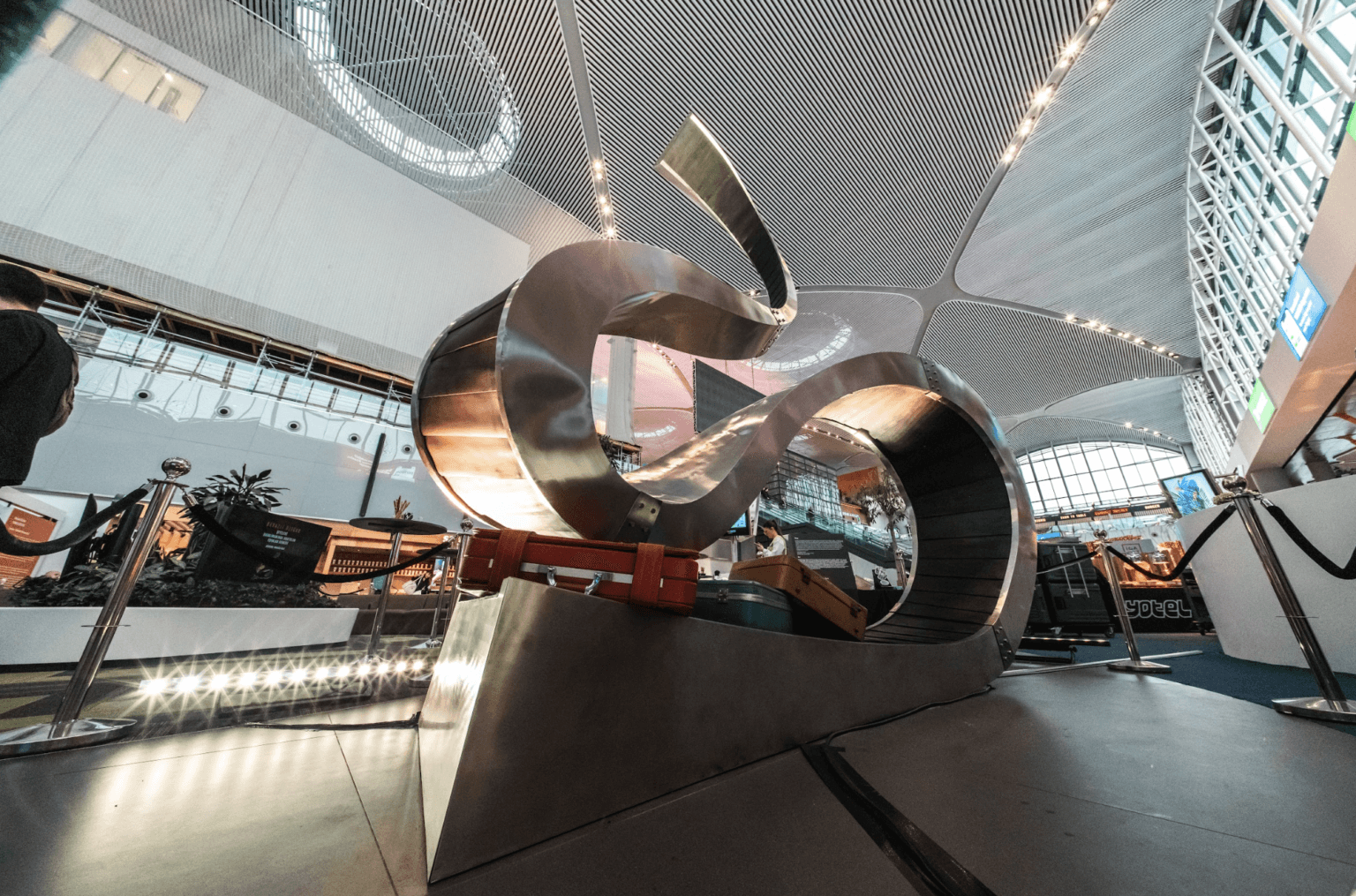
iGA Istanbul Airport has unveiled a new contemporary art exhibition that transforms forgotten travel objects into sculptural reflections on memory, movement and the human experience of air travel. Curated by iGA ART, the exhibition features works by renowned Turkish artist and television personality Beyazıt Öztürk and is currently on display in the International Departures Terminal.
As one of the world’s busiest global aviation hubs, iGA Istanbul Airport continues to expand its commitment to cultural engagement by making art accessible to millions of international passengers. The latest exhibition reinforces the airport’s vision of integrating art into public spaces, positioning the terminal not only as a transit point but also as a cultural platform.
Sculpting the overlooked
Best known for his long-running and influential television programmes, Beyazıt Öztürk now presents his artistic practice through sculpture and ceramics, revealing what he describes as his “silent side.” A graduate of Anadolu University’s Faculty of Fine Arts, Öztürk has worked in sculpture for many years, largely away from the public eye.
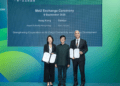
Hosted by iGA ART, the exhibition includes the sculptural work “Thing” (Şey) alongside a collection titled “Things” (Şeyler), both of which centre on objects left behind by travellers. These forgotten items—often dismissed as insignificant—are reimagined as carriers of memory and human experience.
The exhibition officially opened on 22 January at the iGA ART Gallery, with Öztürk joined by Selahattin Bilgen, CEO of iGA Istanbul Airport; Gülveli Kaya, Chairman of the iGA ART Executive Board; and a number of invited guests from the cultural and aviation sectors.
Airports as emotional crossroads
Curated by Marcus Graf, a member of the iGA ART Executive Board, the exhibition explores the idea that airports are spaces where countless human stories intersect. By focusing on everyday objects that travellers forget or abandon, the project highlights the emotional residue of movement, delay, separation and reunion—elements intrinsic to the airport experience.
At the centre of the exhibition is the sculpture “Thing,” inspired by the airport baggage conveyor belt—an essential yet largely unnoticed component of air travel. The work reinterprets the conveyor system as a continuous, flowing line that twists through the space, evoking the form of a large “reminder knot” tied around a finger. The sculpture symbolises memory, continuity and the journeys—both physical and emotional—that pass through airports every day.
Speaking at the opening, Öztürk reflected on the personal significance of the exhibition.
“For many years, I have been known for my television work, appearing in countless living rooms,” he said. “But my story actually began with sculpting. This was my silent side. Breaking that silence at iGA Istanbul Airport, a place where thousands of stories unfold every day, is incredibly meaningful. While creating the ‘Thing’ sculpture and the ‘Things’ exhibition, I focused on objects that didn’t simply pass through the conveyor belts but were forgotten there. I couldn’t accept that these memories were wasted—so I turned them into art.”
A commitment to cultural infrastructure
Commenting on the exhibition, Selahattin Bilgen, CEO of iGA Istanbul Airport, said Öztürk’s work encourages passengers to pause amid the pace of travel and reflect on their surroundings.
“The idea that forgotten objects do not disappear but simply change places creates a powerful connection with the spirit of an airport,” Bilgen said. “At iGA Istanbul Airport, we see art as an essential part of life. We attach great importance to sharing Anatolia’s cultural memory and Istanbul’s multi-layered identity with passengers from around the world. These works offer moments of calm and reflection to thousands of travellers every day.”
Gülveli Kaya, Chairman of the iGA ART Executive Board, highlighted the broader significance of Öztürk’s transition into the visual arts.
“For someone who has achieved such widespread recognition in another field to enter the demanding environment of a sculpture studio is a sign of a genuine artistic spirit,” Kaya said. “Beyazıt Öztürk’s turn toward sculpture represents an important opportunity for increasing the visibility and accessibility of art in public spaces.”
Through exhibitions such as this, iGA Istanbul Airport continues to redefine the role of airports within the global aviation ecosystem—positioning them not only as logistics and passenger hubs, but also as living cultural environments where art, memory and movement converge.