
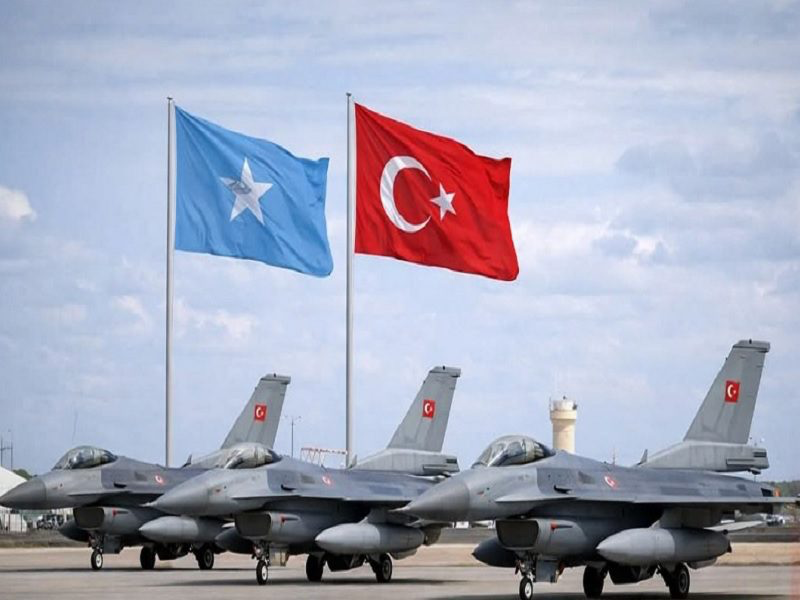
Recent Turkish military airlift activity into Somalia has highlighted the critical and often understated role of cargo aircraft in supporting overseas aviation and defence operations, particularly in regions where security, infrastructure development and air transport increasingly intersect.
According to analysis cited by Forbes, Türkiye conducted multiple military cargo flights into Mogadishu in the days leading up to the deployment of at least three F-16 fighter jets to Somalia in late January. The airlift operation is understood to have supported logistics, equipment movement and infrastructure preparation at Mogadishu International Airport, ahead of the arrival of the combat aircraft.
Satellite imagery referenced in the report indicates that new hangar facilities have been constructed at the airport, suggesting a coordinated effort to enhance on-the-ground aviation infrastructure capable of supporting sustained fighter operations. These developments form part of a broader expansion of Türkiye’s military footprint in Somalia, which already hosts the country’s largest overseas military base.

Cargo aircraft as enablers of force projection
The deployment illustrates how strategic airlift remains fundamental to modern force projection, particularly in geographically distant or high-risk environments. Military cargo aircraft play a central role not only in transporting personnel and equipment, but also in enabling the establishment of infrastructure and operational readiness ahead of frontline aviation activity.
The Forbes analysis notes that the cargo flights were a key enabler of the fighter deployment, allowing Türkiye to prepare facilities, move support equipment and ensure logistical continuity before combat aircraft entered the theatre.
Bloomberg, also cited in the report, indicated that the F-16 deployment is intended to support Turkish drone operations against militant groups and to safeguard Türkiye’s expanding strategic and commercial interests in Somalia. These interests reportedly include planned offshore energy exploration activities, underscoring the intersection between security operations and long-term economic objectives.
Broader implications for air cargo and aviation infrastructure
While the operation is military in nature, it underscores a broader reality familiar to the air cargo industry: cargo aircraft are indispensable to sustained aviation operations, particularly in regions where security concerns, infrastructure development and airspace management overlap.
In such environments, cargo aircraft provide the flexibility, payload capacity and operational resilience required to support both military and civilian aviation activity. The Turkish operation highlights how airlift capabilities underpin not only defence deployments but also the establishment and maintenance of aviation infrastructure in challenging operating conditions.
For the global cargo sector, these developments reinforce the strategic importance of airlift capability, airport infrastructure resilience and operational coordination in regions where geopolitical, security and commercial interests converge.