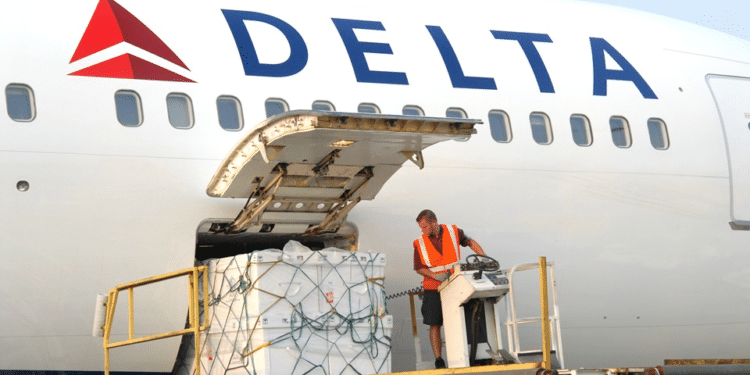


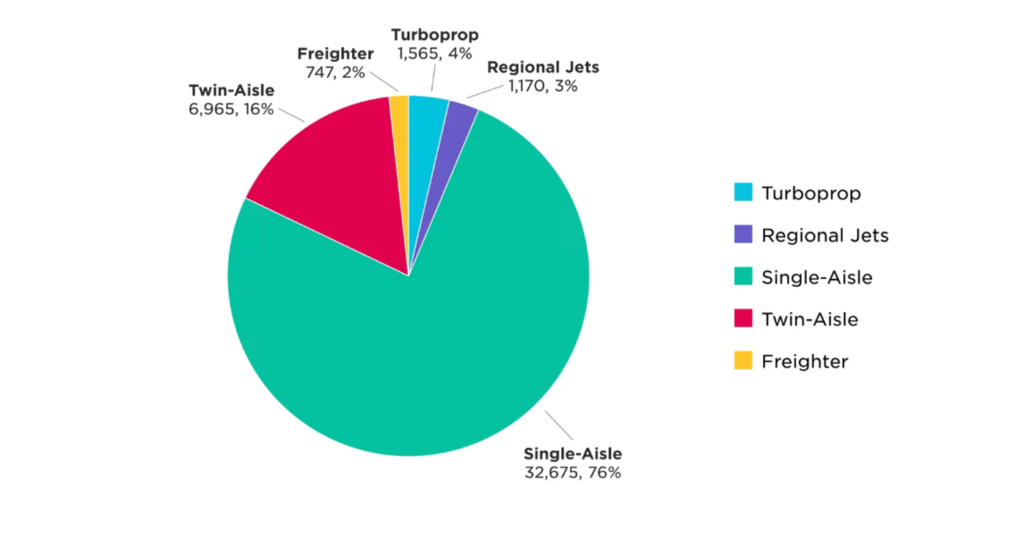
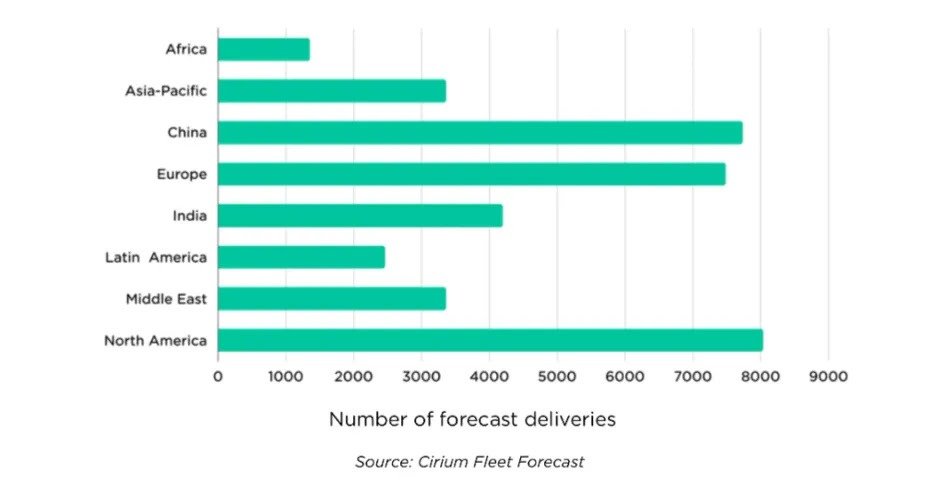
Cirium’s latest Fleet Forecast projects around 43,000 new commercial passenger and freighter aircraft deliveries worldwide between 2026 and 2045, with an estimated value of US$3.2 trillion. Within that outlook, approximately 747 new freighter aircraft are expected to be delivered over the next two decades, while the global freighter fleet is projected to grow at an annual rate of 2%.
Released on 13 October 2026, the annual forecast from Cirium Ascend Consultancy points to sustained long-term demand for aircraft despite production constraints, higher fuel costs and geopolitical uncertainty. The outlook also reflects a more moderate delivery projection than Cirium’s 2025 forecast, which anticipated 46,500 deliveries valued at US$3.4 trillion.
The report identifies manufacturing capacity, engine availability and supply-chain resilience as key factors shaping the industry’s ability to meet demand. Certification delays, rising costs and geopolitical disruption are also expected to affect the pace at which airlines can expand and renew their fleets.
Related Post



Stephen Burnside, global head of Cirium Ascend Consultancy, said long-term aircraft demand remained strong, but growth increasingly depended on the industry’s ability to deliver aircraft at the required pace. He highlighted supply-chain resilience, engine availability and scalable production as critical to meeting airlines’ fleet requirements.
Air cargo outlook remains resilient
Cirium’s assessment highlights the continuing role of e-commerce, high-value commodities and time-sensitive shipments in supporting air cargo demand, even as uncertainty over global trade reshapes established supply chains.
The forecast does not eliminate the challenges facing cargo operators. Aircraft production constraints and engine availability could affect fleet expansion and replacement schedules, while higher fuel costs continue to put pressure on airline economics.
Cirium expects conventional gas-turbine aircraft to remain the backbone of commercial aviation throughout the forecast period. Improvements in aircraft and engine efficiency, alongside fleet renewal, are therefore expected to remain important to managing fuel consumption as sustainable aviation fuel availability and cost continue to constrain adoption.
For the wider aviation sector, the forecast underscores a central challenge: long-term demand for aircraft remains substantial, but the industry’s ability to convert that demand into deliveries will depend on production capacity, supply-chain resilience and the timely availability of engines.