

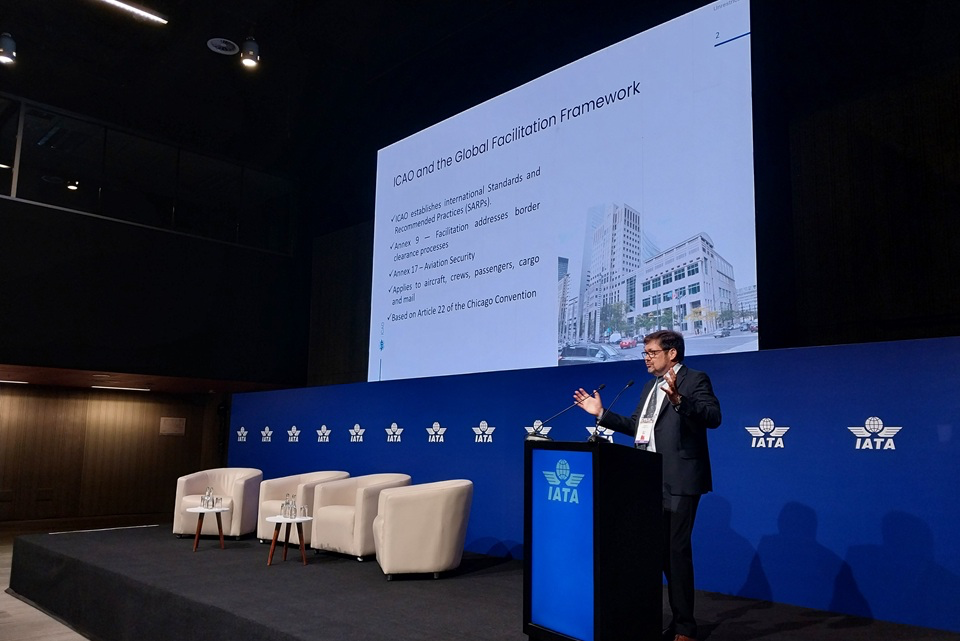
Lima, Peru – Air cargo is often overlooked in the development of aviation policy frameworks, infrastructure planning, and airport operational strategies, according to experts speaking at the IATA World Cargo Symposium (WCS).
Leonardo Boszczowski, ICAO Regional Officer for Aviation Security and Facilitation, highlighted the tendency for air cargo governance to evolve separately from broader aviation governance. “It is not uncommon for aeronautical policy frameworks to overlook air cargo development,” he said, noting that airport master planning, infrastructure investment, and operational planning frequently lack meaningful input from cargo stakeholders.
Boszczowski gave practical examples from airport operations, where aviation security managers often focus exclusively on passenger processes such as access control and baggage screening. When regulators seek to audit cargo operations, these managers frequently defer to cargo specialists, reflecting the perception that air cargo is peripheral to airport operations.
Service-level targets were another area of concern. Passenger terminals routinely track performance metrics such as immigration queue times, check-in efficiency, and baggage handling. In contrast, air cargo terminals rarely adopt equivalent service-level measurements, limiting visibility into operational efficiency and overall system performance. “Cargo is often treated as a niche rather than a core component of the aviation sector, and this could constrain the performance of the air cargo system,” Boszczowski said.
He urged air cargo stakeholders to take a more active role in national air transport and airport facilitation committees, which serve as platforms for interagency coordination and operational problem-solving. “It is important to position cargo within operational governance, ensuring it aligns with overall airport performance,” Boszczowski explained. “Stakeholders working together can deliver coordinated, integrated solutions — for example, setting measurable outcomes to improve a state’s competitiveness.”
Boszczowski’s observations underscore the need for air cargo to be recognised as a fundamental part of aviation infrastructure and planning. Greater engagement in policy-making, performance metrics, and interagency committees will help integrate cargo operations into the broader aviation ecosystem, ultimately improving efficiency, security, and competitiveness for airports and states alike.