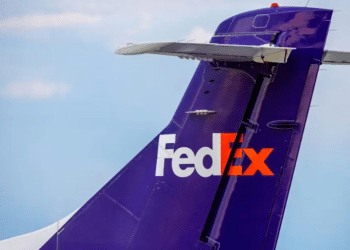
ACIA Aero Leasing Delivers First ATR 72-600P2F with Large Cargo Door to FedEx
ACIA Aero Leasing has delivered the world’s first ATR 72-600 passenger-to-freighter (P2F) aircraft equipped with a Large Cargo Door (LCD) ...

ACIA Aero Leasing has delivered the world’s first ATR 72-600 passenger-to-freighter (P2F) aircraft equipped with a Large Cargo Door (LCD) ...
Global airfreight rates declined modestly following China’s Golden Week holiday, but prices remainsubstantially higher than a year agoas the industry ...
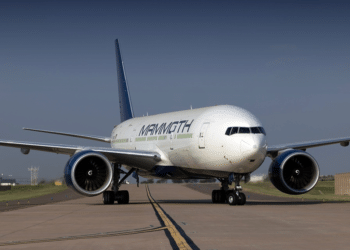
Mammoth Freighters LLC (“Mammoth”) has announced the induction of a Boeing 777-200LR aircraft, registration N60VL (MSN 39254), at STAECO's facility ...
Global airfreight rates edged lower following China’s Golden Week holiday, but the market remainssignificantly more expensive than ayear ago as ...

Milwaukee Mitchell International Airport (MKE) has completed a new 337,000-square-foot air cargo centre designed to expand freight-handling capacity, attract additional ...
The International Air Cargo Association (TIACA) will bring together leaders from across the global air freight industry in Miami from 26 to 29 October for the Air Cargo Forum (ACF) 2026, with discussions set to cover market developments, emerging technologies, supply chain resilience and the impact of geopolitical tensions on global logistics. Taking place at the Miami Beach Convention Center in Florida under the theme “Uniting the world of air cargo”, the event will convene representatives from airlines, airports, ground handlers, freight forwarders, technology providers, shippers and industry associations. Organisers expect more than 250 exhibiting companies at this year’s forum. The previous edition, held in 2024, attracted more than 250 exhibitors and over 3,500 unique visitors, according to the supplied event report. The conference programme is expected to address changing cargo demand, capacity and pricing, evolving trade lanes, customer expectations and the operational pressures facing air freight businesses. Discussions will also focus on service quality, shipment visibility, sustainability, innovation and collaboration across the supply chain. Market outlook and customer expectations Market conditions and the outlook for global air cargo will be central themes, as industry participants assess economic uncertainty, changing trade flows and the balance between capacity and demand. The programme will also examine how customer requirements are evolving, particularly in areas such as real-time shipment visibility, reliable service, resilience and sustainability. Airlines, airports, freight forwarders, ground handlers and technology providers are expected to discuss how closer cooperation can improve performance and address increasingly complex logistics needs. Leadership, investment priorities and the future direction of global logistics will form part of the wider debate, with a focus on how the industry can adapt to shifting market conditions. Geopolitical risks and maritime chokepoints Geopolitical tensions and disruption along major maritime routes are expected to feature in discussions about supply chain resilience and the relationship between air and ocean freight. The Strait of Hormuz, the Panama Canal and the Bab el-Mandeb Strait remain strategically important to global trade. Disruptions, restrictions or security risks affecting these routes can alter shipping schedules, transit times and transport costs, with potential consequences for cargo flows and demand for alternative logistics solutions. For air cargo operators, understanding these developments is important for capacity planning, route selection and customer communication. The extent to which maritime disruption translates into additional air freight demand will depend on the type of goods being transported, the urgency of delivery and the availability and cost of air capacity. The programme will also address cross-border e-commerce and the integration of postal and air cargo networks. Discussions are expected to cover data exchange, operational standards, security, customs compliance and coordination between postal operators and air freight stakeholders as international parcel flows continue to evolve. Industry leaders set to participate The event’s speaker roster spans airlines, airports, cargo handlers, technology companies, shippers and industry associations. Airport and infrastructure representatives named in the supplied programme include Ralph Cutie, director and CEO of Miami International Airport; Jonathan Daniels, director and CEO of PortMiami; Geert Aerts, chief cargo and real estate officer at Brussels Airport; and Frédéric Brun, vice-president of sales and marketing at Liege Airport. Airline cargo leaders listed include Andrés Bianchi, CEO of LATAM Cargo Group; Diogo Elias, CEO of Avianca Cargo; Peter Penseel, president of Delta Cargo; Ian Morgan, vice-president of cargo at Alaska Airlines; Dominic Perret, director of cargo at Cathay Cargo; and Ramesh Mamidala, head of cargo at Air India. Martin Drew, chief strategy and transformation officer at Atlas Air Worldwide, is also among the industry executives identified. Ground handling and cargo services will be represented by Jared Azcuy, CEO of Alliance Ground International; Steven Polmans, senior vice-president of global cargo at Swissport; Martin Holme, chief commercial officer at SATS; Carsten Hernig, vice-president and deputy general manager at PACTL; and Cherry Ho, head of customer services at HACTL. Technology speakers named in the supplied material include Manuel Galindo, CEO of CHAMP Cargosystems; Amar More, CEO of Kale Logistics Solutions; Matt Petot, founder and CEO of CargoAi; Vitaly Smilianets, founder and CEO of Awery Aviation Software; and Olivier Houri, executive vice-president of SmartKargo. Shipper and manufacturing perspectives are expected from Mark Chadwick of Global Shippers Association, Kim Knouse of GE Vernova and Lucas Martin of Lockheed Martin, alongside representatives from Airbus and Boeing. ...
Cargo specialist Liege Airport has been one of Europe’s fastest-growing freight hubs in recent years but the European Union’s introduction ...
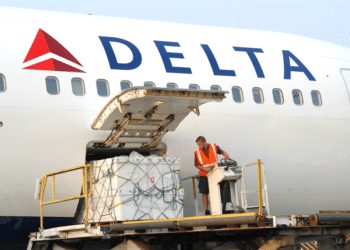
Delta Cargo has joined the CargoWise Carrier Connectivity Program, enabling freight forwarders to access the airline’s schedules, rates and available cargo capacity, and to manage bookings directly through the logistics platform. Announced by technology provider WiseTech Global, the integration establishes a real-time data connection between Delta Cargo and CargoWise. It is designed to streamline shipment planning, booking confirmation and booking management while reducing reliance on manual processes. Through the integration, freight forwarders can respond to customer enquiries using live capacity and pricing information, tailor bookings by commodity, configure routing options and amend reservations within CargoWise. The connection is intended to improve operational efficiency and give customers greater flexibility when arranging air freight shipments. Delta Cargo operates through the passenger network of Delta Air Lines, connecting more than 300 destinations across six continents. The airline’s investment in digital connectivity aims to make its cargo services more accessible through the platforms freight forwarders already use in their daily operations. Peter Penseel, president of Delta Cargo, said improving access to the airline’s services through customers’ preferred platforms was central to its digital strategy. He added that the integration would provide greater real-time visibility and reliability while creating a more seamless booking experience. Jorre Cobelens, vice president of logistics data, AI and connectivity at WiseTech Global, said the integration creates a direct commercial connection between the two platforms. He noted that freight forwarders would be able to act on current rates and capacity information, while Delta Cargo could benefit from more efficient digital connectivity across its operations. The CargoWise Carrier Connectivity Program links freight forwarders with participating carriers through a single platform integration. WiseTech Global said CargoWise customers include 23 of the world’s 25 largest global freight forwarders, providing participating airlines with access to a broad international forwarding network. North America accounts for almost a quarter of global air cargo demand measured in cargo tonne-kilometres, according to the IATA market statistics cited in the announcement. Delta Cargo’s digital investment is intended to strengthen its ability to serve this major market through faster and more flexible booking processes.
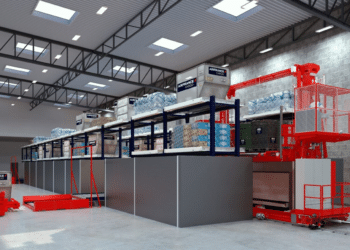
Efficient handling of temperature-sensitive cargo Air France KLM Martinair Cargo has commenced a project to expand and automate its perishables ...
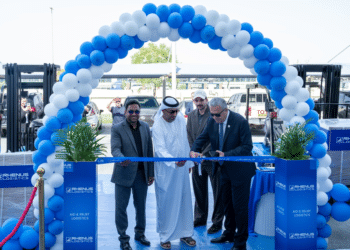
Rhenus has opened a dedicated Aid & Relief logistics office at Dubai Humanitarian, strengthening its presence in the humanitarian supply chain sector and positioning its team closer to organisations involved in international emergency response. The office was inaugurated during a ribbon-cutting ceremony on 14 October 2026. The move follows the launch of Rhenus’ humanitarian logistics offering in the United Arab Emirates earlier this year and represents a further step in the company’s expansion in the sector. During 2026, Rhenus established operations within Dubai Humanitarian, developed regional and cross-border transport solutions, obtained a Dubai Humanitarian Free Zone licence and expanded its network of humanitarian partners. From the new office, the company’s Aid & Relief team will coordinate air, ocean and road freight for essential relief consignments. These include medical products, pharmaceuticals, food aid, shelter materials and emergency response equipment. Hassan Alzeer, managing director of Rhenus Middle East, said the hub brings together organisations central to humanitarian response. Having a permanent presence there, he added, will enable closer collaboration with partners and help the company respond to their logistics requirements. Giuseppe Saba, CEO and board member of Dubai Humanitarian, said the company’s presence reinforces the hub’s model of humanitarian organisations and logistics providers working alongside one another to improve coordination, efficiency and emergency response capacity. Sayid Kunhipurayil, logistics development manager for Aid & Relief at Rhenus Middle East, said humanitarian shipments often operate under tight deadlines and in complex environments. He said the team would help organisations identify suitable transport routes, secure capacity and move essential supplies efficiently. The new office brings together Rhenus’ specialist Aid & Relief expertise and its global transport network, supporting the company’s longer-term commitment to humanitarian logistics.