
FIATA World Congress 2027 confirmed for Addis Ababa, Ethiopia

FIATA World Congress 2027 confirmed for Addis Ababa, Ethiopia

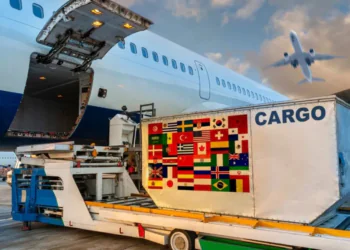
The International Federation of Freight Forwarders Associations (FIATA) will hold its 2027 World Congress in Addis Ababa, Ethiopia, from 5 to 7 October 2027, bringing the international freight forwarding and logistics community together to discuss the future of global trade and supply chains. The announcement follows the 2026 FIATA World Congress in Milan, Italy, which coincided with the federation’s centenary celebrations. The next edition will shift the focus to Africa, highlighting the continent’s role in international logistics, regional connectivity and the development of supply chain networks. The congress is expected to provide a platform for freight forwarders, logistics providers, policymakers and other industry stakeholders to exchange knowledge, build partnerships and discuss challenges affecting cross-border trade. Key issues facing the sector include geopolitical uncertainty, shifting trade routes, digital transformation and the need for more resilient supply chains. Hosting the event in Addis Ababa will also provide an opportunity to showcase Ethiopia’s logistics sector and examine opportunities to strengthen connections between African markets and global trade networks. Dawit Woubishet, chair of the local organising committee and FIATA Airfreight Institute chair, said the event would bring international industry leaders to Ethiopia and create opportunities to develop partnerships and strengthen connectivity across regions. FIATA Director General Dr Stéphane Graber said the congress would build on the federation’s 100-year history while addressing the priorities, partnerships and innovations expected to shape the future of freight forwarding and logistics. 
Cirium forecasts 747 new freighters as global aircraft deliveries reach 43,000 by 2045

Cirium forecasts 747 new freighters as global aircraft deliveries reach 43,000 by 2045

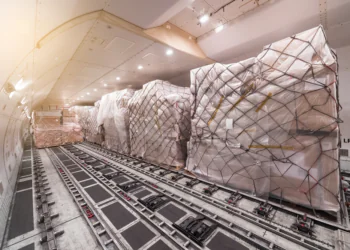
Cirium’s latest Fleet Forecast projects around 43,000 new commercial passenger and freighter aircraft deliveries worldwide between 2026 and 2045, with an estimated value of US$3.2 trillion. Within that outlook, approximately 747 new freighter aircraft are expected to be delivered over the next two decades, while the global freighter fleet is projected to grow at an annual rate of 2%. Released on 13 October 2026, the annual forecast from Cirium Ascend Consultancy points to sustained long-term demand for aircraft despite production constraints, higher fuel costs and geopolitical uncertainty. The outlook also reflects a more moderate delivery projection than Cirium’s 2025 forecast, which anticipated 46,500 deliveries valued at US$3.4 trillion. The report identifies manufacturing capacity, engine availability and supply-chain resilience as key factors shaping the industry’s ability to meet demand. Certification delays, rising costs and geopolitical disruption are also expected to affect the pace at which airlines can expand and renew their fleets. Stephen Burnside, global head of Cirium Ascend Consultancy, said long-term aircraft demand remained strong, but growth increasingly depended on the industry’s ability to deliver aircraft at the required pace. He highlighted supply-chain resilience, engine availability and scalable production as critical to meeting airlines’ fleet requirements. Air cargo outlook remains resilient Cirium’s assessment highlights the continuing role of e-commerce, high-value commodities and time-sensitive shipments in supporting air cargo demand, even as uncertainty over global trade reshapes established supply chains. The forecast does not eliminate the challenges facing cargo operators. Aircraft production constraints and engine availability could affect fleet expansion and replacement schedules, while higher fuel costs continue to put pressure on airline economics. Cirium expects conventional gas-turbine aircraft to remain the backbone of commercial aviation throughout the forecast period. Improvements in aircraft and engine efficiency, alongside fleet renewal, are therefore expected to remain important to managing fuel consumption as sustainable aviation fuel availability and cost continue to constrain adoption. For the wider aviation sector, the forecast underscores a central challenge: long-term demand for aircraft remains substantial, but the industry’s ability to convert that demand into deliveries will depend on production capacity, supply-chain resilience and the timely availability of engines.

Navi Mumbai International Airport reports 11,853 tonnes of cargo amid operational challenges

Navi Mumbai International Airport reports 11,853 tonnes of cargo amid operational challenges

Recently opened Navi Mumbai International Airport (NMIA) has reported handling 11,853 tonnes of cargo between January and September 2026, highlighting early freight activity as it works to address operational challenges affecting cargo operations. The airport also processed 24 scheduled and chartered international freighter flights after dedicated all-cargo operations began in August, marking an important step in the development of its air freight network. However, the ramp-up has been accompanied by operational difficulties. Reports from the Indian aviation sector have highlighted concerns over cargo-handling manpower, ground equipment availability, warehouse capacity and longer aircraft turnaround times. These issues have affected the reliability of freight operations during the airport’s early phase. The challenges have prompted some carriers to reassess their operations at NMIA. Cargo operator Challenge Group temporarily suspended its Mumbai freighter services, citing concerns about operational reliability and its ability to maintain service standards. 

FedEx Europe launches digital portal for temperature-controlled pharmaceutical shipments

FedEx Europe launches digital portal for temperature-controlled pharmaceutical shipments

FedEx Europe has launched a digital booking and shipment management portal for pharmaceutical and life sciences companies, aiming to simplify access to temperature-controlled transport services across 26 European markets ahead of the year-end peak shipping season. Announced in Hoofddorp on 13 October 2026, the platform provides customers with access to FedEx Temp-Assure Advantage, the company’s specialised solution for temperature-sensitive healthcare shipments. The portal is designed for pharmaceutical manufacturers, biotechnology companies and clinical trial operators. It enables customers to complete onboarding, order pre-conditioned packaging, schedule shipments and manage packaging returns through a streamlined digital process. The launch comes as pharmaceutical supply chains face growing demand for the reliable transportation of biologics, specialist medicines and vaccines. These products require carefully controlled temperatures to preserve product quality and efficacy throughout transit. FedEx Temp-Assure Advantage combines qualified packaging tested in the company’s packaging laboratory with its integrated European transportation network. The service supports frozen shipments between -25°C and -15°C, refrigerated cargo between 2°C and 8°C, and controlled room-temperature shipments between 15°C and 25°C. Vacuum-insulated packaging and phase-change materials are designed to maintain the required temperatures for more than 96 hours. FedEx also highlights its CEIV Pharma-certified facilities and standardised processes as measures supporting shipment control, visibility and compliance throughout the transport journey. The solution incorporates reusable packaging, with containers collected, refurbished and redeployed to help reduce waste while maintaining performance standards. Toby Hay, managing director of international marketing at FedEx Europe, said pharmaceutical supply chains increasingly require logistics providers that combine reliability, compliance and ease of access. He described the portal as an important step towards simplifying access to specialised temperature-controlled services and helping customers manage critical shipments more efficiently during the year-end peak season. The digital platform forms part of FedEx’s wider investment in customer-facing technology, with the aim of reducing manual processes and improving access to specialised healthcare logistics capabilities.

Asia Airfreight Terminal secures 15-year franchise renewal at Hong Kong airport

Asia Airfreight Terminal secures 15-year franchise renewal at Hong Kong airport

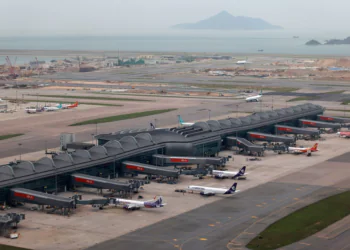
Asia Airfreight Terminal (AAT), a subsidiary of SATS, has renewed its operating franchise with Airport Authority Hong Kong (AAHK) for a further 15 years, extending its presence at Hong Kong International Airport (HKIA) through to 2043. The agreement covers the 2028–2043 period and comes as Hong Kong continues to invest in airport infrastructure and cargo connectivity to support the long-term development of its airfreight sector. Key developments include the full commissioning of HKIA’s three-runway system and improvements to multimodal links across the Greater Bay Area, which connect Hong Kong with major manufacturing and commercial centres in southern China. The renewal follows a similar move by Hong Kong Air Cargo Terminals Limited (Hactl), which secured a 15-year extension of its cargo-handling franchise in June 2026. Mike Chew, chief executive of AAT, said the company would continue investing in infrastructure, technology and operational capabilities, with a target of increasing cargo-handling capacity to two million tonnes to support the long-term development of Hong Kong’s air cargo industry. AAT has operated under a franchise awarded by AAHK since 1998. Its services range from physical cargo handling to documentation processing, supporting airline customers operating through HKIA. The terminal also operates COOLPORT, a specialised cold-chain facility with IATA CEIV Pharma, IATA CEIV Fresh and WHO Good Distribution Practices (GDP) Pharma accreditations. These capabilities support the handling of pharmaceutical products and fresh perishables requiring controlled conditions. 

Air Canada appoints FlyUs Aviation Group to support Puerto Rico cargo operations

Air Canada appoints FlyUs Aviation Group to support Puerto Rico cargo operations

Air Canada has appointed FlyUs Aviation Group as its general sales and service agent (GSSA) in Puerto Rico, strengthening its cargo sales support between San Juan and Toronto, with a particular focus on pharmaceutical shipments. Under the arrangement, FlyUs will support Air Canada’s cargo capacity on three weekly freighter flights between Luis Muñoz Marín International Airport (SJU) in San Juan and Toronto Pearson International Airport (YYZ), Air Canada’s hub. The service connects Puerto Rico with the airline’s wider cargo network. Pharmaceutical exports are a key focus of the appointment, reflecting the island’s importance as a bioscience manufacturing centre and the need for reliable air freight capacity for temperature-sensitive products. Carlo de Haas, president and chief executive officer of FlyUs Aviation Group, said Puerto Rico’s pharmaceutical manufacturing sector creates significant demand for dependable temperature-controlled air cargo services. He added that FlyUs has experience handling sensitive shipments, including pharmaceuticals, perishables and flowers. The appointment builds on an existing relationship between the two companies. FlyUs already represents Air Canada in Belgium, the Netherlands, Luxembourg, Ecuador and several Central American markets. Matthieu Casey, managing director of commercial cargo at Air Canada, said FlyUs had demonstrated its value through its performance in other markets, making the expansion into Puerto Rico a logical next step. He added that reliable cargo capacity from the island was an important part of the airline’s offering. The new office also forms part of FlyUs Aviation Group’s wider international expansion strategy. The company said it represents 24 airlines across 28 locations, with further office openings planned for the remainder of 2026 and into 2027.

Hermes Logistics Technologies promotes Upneesh Gill to Head of Product and Service Delivery

Hermes Logistics Technologies (HLT) has promoted Upneesh Gill to Head of Product and Service Delivery, recognising her experience in air cargo operations, customer relations and technology implementation. Gill has worked with HLT for nearly 15 years, building on earlier experience as a user of the company’s cargo management system while working at Menzies, where she managed cargo operations and customer satisfaction. Her background gives her direct insight into the operational requirements of cargo handlers and the technology needed to support their work. Since joining HLT, Gill has held roles in customer relations and service delivery, developing relationships with customers and supporting service delivery across the business. HLT chief executive Yuval Baruch said Gill’s combination of operational experience and long-standing customer relationships would be valuable as the company continues to develop its technology and services. “Her knowledge, experience and relationships make her an important part of our continued evolution as we enter this new chapter for Hermes,” Baruch said. Gill said her experience on both sides of the customer relationship had given her a perspective on how air cargo operations and technology have evolved. She added that she looked forward to helping shape the company’s products and services in her new role. The promotion comes as HLT advances its next-generation Hermes ecosystem, including hermesONE, which brings together operational systems, intelligence, mobile capabilities and artificial intelligence to support more connected cargo operations. 

Airlines warn of challenging winter as fuel costs and geopolitical risks mount

Airlines warn of challenging winter as fuel costs and geopolitical risks mount

Airlines are preparing for a difficult winter operating season as elevated fuel costs and geopolitical uncertainty put pressure on profitability, with industry leaders warning that smaller and mid-sized carriers could face serious financial challenges. The concerns, reported by the Financial Times, come ahead of the first winter season since the outbreak of the Iran war. Higher fuel expenses, disrupted air routes and uncertainty over regional security are adding pressure to airline operating costs and forcing some carriers to reassess capacity. International Airlines Group (IAG) chief executive Luis Gallego warned that smaller operators could struggle to remain financially viable over the coming months. Speaking to the Financial Times, he said some medium-sized and smaller airlines could face severe difficulties, with some potentially disappearing from the market. Several carriers have already adjusted their plans in response to the difficult operating environment. Lufthansa has reportedly reduced capacity in its winter schedule, reflecting the pressure airlines face as they balance demand, costs and operational risk. Fuel expenditure has become a particular concern for US airlines. Figures attributed to the US Bureau of Transportation Statistics in the supplied report put industry fuel spending at US$42.9 billion through August 2026, an increase of US$13.2 billion compared with the same period in 2025. Delta Air Lines has also reported a sharp rise in fuel expenses. According to the report, the carrier’s third-quarter fuel costs increased by 62% year on year, intensifying pressure on its financial outlook. Airline failures and regional disruption add to pressure The industry’s financial pressures have been compounded by the collapse of Spirit Airlines, which began winding down operations on 2 May 2026 after higher oil prices and other business pressures undermined its financial outlook. 

Frankfurt Airport cargo volumes rise 2.5% in September as belly-hold freight gains

Frankfurt Airport cargo volumes rise 2.5% in September as belly-hold freight gains

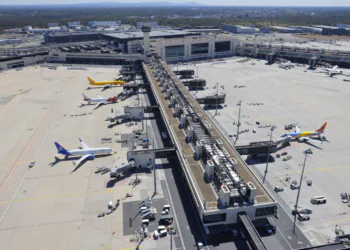
Frankfurt Airport recorded a 2.5% year-on-year increase in cargo throughput in September 2026, handling 174,773 metric tonnes of airfreight and airmail, according to traffic figures released by airport operator Fraport. The increase came despite a decline in aircraft movements. Frankfurt recorded 40,539 take-offs and landings during the month, down 3.5% compared with September 2025. Maximum take-off weights also fell by 1.2% to approximately 2.5 million metric tonnes. Cargo carried in passenger aircraft holds was a key contributor to growth. Belly-hold volumes increased by 6.6% to 72,500 tonnes, while cargo carried on dedicated freighter aircraft remained broadly stable at 102,200 tonnes, a marginal decline of 0.2%. The airport’s cargo performance reflected varied demand across international markets, with North America and several Asian, African and Latin American markets recording growth. However, lower volumes from China, Hong Kong and the Middle East weighed on selected trade lanes. Fraport’s September figures also showed a divergence between outbound and inbound flows. Cargo loadings rose by 7.0% year on year to 86,900 tonnes, while unloadings declined by 2.4% to 83,700 tonnes. Regional trade trends North America was a major contributor to September’s cargo performance. Traffic with the United States increased by 8.0%, while volumes with Canada rose by 1.0%. Outbound loadings to the US and Canada grew by 18.5% and 5.7%, respectively, although unloadings from both markets declined. Far East traffic increased by 3.2%, but performance varied across markets. Cargo volumes associated with China fell by 1.8% and Hong Kong by 7.4%. In contrast, India recorded growth of 14.9%, Taiwan 19.3%, Japan 11.2% and South Korea 3.2%. The shift towards belly-hold capacity on Far East routes continued. Belly-hold cargo rose by 12.3%, while freighter volumes slipped by 0.4%. Additional passenger services to China contributed to the increase in belly-hold capacity. Other intercontinental markets also posted strong gains. Cargo traffic with Africa rose by 22.0%, while Latin America increased by 20.5%. Mexico recorded particularly strong growth of 37.7%. Additional belly-hold capacity supported volumes associated with South Africa and Kenya. By contrast, traffic with the Middle East declined by 16.3%, reflecting continued reductions in flight capacity. Continental cargo traffic fell by 10.0%, mainly following Lufthansa Cargo’s discontinuation of its A321 converted freighter network.

Page 9 of 880 1 … 8 9 10 … 880