
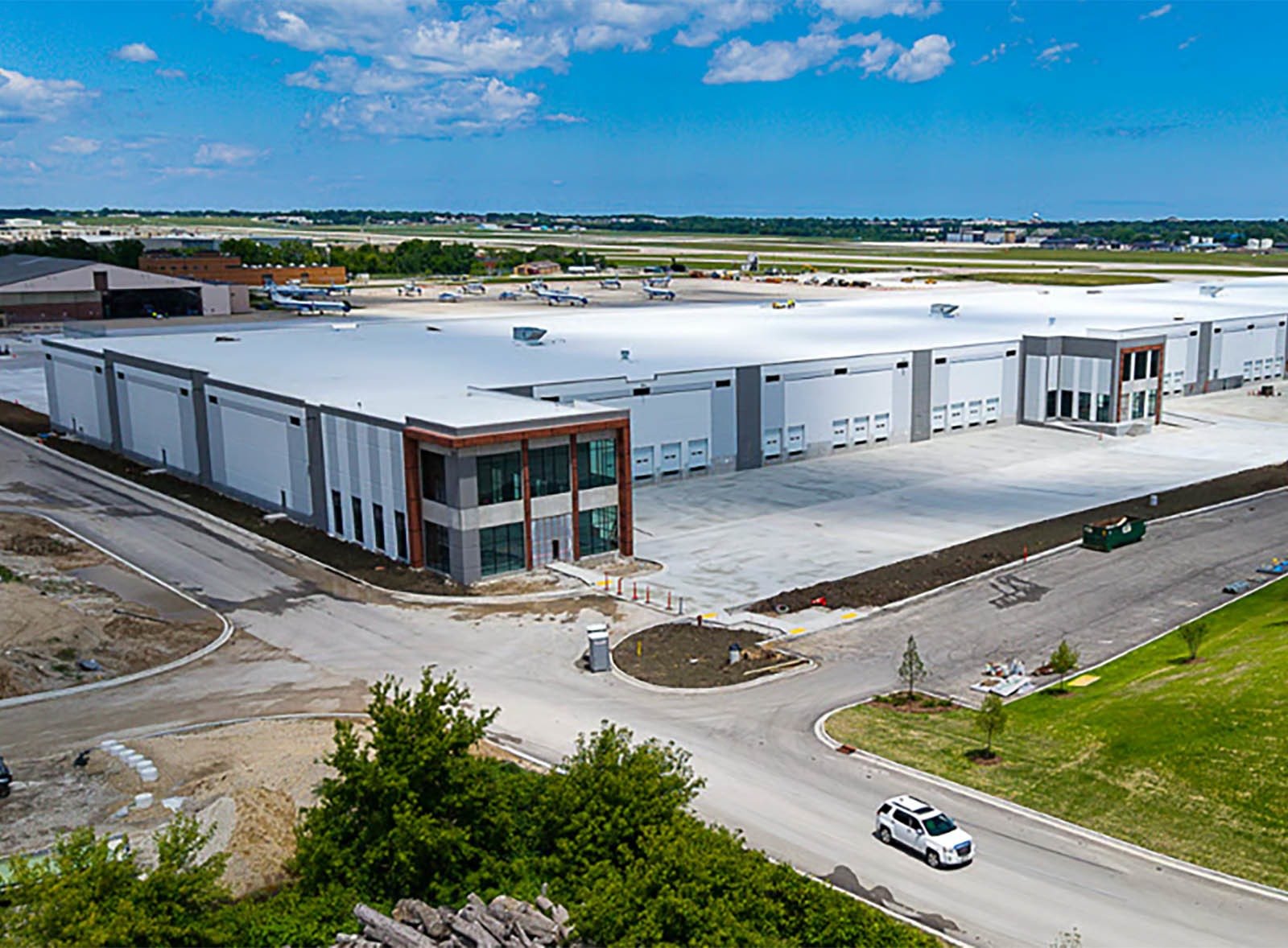
Milwaukee Mitchell International Airport (MKE) has completed a new 337,000-square-foot air cargo centre designed to expand freight-handling capacity, attract additional cargo operators and strengthen Wisconsin’s access to domestic and international markets.
The facility was officially opened on 14 October through a ribbon-cutting ceremony involving the airport and real estate investment firm Crow Holdings, which partnered with Milwaukee County on the development.
Located at the MKE Regional Business Park on the former site of the 440th Airlift Wing, the new centre is designed to accommodate up to five Boeing 747-400 aircraft simultaneously. Construction began in February 2025, following several years of planning and development.
Related Post

The project provides additional infrastructure for wide-body freighter operations and aims to position Milwaukee as an alternative gateway for shippers and logistics providers seeking to avoid congestion, delays and higher operating costs associated with airports in neighbouring Illinois, particularly Chicago O’Hare International Airport.
New capacity targets Wisconsin’s manufacturing sector
Airport officials expect the development to improve freight access for manufacturers, distributors and logistics companies across Wisconsin and the wider Midwest. By providing dedicated air cargo infrastructure, MKE aims to attract additional freighter services and enable businesses to move raw materials and finished products more efficiently.
The airport forecasts that the facility will generate more than US$1.3 million annually in aircraft landing fees, alongside more than US$1 million in ground lease rents and other fees. The combined projected revenue exceeds US$2.3 million a year.
The development is also expected to support employment growth and stimulate additional commercial activity in the surrounding region as cargo operators and logistics businesses establish or expand their presence at the airport.
Airport director Brian Dranzik described the opening as a significant milestone for Milwaukee and Wisconsin, highlighting the transformation of previously underutilised airport property into infrastructure intended to support regional businesses and economic development.
The project forms part of a public-private partnership between Milwaukee County and Crow Holdings. The airport provided the land, while the development partner supplied the investment needed to construct the cargo facility.
Infrastructure investment supports larger freighter operations
The new centre forms part of a broader effort to strengthen MKE’s competitiveness in the air freight market. Its location near major road connections and within reach of the Chicago metropolitan area offers potential advantages for shippers seeking additional routing options.
The ability to accommodate five Boeing 747-400 aircraft simultaneously provides scope for large-scale freighter operations, although the facility’s ultimate throughput will depend on airline participation, cargo demand, handling arrangements and the development of supporting services.
The airport and its development partner are targeting cargo operators and logistics providers that could benefit from dedicated facilities and an alternative to more congested regional gateways. The project is also intended to improve Wisconsin’s ability to retain freight-related business and revenue within the state.
Cargo expansion accompanies passenger terminal development
The cargo centre is part of a wider programme of infrastructure investment at Milwaukee Mitchell International Airport. Work on the redevelopment of Concourse E, which is intended to improve international passenger facilities, began in September 2025.
While the passenger project focuses on international travel and terminal capacity, the new cargo centre addresses the requirements of freight operators, manufacturers and supply-chain businesses.
The completion of the air cargo facility marks an important step in MKE’s efforts to broaden its role in regional logistics. Its longer-term impact will depend on attracting sustained freighter activity, securing cargo-handling operators and converting the additional infrastructure into increased freight volumes.
For Wisconsin businesses, the centre offers the prospect of greater flexibility in routing goods through the air transport network. For the airport, it creates an opportunity to develop a stronger cargo business alongside its established passenger operations.