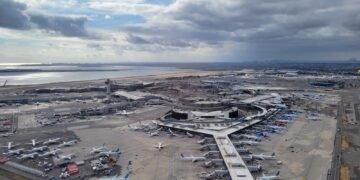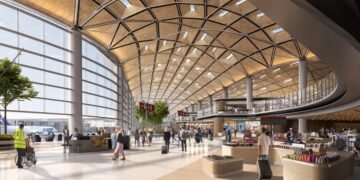

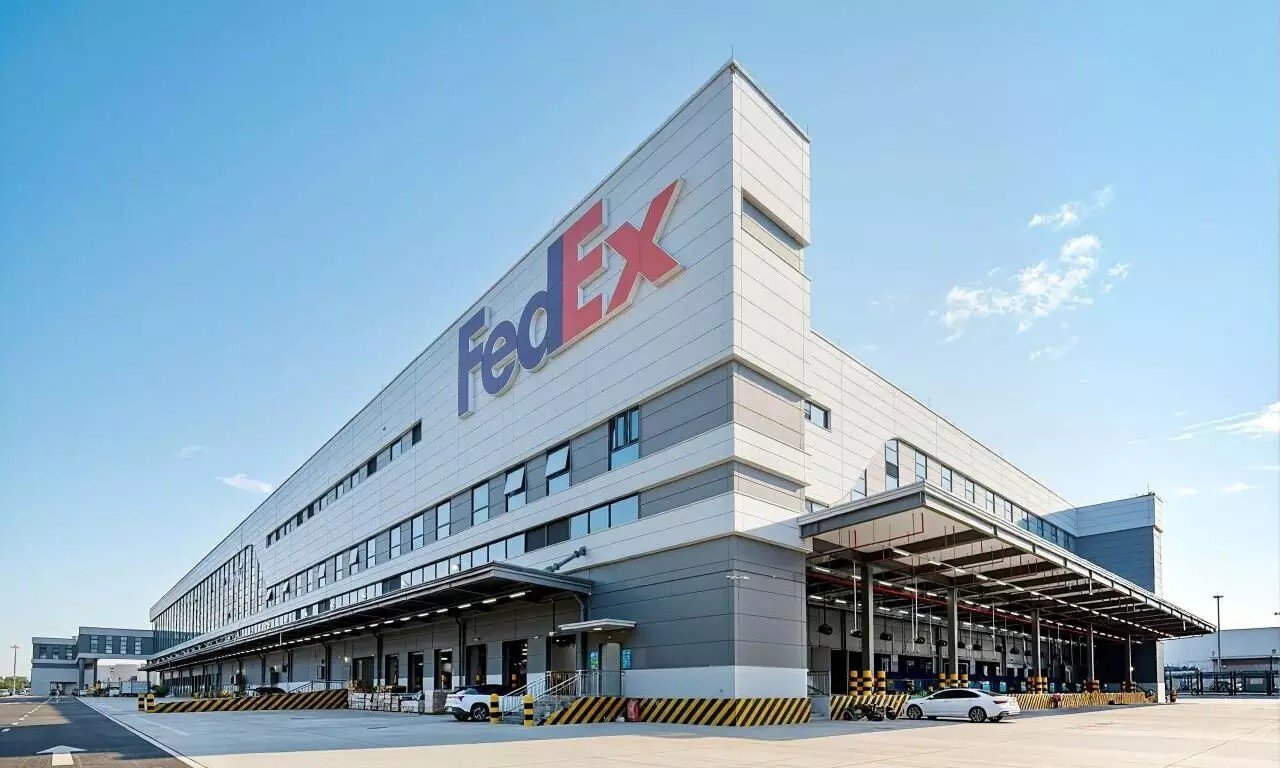
FedEx has officially opened a major new international cargo terminal at Guangzhou Baiyun International Airport in southern China, significantly expanding its handling capacity and strengthening connections between the Greater Bay Area, Asia-Pacific and international markets.
Developed in collaboration with Guangdong Airport Authority, the FedEx Guangzhou Baiyun Airport International Cargo Terminal 4 represents a significant investment in the company’s Chinese logistics infrastructure, supporting growing cross-border trade and demand for international express and freight services.
Covering approximately 45,000 sq m, the new facility integrates warehousing, automated sorting operations and customs supervision within a single air cargo complex. Designed to handle both express parcels and general freight shipments, it can process up to 28,000 shipments per hour at peak capacity, more than tripling FedEx’s previous processing capability at the airport.
Related Post


The terminal has an annual cargo handling capacity exceeding 100,000 metric tonnes, providing additional infrastructure to support growing shipment volumes from one of China’s most important manufacturing and export regions.
Advanced automation and intelligent cargo handling
Technology and automation are central to the new terminal’s operational design.
FedEx has incorporated artificial intelligence, automated sorting systems and radio frequency identification (RFID) technology to improve processing efficiency, shipment visibility and handling accuracy.
The integrated systems enable the company to maintain sorting accuracy above 99%, supporting the efficient movement of high volumes of international shipments through the facility.
A smart customs-supervised warehouse is another important component of the development. Supported by digital documentation, advance declarations and intelligent alert systems, the facility is designed to streamline customs procedures and reduce shipment clearance times.
The combination of warehousing, sorting and customs supervision within one complex is expected to improve coordination across cargo handling operations and facilitate faster movement of shipments through the international logistics network.
Strengthening Greater Bay Area connectivity
The new terminal will operate alongside FedEx’s existing Asia-Pacific hub at Guangzhou Baiyun International Airport, strengthening the company’s integrated air network and improving connections between southern China and major international markets.
The expanded infrastructure is expected to support cargo movements across Asia, Europe, the Middle East and the Americas, providing businesses with additional access to international supply chains.
The development is particularly significant for the Guangdong-Hong Kong-Macao Greater Bay Area, a major manufacturing, technology and international trading centre.
According to figures cited in FedEx’s announcement, the region’s nine mainland Chinese cities recorded combined imports and exports of US$1.26 trillion during the first three quarters of 2026, accounting for 21% of China’s total foreign trade.
The region’s strong manufacturing and export base generates substantial demand for international express transportation, air freight and cross-border logistics services.
Industries expected to benefit from the additional capacity include manufacturing, e-commerce, healthcare, cold chain logistics and high-value technology.
Salil Chari, President of FedEx Asia-Pacific, said the investment reinforces the company’s commitment to supporting businesses in China and across the wider region.
He highlighted the importance of reliable international connectivity, resilient supply chains and access to global markets in helping businesses expand their international operations.
Sustainability incorporated into terminal design
The new Guangzhou facility also incorporates energy-efficient infrastructure and equipment intended to reduce the environmental impact of cargo handling operations.
Features include natural daylighting, intelligent lighting systems and green landscaping, alongside electric forklifts and dedicated charging infrastructure.
Intelligent energy management systems have also been incorporated to improve energy efficiency across the facility.
These measures form part of FedEx’s wider commitment to improving the environmental performance of its global operations, with the company targeting carbon-neutral operations by 2040.
Guangzhou network expansion gathers momentum
The opening of the new terminal follows several developments aimed at strengthening FedEx’s air cargo connectivity through Guangzhou.
In August 2026, the company introduced a dedicated non-stop freighter service between Guangzhou and Sydney, operating five times weekly with Boeing 777 freighter aircraft.
The service was designed to increase cargo capacity between Asia and Australia, providing improved connections for shipments originating in southern China and other major Asian markets, including Hong Kong, Japan, South Korea, Malaysia, Thailand and the Philippines.
Selected shipments benefit from transit times of up to one day faster, with deliveries to Australia possible in as little as two business days, subject to service conditions.
Earlier, in June 2026, FedEx signed a strategic memorandum of understanding with China Southern Air Logistics to explore closer cooperation across international flight connectivity, hub operations, network planning, fleet resources, ground handling and digitalisation.
The agreement aims to combine the companies’ respective operational capabilities to improve network efficiency and strengthen international air logistics services.
Expanding capacity to support global trade
The new Guangzhou terminal represents another important step in FedEx’s strategy to expand its Asia-Pacific infrastructure and strengthen its international logistics network.
By combining increased cargo handling capacity, advanced sorting technology, integrated customs facilities and improved international connectivity, the development is expected to support the growing transportation requirements of businesses operating across southern China and global markets.
As manufacturers and exporters increasingly seek faster and more reliable international logistics solutions, the expanded facility strengthens Guangzhou’s role within FedEx’s global air freight and express network.
The investment also reinforces the strategic importance of the Greater Bay Area as a major gateway for China’s international trade, with additional logistics infrastructure supporting the region’s expanding connections to global markets.