
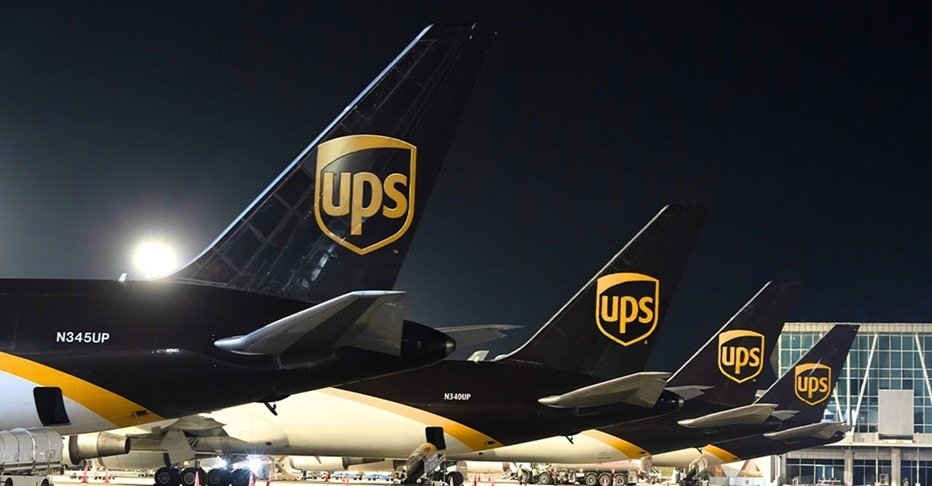
UPS has officially opened its expanded international air cargo hub at Clark International Airport in the Philippines, marking an investment of more than US$80 million aimed at strengthening its Asia-Pacific logistics network and improving connectivity across major global trade routes.
The new facility, covering 30,000 sq m (323,000 sq ft), is 15 times larger than the company’s previous Clark operation, which began operations in 2002. The expansion increases average daily package processing volumes to approximately 46,000, while maximum sorting capacity rises to 15,000 packages per hour.
The development represents a significant upgrade to UPS’s Philippine operations, strengthening its ability to handle growing shipment volumes and specialised cargo requirements across healthcare, high technology and advanced manufacturing.
Related Post



The new hub was inaugurated on 15 October by Philippine President Ferdinand Marcos Jr., alongside senior UPS executives and government representatives.
Increased processing capacity and automation
The expanded Clark facility incorporates an automated sorting infrastructure designed to improve shipment throughput, handling efficiency and operational reliability.
A dedicated automated small-package sorting system can process up to 9,000 packages weighing less than three kilograms per hour, supporting the efficient movement of e-commerce shipments and other smaller consignments.
With maximum overall processing capacity of 15,000 packages per hour, the facility provides substantially greater operational capability than the previous hub, which handled approximately 5,000 packages daily and had a maximum processing rate of 1,250 packages per hour.
The increased capacity is expected to support UPS customers across more than 1,100 international trade lanes, providing improved connections between the Philippines and major markets throughout Asia-Pacific, India, Europe and North America.
Dedicated infrastructure for healthcare and specialised cargo
A key feature of the new facility is its expanded capability to handle time-sensitive and temperature-controlled shipments.
The hub includes three refrigeration and freezer units operating across temperature ranges from -20°C to +25°C, alongside dedicated re-icing facilities to support specialised healthcare logistics requirements.
UPS has also incorporated its Premier RFID technology, providing enhanced shipment visibility, monitoring and priority handling for critical healthcare consignments.
These capabilities are particularly relevant for pharmaceutical products, medical supplies, vaccines and other temperature-sensitive shipments where maintaining appropriate handling conditions throughout transportation is essential.
The specialised infrastructure is also designed to support customers in high-tech and manufacturing sectors, where shipment integrity, reliability and delivery timelines are critical.
Electrification of ground operations
The Clark expansion also incorporates sustainability-focused improvements across its ramp and ground-handling operations.
UPS has introduced electric ground support equipment, including cargo tractors, belt loaders, cargo loaders, ground processing units and forklifts.
The Philippine Presidential Communications Office reported that the facility was expected to operate 17 electric ground service vehicles and equipment units, with additional units scheduled for delivery in 2027.
The deployment forms part of UPS’s wider efforts to improve operational efficiency and reduce emissions associated with its ground operations.
The new facility has also created nearly 600 jobs, providing additional employment opportunities in operations, security, information technology and mechanical services.
170 weekly flights strengthen international connectivity
The expanded hub is supported by UPS’s existing air network at Clark, where the company currently operates approximately 170 weekly flight segments.
These services connect businesses in the Philippines with major commercial markets across Asia-Pacific, India, Europe and the United States.
The upgraded facility is expected to improve shipment transit times across more than 1,100 global trade lanes, with selected services benefiting from delivery improvements of up to two days.
Among the planned service enhancements are faster connections to and from eastern China and other major Asia-Pacific markets, as well as improved transit times between several Southeast Asian destinations and India.
UPS also expects improvements in Philippine export and import services across its international network, including earlier delivery times and extended pickup cut-off windows in selected markets.
The company said the improvements would provide customers with greater flexibility in managing international shipments while supporting the movement of high-value and time-critical goods.
Strategic investment in the Asia-Pacific network
Russell Reed, Managing Director of UPS Philippines, said the opening represented an important milestone for the company and its customers.
He highlighted the long-standing relationship between UPS and Clark, where the company established its first hub in 2002, and said the expanded facility would support future growth in the Philippines and across the wider region.
The investment also reflects UPS’s strategy of strengthening its international logistics infrastructure amid changing trade patterns, increasing supply chain complexity and growing demand for specialised transportation services.
Bernard Jiang, President of UPS Asia Pacific, said the Clark development was part of a sustained, multi-year investment programme first announced in 2024.
“When we first announced plans to build our new Clark hub in 2024, it was the beginning of a sustained, multi-year investment strategy to strengthen our Asia Pacific network and give our customers faster connections to support growing trade flows across the region,” Jiang said.
He added that the company would continue investing in regional infrastructure to improve connectivity, service reliability and supply chain resilience.
Part of a wider regional expansion programme
The new Clark hub is the latest in a series of significant infrastructure investments by UPS across Asia-Pacific.
In March 2026, the company opened its largest logistics centre in the region in Taiwan, while also breaking ground on a new air cargo hub at Hong Kong International Airport.
The company also completed a major expansion of its Incheon Airport hub in South Korea in April.
These developments form part of UPS’s wider investment programme to strengthen its international logistics capabilities, improve handling efficiency and expand specialised services for healthcare, technology, automotive and industrial manufacturing customers.
The Clark facility is particularly important for the Philippines, providing additional international cargo processing capacity while strengthening the country’s connections with major global markets.
With its expanded sorting infrastructure, specialised temperature-controlled facilities, electric ground-handling equipment and extensive flight network, the new hub positions Clark as an increasingly important component of UPS’s Asia-Pacific logistics operations.
The investment also reinforces the airport’s growing role in supporting international trade, regional distribution and the Philippines’ expanding air cargo sector.