
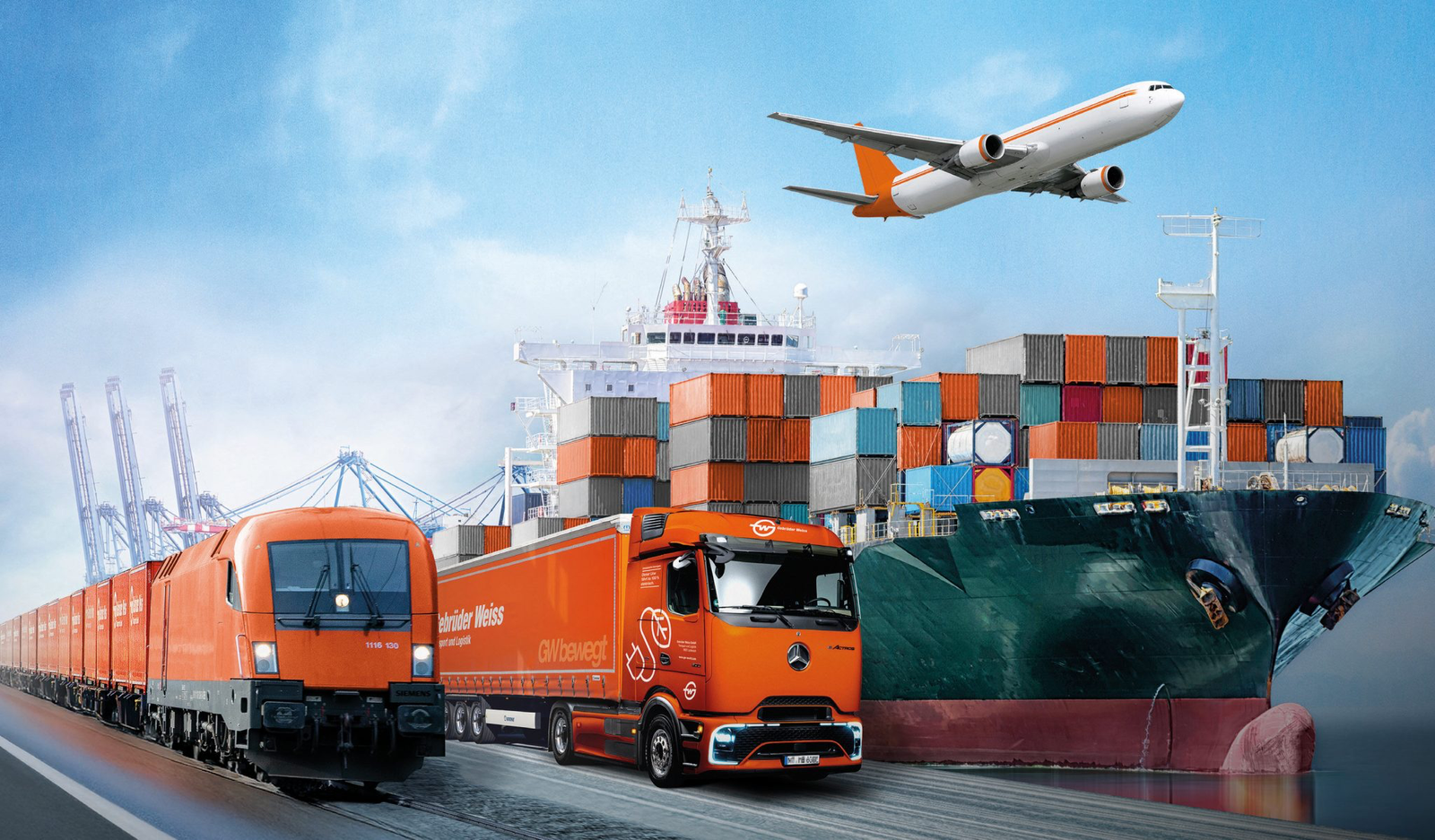
Despite a demanding economic backdrop in 2025, global transport and logistics provider Gebrüder Weiss reported sustained volume growth across its Air & Sea division and recorded modest gains in overall net revenue, underpinned by strategic investments and operational resilience.
According to the company’s full‑year results, cargo volumes handled by the Air & Sea division increased year‑on‑year, driven particularly by expanding trade flows between Europe and Asia and within Asian markets. The uptick in airfreight volumes was especially notable on e‑commerce corridors linking China and Europe, reflecting the continued strength of cross‑border online trade.
However, overall revenue for the Air & Sea division declined slightly to €913 million in 2025, compared with €929 million in 2024, as a result of downward pressure on both air and sea freight rates. The contraction in freight yields tempered top‑line performance even as throughput grew.
Logistics and Supply Chain Performance
In contrast to the freight segment, Gebrüder Weiss posted solid year‑on‑year gains in its logistics operations. Revenues from contract logistics and supply chain management rose 7% to €147 million, reflecting growing demand for tailor‑made solutions and data‑driven supply chain optimisation services.
The company’s supply chain division has increasingly leveraged analytics and digital tools to deliver greater efficiency and visibility for customers, supporting complex end‑to‑end logistics flows in a fragmented market environment.
Across all business units, Gebrüder Weiss reported total net revenue of €2.73 billion in 2025, a slight increase over the previous year’s €2.71 billion. While the headline growth was incremental, the company emphasised that it concurrently expanded market share and improved productivity — key indicators of operational strength amid global headwinds.
Leadership Response to External Pressures
Commenting on the results, Gebrüder Weiss Chief Executive Wolfram Senger‑Weiss acknowledged the difficulties faced by the logistics industry last year, particularly in the company’s core Central European markets.
“The economic climate proved challenging in 2025 — particularly in our core markets in Central Europe,” Senger‑Weiss said.
“The fact that we nonetheless posted growth, and were simultaneously able to continue investing, demonstrates the performance and financial strength of our organisation.”
He noted that Europe remains the company’s primary operational base and investment focus, even as Gebrüder Weiss pursues network expansion into high‑growth global markets.
Addressing broader geopolitical and macroeconomic uncertainties, Senger‑Weiss warned that disruption risks are set to persist into 2026.
“The uncertainties pervading global trade will continue to impact us all in 2026,” he said.
“The most recent escalation in the Middle East has further aggravated geopolitical tensions, demonstrating how quickly global supply chains can face disruption.”
He stressed the importance of resilient transport networks and reliable logistics partners in navigating volatility, underscoring the company’s strong financial foundation and ongoing investments in technology and infrastructure as key to supporting clients in turbulent times.
Leadership Transition in Air & Sea Operations
In a significant leadership development, Gebrüder Weiss announced the appointment of Alessandro Cacciola as Chief Operating Officer Air & Sea and a new member of the executive board, effective 1 March 2026. Cacciola succeeds Lothar Thoma, who will depart the company for personal reasons on 31 March, formally handing over operational responsibility to his successor.
The transition marks the next step in the company’s executive evolution as it seeks to align leadership with strategic priorities in global air and sea freight operations.