
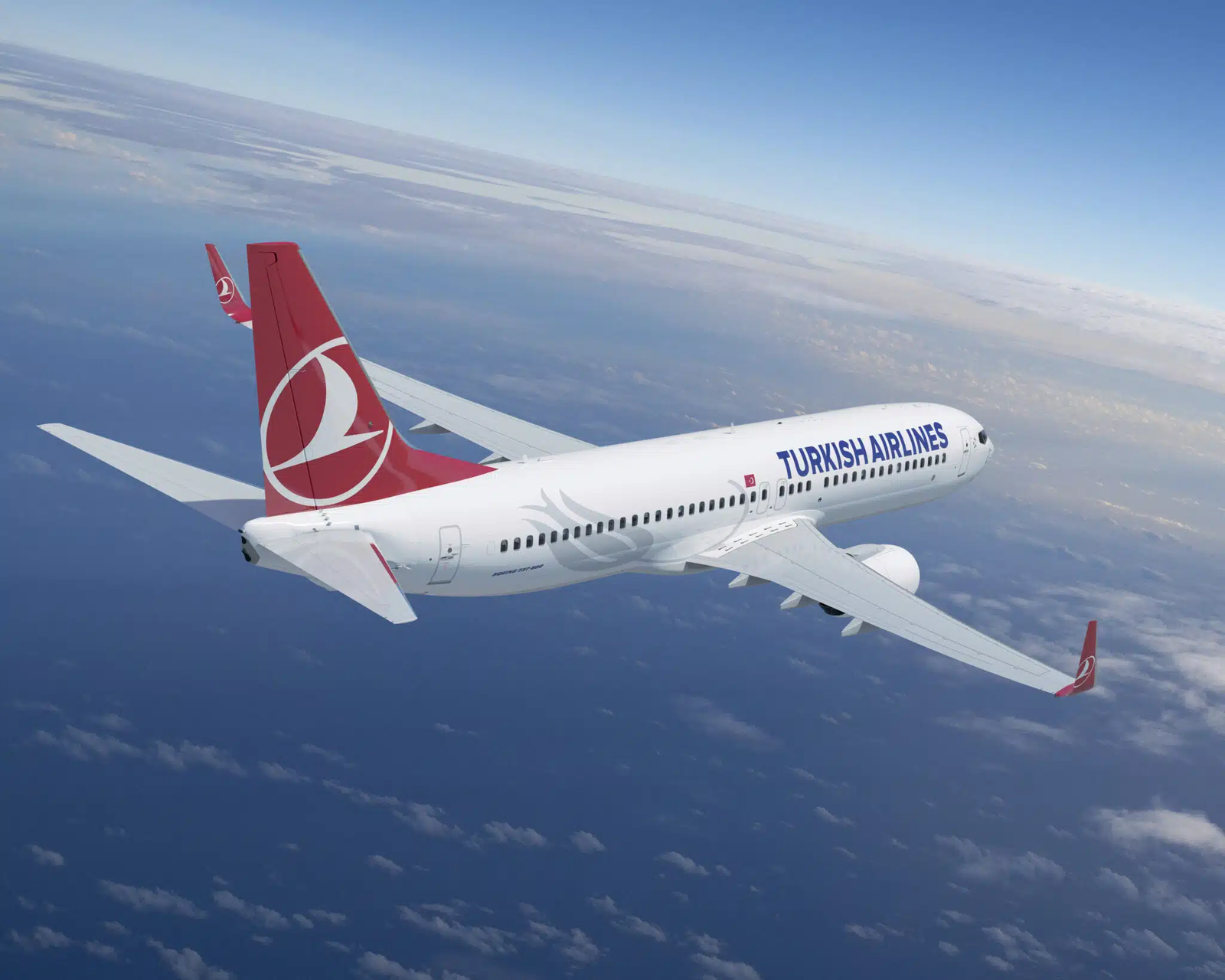
Turkish Airlines has unveiled ambitious plans to build what it describes as the world’s largest cargo terminal alongside a new in-flight catering facility, backed by an investment of 100 billion Turkish liras (more than USD 2.3 billion). The landmark project is expected to generate 26,000 new jobs and underscores Türkiye’s accelerating growth in both the aviation and logistics sectors.
The announcement was reported by the state-run news agency Anadolu Ajansı. While the airline has yet to disclose the exact location of the developments, Istanbul—Türkiye’s commercial capital and home to two major international aviation hubs—is widely viewed as the most likely site.
“Türkiye is growing, Turkish Airlines is soaring,” the flag carrier said in a post on Turkish social media platform NSosyal, framing the investment as a symbol of national economic momentum. The airline added that the scale of the cargo terminal and catering facility reflects both its global ambitions and Türkiye’s expanding role in international trade and air transport.
Related Post
“As Türkiye’s flagship brand, this pride makes us proud,” the airline noted, highlighting the strategic importance of the project not only for Turkish Airlines but also for the wider economy.
Istanbul-based Turkish Airlines is already among the world’s largest carriers by network reach, transporting more than 85 million passengers and approximately 2 million tonnes of cargo annually. Its cargo arm, Turkish Cargo, has been a key growth driver, supported by Istanbul’s emergence as a leading global logistics hub linking Europe, Asia, Africa and the Middle East.
The proposed investment aligns closely with the airline’s long-term growth strategy. Earlier this week, Turkish Airlines CEO Bilal Ekşi said the carrier aims to rank among the world’s top five airlines by 2033. Under its long-term fleet plan, Turkish Airlines targets a total fleet of 813 aircraft by that year, up from 514 aircraft at the end of 2025.
If realised as outlined, the new cargo terminal and catering facility would significantly expand Turkish Airlines’ infrastructure capabilities, strengthening its position in the global air cargo market while reinforcing Istanbul’s status as a critical crossroads for international aviation and logistics.