
Brussels Airport (BRU) is positioning itself at the forefront of next-generation healthcare logistics, launching a series of transatlantic test shipments aimed at establishing global transport standards for precision therapies. The Belgian hub has dispatched initial consignments of human cell and blood material to Dallas Fort Worth International Airport (DFW), marking a significant milestone in the Precision Therapy Logistics Gateway (PTLG) project.
The initiative focuses on analysing how highly sensitive, patient-specific treatments—including cell, gene, and radioligand therapies used in cancer and rare disease care—can be transported safely, rapidly, and reliably across international supply chains. A core objective is to identify risks and bottlenecks in existing logistics processes and lay the groundwork for the first internationally recognised protocol for the air transport of such therapies.
Building a Standard for a Growing Medical Segment
Launched in early 2025, the PTLG project is a collaborative effort involving Brussels Airport, Pharma.Aero, Air Cargo Belgium, and at.las, the Antwerp ecosystem for Advanced Therapy Medicinal Products (ATMP). The project is co-funded by the provinces of Antwerp and Flemish Brabant, reflecting regional support for innovation in healthcare logistics.
Related Post



Since November, 10 test shipments of cell and blood samples—sourced from healthy donors—have been transported from BRU to BioLabs Pegasus Park in Dallas via DFW, with a further 50 shipments scheduled in the coming weeks. Research samples are provided by the Laboratory of Experimental Haematology at the University of Antwerp and originate at the Centre for Cell Therapy and Regenerative Medicine (CCRG) of Antwerp University Hospital (UZA).
Following completion of the test phase, project partners aim to develop a globally recognised standardised protocolfor precision therapy logistics—an area that currently lacks uniform international guidelines. BRU is also evaluating the feasibility of establishing a dedicated logistics centre within its cargo zone to support this specialised segment.
Controlled Chain, Data-Driven Insights
Precision therapies demand exceptionally tight control of temperature, lead times, and traceability, given their sensitivity and patient-specific nature. Upon arrival at Brussels Airport, test shipments undergo customs clearance before being stored in temperature-controlled facilities within the cargo area. BRU’s pharma infrastructure includes approximately 45,000 square metres of temperature-controlled storage, underscoring its established role in pharmaceutical air freight.
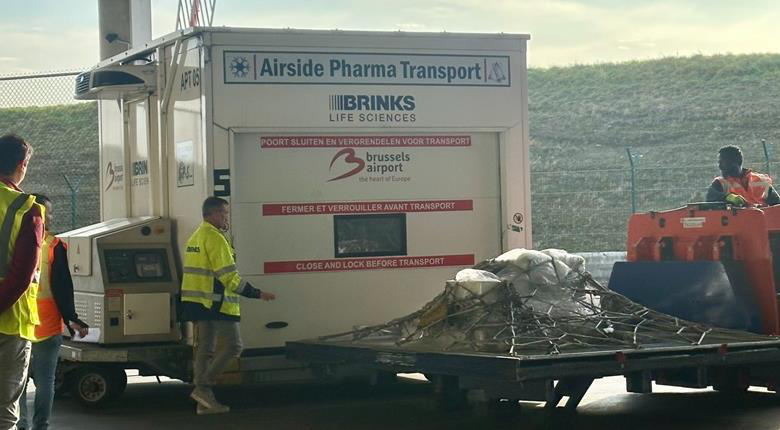
Shipments are transferred to aircraft using refrigerated containers developed by BRU, designed to maintain optimal environmental conditions during transit. Advanced sensors accompany each consignment, monitoring critical parameters such as transit times, temperature stability, and chain-of-custody data. This real-time monitoring enables stakeholders to pinpoint vulnerabilities and performance gaps throughout the logistics chain.
In Dallas, the material is delivered to a laboratory at BioLabs Pegasus Park for visual inspection before being returned to Belgium. Upon its return, the shipment is received again at the CCRG facility, completing a full end-to-end test cycle.
Passenger Belly Capacity as a Model
The consignments are transported as small shipments in the belly holds of passenger aircraft, demonstrating a scalable model that leverages existing air networks. This approach allows therapies to move internationally without requiring patients to travel—an important factor in expanding access to advanced treatments.
Arnaud Feist, Chief Executive of Brussels Airport, said the project reinforces BRU’s ambition to lead in specialised healthcare logistics. He noted that the production and application of precision therapies in Belgium are expected to rise significantly in the coming years, requiring logistics systems built on speed, precision, and reliability.
Strategic Role in Future Healthcare Supply Chains
As the healthcare industry shifts toward personalised medicine, logistics providers face increasing demands for ultra-secure, temperature-stable, and time-critical transport solutions. Through the PTLG project, Brussels Airport and its partners aim not only to future-proof their own operations but also to help define the global framework for moving advanced therapies safely across borders.
Results from the test phase are expected in the first half of the year. The findings will inform the development of standardised procedures and potential infrastructure investments, positioning BRU as a key node in the emerging global network for precision therapy logistics.