

CEVA Logistics has expanded its collaboration with Lufthansa Cargo on the use of sustainable aviation fuel (SAF), formalising a long-term agreement that underscores both companies’ commitment to reducing carbon emissions in air freight operations.
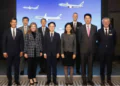
The renewed partnership, which runs through to the end of 2028, builds on a previously established memorandum of understanding and transitions the relationship into a structured, multi-year framework. The agreement was signed during CEVA’s Airfreight Annual Strategic Partners Council held in Paris, highlighting the strategic importance of sustainability within the company’s global airfreight agenda.
As part of the arrangement, CEVA will utilise SAF credits in 2025, a move expected to deliver a reduction of approximately 8,000 tonnes of carbon dioxide emissions. The initiative is designed to enable measurable and verifiable emissions savings across the company’s air cargo activities, aligning with broader industry decarbonisation targets.

Both companies emphasised that the partnership reflects a long-standing relationship built on transparency, continuous collaboration and knowledge exchange. The extended agreement further deepens this cooperation, with a shared focus on advancing sustainable logistics solutions and accelerating the adoption of lower-emission technologies within the air freight sector.
The SAF deployed under the agreement is derived from waste and residual feedstocks, avoiding the use of palm oil and complying with internationally recognised sustainability standards. Emissions reductions associated with its use will be independently verified through certified processes, ensuring accountability and credibility in reporting.
The collaboration also forms part of a wider strategic push by both organisations to promote sustainable air cargo. This includes joint initiatives, innovation programmes and closer alignment on decarbonisation pathways, as the industry seeks scalable solutions to reduce its environmental footprint.
With regulatory pressure and customer demand for greener supply chains continuing to intensify, long-term SAF agreements such as this are increasingly seen as critical mechanisms for driving progress in aviation sustainability while maintaining operational reliability.