
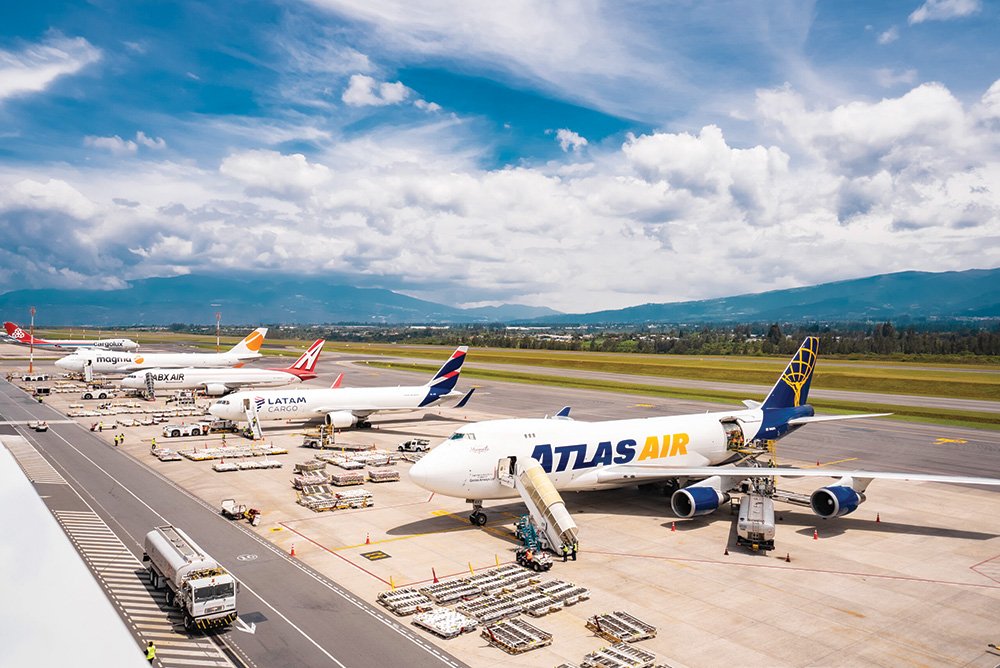
Flower exports for Mother’s Day from Quito’s Mariscal Sucre International Airport in 2026 increased by 16% compared to the 2025 season, consolidating this date as the second most important period for flower exports by air after the Valentine’s Day season.According to information gathered by Corporación Quiport, between April 16 and May 6 — over a 21-day period — approximately 24,800 metric tonnes of flowers were exported, surpassing the 21,300 metric tons exported from Quito Airport during the 2025 season.Ecuador’s flower export sector has delivered another strong signal of resilience and global demand, with Mariscal Sucre International Airport recording its highest-ever Mother’s Day export performance in 2026—further strengthening the airport’s position as one of Latin America’s fastest-growing air cargo gateways. According to Corporación Quiport, the operator of Quito’s international airport, flower exports during the 2026 Mother’s Day season rose 16 percent year-on-year, consolidating the period as Ecuador’s second most important flower export window after Valentine’s Day. Between April 16 and May 6, over a 21-day export cycle, approximately 24,800 metric tonnes of flowers moved through Quito by air, significantly surpassing the 21,300 metric tonnes handled during the corresponding 2025 season. The latest performance reflects sustained momentum in Ecuador’s floriculture supply chain, supported by strong international demand, coordinated airline capacity and highly specialised cold-chain handling infrastructure.
Peak-day performance highlights operational scalability
The season’s busiest export day was recorded on April 29, when Quito processed 1,641 metric tonnes of flower shipments in a single day—an increase of 4.1 percent over the peak day registered during the 2025 campaign. While Mother’s Day export volumes remained approximately 15 percent below Valentine’s Day throughput, the gap continues to narrow. In 2025, Valentine’s volumes exceeded Mother’s Day shipments by 25 percent, indicating that Mother’s Day is becoming an increasingly strategic commercial period for Ecuador’s floriculture exporters and air logistics partners.




Quito strengthens role as Latin America’s floral cargo gateway
For Ramón Miró, the latest milestone reflects more than seasonal demand—it underscores Quito’s emergence as a strategic cargo hub in the region. Miró said the airport has been breaking historical cargo records every year since 2022, helping position Quito among the most important air freight gateways in Latin America and the Caribbean while driving export growth and economic development across Ecuador. That growth is now being reflected in regional rankings. According to the latest cargo performance report published by Airports Council International Latin America and Caribbean on May 6, Quito climbed from fifth to fourth place among Latin America and Caribbean airports for air cargo throughput. The Ecuadorian gateway now ranks behind only El Dorado International Airport, São Paulo/Guarulhos International Airport, and Felipe Ángeles International Airport, overtaking Arturo Merino Benítez International Airport and other major regional cargo gateways. ACI-LAC data shows Quito handled 405,024 metric tonnes of cargo in 2025, representing an 11 percent increase year-on-year, with flowers accounting for more than 92 percent of export cargo volumes moving through the airport.
Cold-chain precision driving Ecuador’s export competitiveness
The latest Mother’s Day performance also highlights the growing sophistication of Ecuador’s perishables logistics ecosystem. Quito has become a critical export platform for Ecuadorian roses and premium flowers destined primarily for the United States, Europe and emerging markets across Asia-Pacific. The airport’s ability to process nearly 25,000 tonnes of temperature-sensitive cargo within three weeks demonstrates the strength of its integrated handling capabilities, airline coordination and ground logistics partnerships. At a time when perishables remain one of the most time-critical segments in global air freight, Quito’s continued rise underscores how specialised cargo infrastructure, export diversification and operational reliability are reshaping the competitive landscape for Latin American cargo hubs. For Ecuador’s floriculture industry—and for the airlines, handlers and freight partners supporting it—the 2026 Mother’s Day season may represent more than a record. It may signal a structural shift in how seasonal perishables demand is redefining cargo flows across the region.