
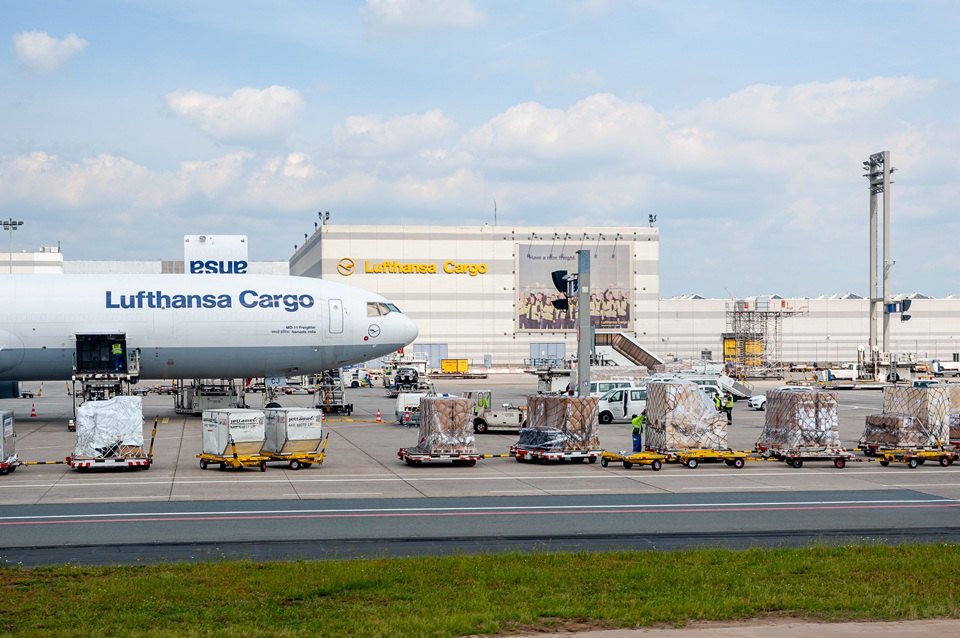
- Lufthansa Cargo is joining the FAIR@Link digital cargo platform operated by allivate, using its FRA-OS module to digitalise and accelerate eligible import customs processes at Frankfurt Airport.
- The system brings customs data and shipment-status information together, enabling eligible consignments to benefit from deferred customs presentation at authorised bonded warehouses rather than requiring immediate presentation following aircraft arrival.
- The streamlined process is particularly relevant to time-sensitive e-commerce cargo, allowing eligible shipments to move from the aircraft via the Neutral Cargo Transfer Point (NFÜP) directly towards freight forwarders while reducing an additional handling step.
Lufthansa Cargo moves to accelerate digital customs processing at Frankfurt
Lufthansa Cargo is strengthening the digitalisation of its import operations at Frankfurt Airport through participation in FAIR@Link, the Cargo Community System used to connect stakeholders across the airport’s air freight ecosystem.
The carrier will use the FRA-OS module to support faster and more transparent customs processing for selected import shipments. The initial scope covers parts of Lufthansa Cargo’s e-commerce and general cargo flows that are handled through Frankfurt’s Neutral Cargo Transfer Point (NFÜP).
The move adds another major stakeholder to a digital infrastructure designed to connect airlines, cargo handlers, freight forwarders and customs-related processes through a common data environment. FAIR@Link is operated by allivate, the joint venture established by Fraport and DAKOSY to further develop digital air cargo processes.
Related Post

From customs paperwork to connected cargo data
At the heart of the initiative is FRA-OS, the import component of the Frankfurt cargo community platform.
The system consolidates relevant customs information for consolidated import shipments and links that information with shipment-status data. This creates greater visibility over a consignment’s movement across the airport and supports the digital handling of customs procedures.
The approach addresses one of the fundamental challenges associated with consolidated air cargo: ensuring that individual consignments can be identified, tracked and processed in accordance with increasingly demanding customs requirements without creating additional physical bottlenecks.
FRA-OS was developed to support customs-compliant import consolidation at Frankfurt. The airport has previously described the platform as a solution for standardising, simplifying and accelerating customs and import processes, particularly in response to the requirements of the EU Union Customs Code.
Deferred customs presentation changes the sequence
One of the principal operational advantages for Lufthansa Cargo is the possibility of deferred customs presentationfor eligible shipments.
Under the conventional process, cargo arriving at Frankfurt must be presented to customs following aircraft arrival through the appropriate handling process. FRA-OS enables an alternative workflow in which authorised participants can maintain continuous visibility of the shipment while it moves through the airport customs area.
This means eligible cargo can subsequently be presented to customs at a freight forwarder’s authorised customs-bonded warehouse, rather than necessarily being presented immediately after landing.
The operational significance lies in the combination of digital visibility and physical cargo movement. Tracking information establishes where the shipment is within the airport, while the digital exchange of data supports the customs process surrounding it.
For a major cargo hub such as Frankfurt, the ability to separate the physical movement of eligible freight from the timing of customs presentation can help remove unnecessary handling stages and improve the use of warehouse and handling capacity.
NFÜP creates a faster route for eligible shipments
For Lufthansa Cargo, the implementation is particularly relevant to cargo moving through the Neutral Cargo Transfer Point (NFÜP).
The NFÜP is designed as an interchange facility within Frankfurt’s cargo operation, enabling shipments to move between the airport’s airside environment and participating logistics companies.
With the digital customs process in place, eligible import cargo can move from the aircraft apron through the NFÜP towards the relevant freight forwarder. This can eliminate a previous processing stage in which shipments had to pass through Lufthansa Cargo’s handling warehouse for customs processing before being released for onward movement.
The result is a more direct physical flow supported by digital information exchange.
That distinction is especially important for e-commerce shipments, where delivery expectations are measured increasingly in hours rather than days. Even a single removed handling stage can have a measurable effect on the time required to move an inbound shipment from aircraft arrival towards final distribution.
E-commerce puts pressure on every minute of the import process
The development comes as Frankfurt continues to expand its digital infrastructure for increasingly data-intensive air cargo flows.
FAIR@Link is designed to connect the different participants in the cargo community rather than create another isolated airline or handling system. The platform’s growing use reflects the industry’s broader shift towards shared digital processes, real-time shipment information and greater automation.
The scale of that development is already visible at Frankfurt. allivate states that FAIR@Link connects more than 1,100 companies, while recent industry reporting has highlighted the platform’s growing role in processing house-air-waybill information associated with e-commerce flows.
For e-commerce logistics in particular, the value of digitalisation is not limited to replacing paper documents. The larger opportunity is to synchronise cargo movement, customs information and operational status so that physical handling follows the flow of verified data.
A broader Cargo Community effect
Lufthansa Cargo’s participation also has significance beyond the airline’s own import operation.
The effectiveness of a Cargo Community System depends heavily on network participation. The more airlines, handling agents, freight forwarders and authorities work through a shared digital environment, the fewer separate interfaces are required to exchange information.
That network effect is already visible at Frankfurt, where FAIR@Link has developed into a broader digital infrastructure for cargo operations. The platform has also been expanded into other areas of airport logistics, including truck processing, driver identification and digital import pick-up procedures.
In 2024, Fraport and DAKOSY established allivate as a 50:50 joint venture to develop FAIR@Link further and advance digital air cargo processes. The company has subsequently continued to expand the platform’s scope, including developments at Hamburg Airport.
Digitalisation extends beyond customs
The Lufthansa Cargo development also fits into a wider digitalisation strategy at Frankfurt.
Recent initiatives surrounding FAIR@Link have focused on reducing manual processes, improving visibility and creating common standards across the airport cargo community. The platform is increasingly being positioned as an operational layer connecting different participants rather than simply as an IT tool for individual processes.
That direction is also reflected in current work involving ONE Record, the International Air Transport Association’s data-sharing standard. allivate says it is working with Fraport, Lufthansa Cargo and Fraunhofer IML on a Digital Testbed Air Cargo project examining how ONE Record can be used within Cargo Community Systems, including a selected use case involving the FRA-OS process.
The development points towards a future in which customs, cargo handling and shipment information are increasingly exchanged through interoperable digital systems rather than through separate transactions between individual companies.
Frankfurt’s next step in connected cargo processing
Lufthansa Cargo’s integration of FRA-OS therefore represents more than a change to the handling sequence for a particular group of shipments. It strengthens the airport’s wider move towards common digital processes covering the complete import chain.
For eligible cargo, the combination of continuous shipment tracking, digital customs information and deferred presentation has the potential to reduce physical handling, shorten processing times and improve predictability.
The immediate gains are likely to be most visible in fast-moving e-commerce logistics, where every additional handling point can add time to the supply chain. But the longer-term significance is broader: as participation in FAIR@Link increases, Frankfurt has the opportunity to standardise more of the interfaces between airlines, handlers, freight forwarders and customs authorities.
In that model, cargo does not simply move faster because individual companies work faster. It moves faster because the data, customs status and physical shipment flow are increasingly coordinated across the airport community.