Milan Bergamo Airport is strengthening its position as an air cargo gateway in northern Italy as cargo aircraft activity continues to increase and the airport develops its dedicated logistics infrastructure.
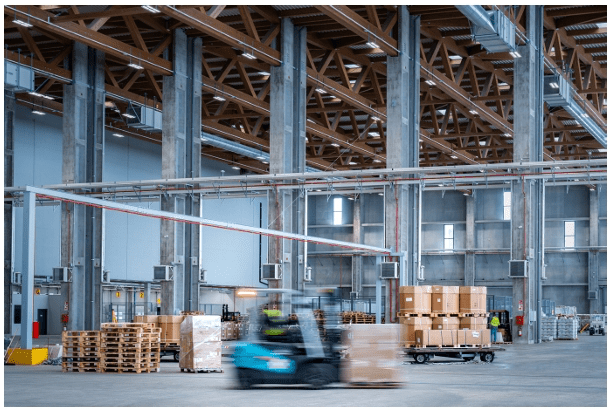
The centrepiece of the expansion is BGY Logistic Park, a dedicated cargo area designed to separate freight activity from the airport’s passenger operations and provide additional capacity for courier, e-commerce and general cargo flows.
The development forms part of SACBO’s broader strategy to expand cargo operations and attract additional airline partners, particularly as e-commerce continues to reshape European air freight demand.
Related Post




Dedicated cargo infrastructure
BGY Logistic Park includes two warehouses, with one operated by UPS and the other by SACBO subsidiary BGY International Services. Together, the facilities provide more than 11,000 square metres of space for cargo activities, according to the airport.
The logistics area has its own customs access and dedicated road connectivity, allowing freight vehicles to reach the cargo facilities without passing through the main passenger terminal area.
BGY International Services is the airport’s reference cargo-handling operator for general cargo. SACBO says the company operates its cargo warehouses around the clock, seven days a week, with services covering export acceptance, security screening, customs warehousing, import handling, customs clearance and ULD build-up.
The airport also has dedicated customs infrastructure serving cargo operators. SACBO’s official contact information lists both BGY International Services Cargo and UPS among the airport’s cargo-related operations.
Cargo aircraft movements increase
Cargo activity at Milan Bergamo has recorded strong growth in 2026.
According to figures provided by the airport, 1,142 cargo aircraft movements were recorded between January and August, compared with 877 during the same period in 2025. That represents an increase of around 30%.
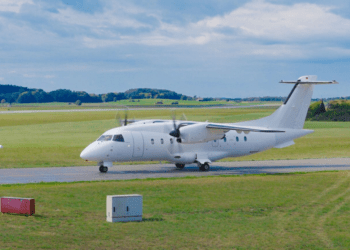
UPS remains the dominant cargo operator at the airport, accounting for more than three-quarters of cargo aircraft movements, according to the supplied figures. CAMEX and Georgian Airlines are also among the principal cargo carriers serving the airport.
By tonnage, UPS accounts for around 60% of cargo volumes, while CAMEX and Georgian Airlines operate aircraft with higher average loads, supported in part by e-commerce traffic originating in China.
The growth comes as SACBO continues to invest in airport infrastructure and cargo-related services. Its 2025 financial results noted increased staffing at BGY International Services to support the growth of courier activities.
24-hour operations support cargo growth
Milan Bergamo Airport’s operating characteristics are also suited to time-sensitive cargo.
SACBO confirms that the airport is authorised to handle all types of cargo aircraft up to the Antonov An-124 without operating-time restrictions. BGY International Services’ cargo facilities also operate 24 hours a day, seven days a week.
The airport’s main runway measures 2,874 metres by 45 metres and the airport is classified as ICAO 4E.
Its location in Lombardy provides access to one of Italy’s most important industrial and manufacturing regions, placing the airport close to a large concentration of manufacturers, distributors and logistics companies.
E-commerce remains a key target
SACBO sees e-commerce as an important area for future cargo development and is seeking to expand the number of airline partners serving the airport.
Giacomo Cattaneo, Director of Commercial Aviation, Marketing & Communications at SACBO, said the growth of e-commerce was creating opportunities for operators seeking fast access to the region’s industrial and consumer markets.
“With BGY Logistic Park, our focus is on making cargo flows as efficient as possible and expanding the range of airline partners that can benefit from this location and infrastructure,” Cattaneo said.
The development of dedicated logistics facilities also reflects a wider shift among European airports towards separating cargo infrastructure from passenger operations, while improving customs access, road connectivity and handling efficiency.
For Milan Bergamo, the combination of 24-hour cargo capability, dedicated facilities and its location in Lombardy provides a platform for further growth as e-commerce and time-sensitive freight continue to generate demand for additional air cargo capacity.