
dnata has highlighted the importance of phased technology implementation, operational readiness and local expertise following the challenging initial ramp-up of its highly automated cargo facility at Amsterdam Schiphol Airport.
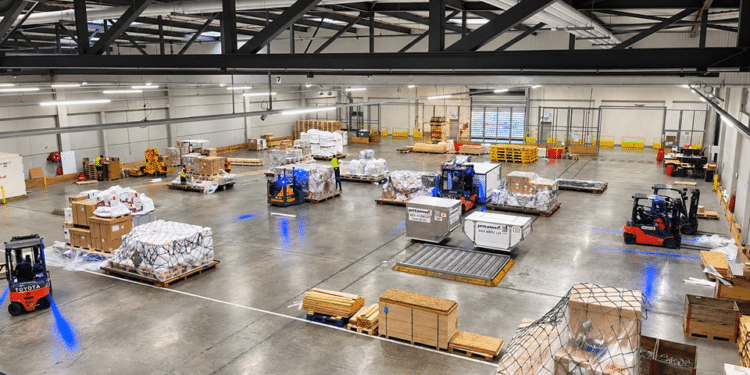
The 61,000 sq m dnata Cargo City Amsterdam facility opened in July 2025 after an investment of more than US$70 million. Designed to process more than 850,000 tonnes of cargo annually, the facility incorporates automated storage and retrieval systems, automated guided vehicles (AGVs), elevated transfer vehicles (ETVs), smart gates and an integrated warehouse management system.
The facility was developed to support the handling of a broad range of cargo, including pharmaceuticals, perishables, dangerous goods, live animals, aircraft engines and vehicles. dnata said its automation strategy was intended to improve efficiency, safety and scalability while reducing manual handling.
Related Post

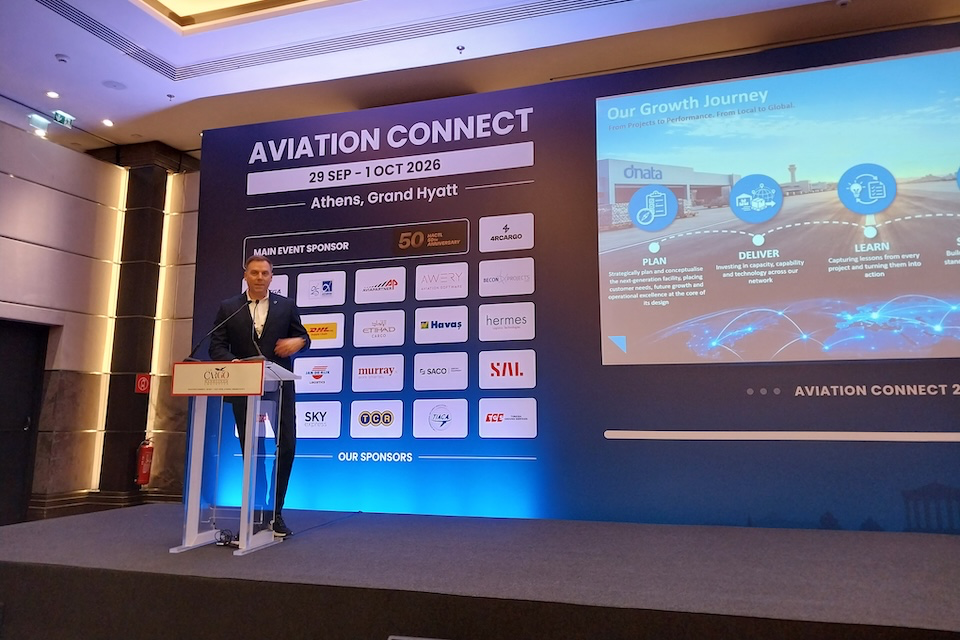
Speaking at Aviation Connect in Athens, dnata Chief Cargo Officer Guillaume Crozier said the transition to the new facility demonstrated that the implementation of large-scale automation requires careful management of technology, people, processes and data.
According to Crozier, the initial challenges centred on simultaneously ramping up cargo volumes, systems and personnel, while limited data visibility made it more difficult to obtain a clear picture of operational performance.
The recovery process involved stabilising operations and transferring all cargo volumes from the previous facility. Data and operational dashboards were subsequently used to support decision-making, while dnata also focused on improving collaboration across the end-to-end operation and establishing clear key performance indicators.
Phased technology implementation
One of the principal lessons identified by Crozier was the importance of managing the pace at which new technologies are introduced.
While implementing multiple technologies simultaneously can appear logical when designing an end-to-end automated operation, he said a phased approach can reduce operational risk, particularly when technologies are being deployed at a scale or in combinations that are relatively new to the market.
Crozier specifically highlighted AGVs and the importance of understanding how traffic and cargo flows interact with automated vehicles before full implementation.
The experience also reinforced the need for extensive operational simulations before opening a highly automated facility. According to Crozier, organisations should aim to establish the necessary data infrastructure from the first day of operations, supported by clear governance arrangements and close cooperation with key stakeholders.
Building contingency into major projects
The timing of major automation projects was another area identified as requiring careful consideration.
Crozier said project schedules should include sufficient contingency to accommodate unexpected setbacks rather than relying on a tightly compressed implementation timeline.
Change management and training were also identified as important elements in preparing employees for new processes and technologies.
Local market knowledge was another factor highlighted in the discussion. Crozier said operational requirements can vary considerably between markets and that local expertise is therefore important when implementing large-scale technology programmes.
The lessons are particularly relevant as cargo handlers increasingly turn to automation to address operational complexity and labour constraints.
dnata has continued to expand its use of automation and digital tools across its cargo and airport operations. In August 2026, the company also launched a Cargo Integrated Command Centre in Dubai, using an operational dashboard that refreshes information every 10 seconds to provide near-real-time visibility across its UAE cargo operation.
Automation and the future of cargo handling
The Schiphol project incorporates two automated storage and retrieval systems for import and export cargo, with capacity for up to 2,500 pallets, as well as a separate ULD storage system served by four ETVs. Seven intelligent AGVs were introduced to provide flexible ULD movement within the terminal, while smart gates use three-dimensional scanning to capture shipment dimensions and weight automatically.
dnata’s current Netherlands operation also includes temperature-controlled pharmaceutical and perishables handling, animal handling and warehouse services.
Following the initial operational challenges, Crozier said the Schiphol facility is now operating smoothly and receiving positive feedback from the local market.
He also pointed to the growing importance of automation as recruitment becomes more challenging across the cargo handling sector.
The experience at Schiphol underlines a broader consideration for the air cargo industry: advanced technology can increase capacity and operational efficiency, but successful implementation depends not only on the technology itself, but also on data availability, employee training, process readiness, contingency planning and the pace at which new systems are introduced.