
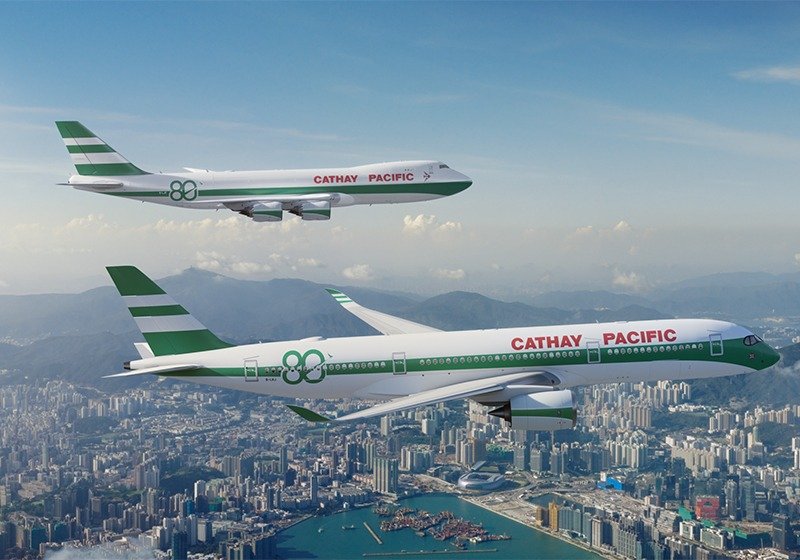
Award-winning performance, additional freighter capacity and new AI-assisted compliance tools are shaping Cathay Cargo’s next phase of growth.
Cathay Cargo is marking a significant milestone with renewed confidence, combining its 80th anniversary celebrations with fresh industry recognition and expectations of a strong year-end peak season.
The cargo business has been named Cargo Operator of the Year at Air Transport World’s 2027 Airline Industry Achievement Awards. It is the fourth time Cathay Cargo has received the accolade since 2023, following wins in 2023, 2025 and 2026. The award recognises the contribution of its global cargo teams, supporting departments across Cathay Pacific and supplier partners, alongside the carrier’s continuing focus on customer service and operational performance.
Related Post

The recognition comes as the Cathay Group celebrates 80 years since its founding on 24 September 1946. For Cathay Cargo, the anniversary provides an opportunity to reflect on its development while looking ahead to a market increasingly shaped by changing trade patterns, specialised shipment requirements and digital technology.
The carrier’s stated ambition is to become the world’s best air cargo operator. Its current priorities include strengthening operational reliability, developing specialist cargo solutions and introducing digital and AI-supported tools intended to improve service and give customers greater confidence in the movement of their shipments.
Capacity in focus as peak season approaches
Market conditions are providing both opportunities and challenges as the industry enters the final months of the year. Cathay Cargo describes demand across long-haul markets as uneven, with European trade adjusting to the impact of EU tariffs on e-commerce imports, while demand for the Americas remains strong.
In response, the airline has added transpacific capacity ahead of the year-end peak. Demand from key Asian markets, including the Chinese Mainland and Southeast and Northeast Asia, is also holding up, supported in particular by shipments of high-value technology products serving the artificial intelligence and data-centre sectors.
With demand expected to remain strong, securing enough capacity is a central operational concern. An additional Airbus A330 passenger-to-freighter aircraft is expected to help address the pressure from November. The aircraft will be operated by Air Hong Kong, Cathay Group’s wholly owned subsidiary, on Cathay Cargo’s behalf under a long-term lease arrangement.
The additional freighter is intended to provide more regional capacity and flexibility, supporting cargo flows through Hong Kong and helping the carrier respond to changing demand during the busy season. Air Hong Kong operates an all-A330 freighter fleet, primarily serving DHL Express, while also providing cargo opportunities through its relationship with Cathay Cargo.
Rerouting operations to keep European freight moving
Operational adaptability has also been tested by disruption to services through the Middle East. The suspension of some services affected Cathay Cargo’s European freighter operations, which had relied on Dubai as an intermediate stop. Flying directly would have created payload penalties, making alternative routing arrangements important to maintaining capacity.
Cathay Cargo’s South Asia, Middle East and Africa team worked to identify alternative stops, including establishing a new seasonal operation through Astana, Kazakhstan. The solution demonstrated the importance of network planning and coordination when established routes are disrupted.
For cargo customers, the priority is continuity: keeping freight moving while managing the constraints imposed by route changes, aircraft performance and available capacity. The episode underlines the role of operational teams in responding quickly when market or geopolitical developments affect established supply chains.
AI-assisted tools support compliance
Alongside network and capacity management, Cathay Cargo is developing technology to help address increasingly complex international trade requirements. Its new AI-assisted Import and Export Control Check (IECC) is designed to help frontline teams identify shipments that may require additional import or export licences.
The tool analyses shipment descriptions against relevant licensing requirements and flags potential issues for further review. Rather than relying solely on keyword matching, it uses AI-assisted language analysis to help teams recognise when a goods description may need closer examination.
The system is intended to support earlier checks and more consistent decision-making, reducing the risk of shipments being delayed or offloaded because of unresolved compliance requirements. Human review remains essential, and shippers retain responsibility for providing accurate and sufficiently detailed goods declarations.
The development reflects a wider industry challenge: as trade rules change and supply chains become more complex, airlines and their customers need processes that combine regulatory awareness, reliable data and operational expertise.
Building on the anniversary milestone
Cathay Cargo’s 80th anniversary arrives at a time when air freight operators must balance fluctuating demand with capacity constraints, route disruption and rising expectations around digital service.
Its latest award provides external recognition of its performance, while the planned A330 freighter addition and AI-assisted compliance capability demonstrate how the carrier is addressing immediate operational demands and longer-term customer needs.
As the year-end peak approaches, the test will be whether capacity and operational flexibility can keep pace with demand across its major markets. For Cathay Cargo, the anniversary is not only a celebration of its history, but also a marker of the work required to maintain reliability and customer confidence in a changing global cargo market.