
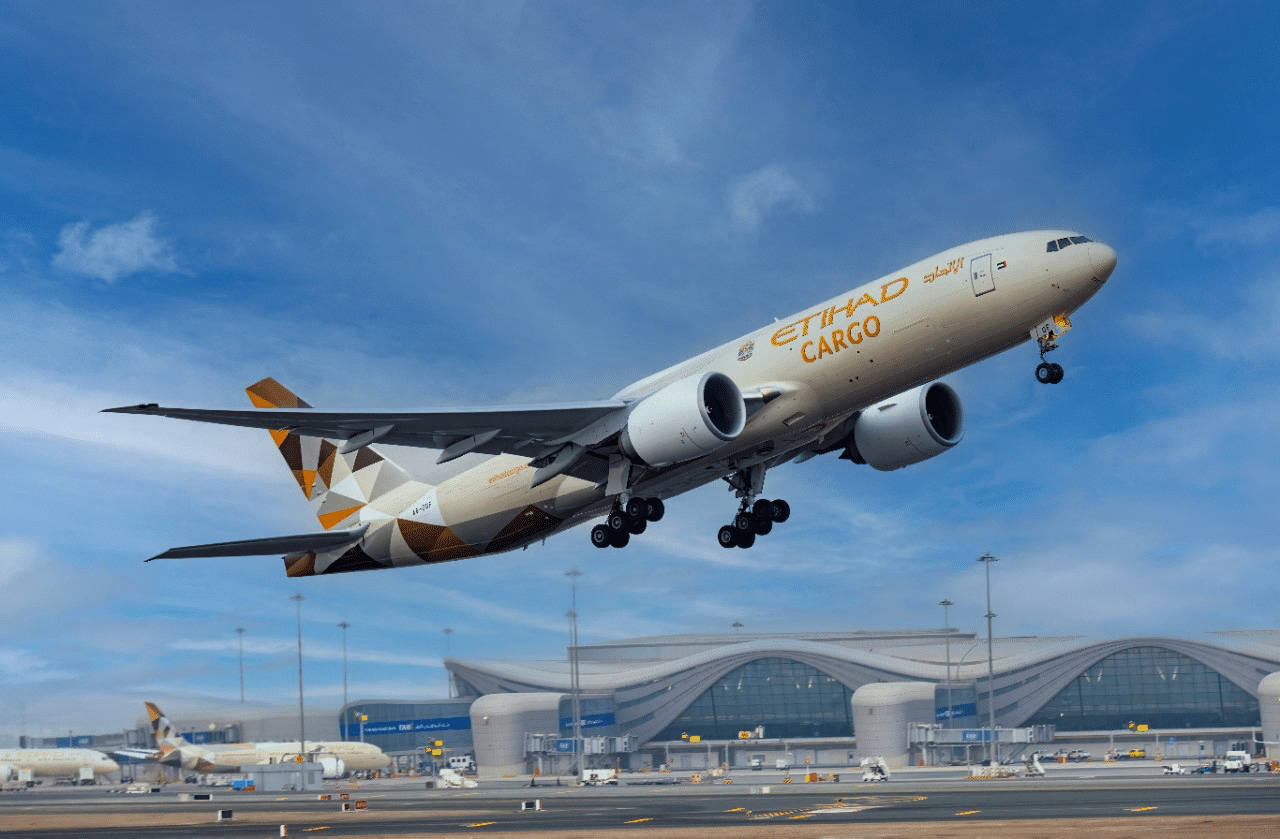
The return of daily Boeing 787-10 passenger flights strengthens Etihad Cargo’s Shanghai operations ahead of the year-end peak, complementing seven weekly freighter services and expanding connections through Abu Dhabi.
Etihad Cargo is restoring daily passenger-flight capacity between Abu Dhabi and Shanghai, bringing its combined cargo capability from the Chinese gateway to approximately 840 tonnes a week as international supply chains prepare for the year-end peak.
The daily Boeing 787-10 passenger service resumed on 1 October, adding bellyhold capacity to the seven weekly Boeing 777 freighter operations already serving Shanghai. The combined schedule gives freight forwarders and shippers access to both dedicated freighter space and cargo capacity aboard passenger aircraft, offering additional options for moving goods out of one of China’s major commercial centres.
Related Post



For Etihad Cargo, the move represents the return of planned network capacity rather than a short-term response to seasonal demand. However, its timing is significant, with the final quarter traditionally bringing increased volumes across e-commerce, consumer technology and other major air freight categories.
Stanislas Brun, Chief Cargo Officer at Etihad Cargo, said the additional capacity would help the carrier support customers during a busy period while maintaining flexibility across its wider cargo network.
The restoration also reinforces Shanghai’s role within Etihad Cargo’s broader Asian operations, where demand is supported by manufacturing, technology exports and trade connecting China with markets across the Middle East, Europe and beyond.
Balancing peak demand with network reliability
The year-end period places additional pressure on air cargo capacity as retailers, manufacturers and logistics providers work to meet delivery commitments. E-commerce shipments and consumer electronics are important contributors to seasonal demand, while pharmaceuticals, life sciences products and high-value industrial goods require dependable transport and carefully managed handling.
The additional passenger service gives Etihad Cargo another source of capacity on the Shanghai route. Bellyhold cargo can complement freighter operations, allowing the carrier to offer more scheduling options and make use of its passenger network alongside dedicated aircraft.
The distinction matters for freight customers managing shipments with different transit-time, handling and capacity requirements. A combination of passenger and freighter services can provide greater choice, although the space available for individual shipments remains subject to aircraft payload, operating conditions and cargo acceptance requirements.
The restored schedule also supports the movement of goods through Etihad Cargo’s hub in Abu Dhabi, where shipments can connect with onward services across the airline’s international network. The hub links Asian origins with destinations in Europe, the Middle East, Africa and the Americas, giving customers access to a wider range of markets through a single connecting point.
Abu Dhabi strengthens its role as a cargo gateway
The Shanghai capacity increase comes as Etihad Cargo continues to develop its position in key international trade lanes. Its network strategy combines passenger bellyhold capacity, dedicated freighters and partnerships to connect major manufacturing and distribution centres with global destinations.
China remains an important part of that strategy. Etihad Cargo’s published network developments have highlighted growing links with Chinese cargo gateways, including Ezhou, alongside its operations in other major Asian markets. These connections support a mix of general cargo and specialised shipments moving between Asia and international markets.
Abu Dhabi’s location also provides a platform for cargo requiring more than standard airport-to-airport transportation. Through its PharmaLife service, Etihad Cargo offers temperature-controlled solutions for pharmaceutical and life sciences shipments, including specialised equipment, controlled storage and handling procedures designed to protect product integrity during transit. The carrier’s wider portfolio includes solutions for perishables, live animals and other specialist cargo categories.
These services are particularly relevant to shippers whose requirements extend beyond available capacity to include temperature management, shipment visibility and careful coordination between handling points.
Capacity growth built around customer requirements
Etihad Cargo’s recent performance provides further context for its network investment. The carrier reported that cargo volumes rose 9 per cent in 2025 to 703,000 tonnes, while revenue increased 8 per cent to AED 4.5 billion. It also recorded growth across several specialist products, including pharmaceutical logistics through PharmaLife.
Alongside its physical network, the company has been investing in digital tools and service development. Its SmartTrack platform, introduced in 2025, uses AI and data analytics to improve shipment visibility and provide more proactive tracking information.
The restoration of daily Shanghai passenger flights is a more immediate operational development, but it fits the same broader objective: providing customers with reliable capacity and better-connected services across key trade routes.
For freight forwarders and shippers, the principal benefit is the return of daily passenger-flight options alongside established freighter services. The resulting weekly capacity of approximately 840 tonnes gives the market additional room as demand builds toward the end of the year.
With international trade flows continuing to evolve, Etihad Cargo’s challenge will be to balance capacity across its network while maintaining dependable connections and meeting the varied requirements of its customers. Shanghai’s strengthened schedule is an important part of that effort.