
CEO Jörg Eberhart calls for a level playing field for European carriers amid rising fuel expenses, while outlining expansion plans for South America and future growth opportunities in Asia
ITA Airways is targeting a positive operating result in 2026 and expects to remain profitable in 2027, despite significantly higher fuel costs and mounting financial pressures on European airlines. The carrier’s Chief Executive Officer, Jörg Eberhart, has called on the European Union to consider temporarily suspending aviation emissions allowance costs, arguing that European airlines face competitive disadvantages compared with carriers operating from outside the bloc.
In an interview with Italian newspaper Corriere della Sera, Eberhart said ITA Airways expected to close 2026 with a small operating profit, potentially exceeding its 2025 operating result of €25.1 million. He also confirmed that the airline’s financial planning for 2027 is based on a positive operating result, supported by cost efficiencies, increased revenues and synergies with the Lufthansa Group.
Related Post


The outlook comes against a challenging operating environment, with ITA’s additional jet fuel expenditure estimated at between €150 million and €170 million in 2026 compared with the previous year.
ITA calls for temporary relief from EU emissions costs
One of the central issues raised by Eberhart concerns the cost of complying with European environmental regulations, particularly the EU Emissions Trading System (EU ETS), which requires airlines covered by the scheme to surrender allowances for their aviation emissions.
The ITA chief argued that European airlines should not be placed at a disadvantage against competitors from outside Europe, particularly when operating under different regulatory and cost structures.
He called for coordinated action by European carriers to raise the issue with the European Commission, advocating a more balanced competitive environment and greater flexibility in how taxes collected from the aviation sector are used.
Asked whether a temporary suspension of EU ETS allowance costs for one or two years would be justified, Eberhart supported the proposal, at least while European carriers face what he considers competitive disadvantages.
His comments add to the wider debate over the balance between aviation decarbonisation, regulatory costs and the international competitiveness of European airlines.
The proposal, however, represents the ITA chief’s position and should not be interpreted as an announced change to EU climate policy. The EU ETS remains part of the European Union’s aviation emissions framework.
Rising fuel prices put pressure on airline profitability
Fuel expenditure remains one of ITA Airways’ most significant financial challenges. Eberhart said the airline expected to spend an additional €150 million to €170 million on jet fuel during 2026, compared with the previous year.
The carrier has benefited from fuel hedging covering more than 80% of its requirements this year. However, its protection against future price fluctuations will be considerably lower in 2027, although Eberhart declined to disclose the exact level of coverage.
He indicated that airlines with limited fuel hedging could face substantial pressure on ticket pricing, with traditional carriers potentially needing fare increases of 15% to 20% to offset higher fuel costs under the price conditions discussed in the interview.
ITA is seeking to mitigate the impact through higher passenger revenues, improved cost management and operational synergies with Lufthansa. Eberhart said the airline had already begun benefiting from joint purchasing arrangements and improved negotiating leverage with suppliers.
Operational disruptions, including technical problems, adverse weather and geopolitical developments, have also affected performance. These factors are estimated to have reduced the airline’s operating margin by approximately 1.5 percentage points, with disruption-related costs expected to reach around €50 million.
The European Commission’s existing framework provides for the phase-out of free aviation emissions allowances by 2026, increasing airlines’ exposure to carbon allowance purchasing costs. The Commission’s aviation policy also includes provisions to support the uptake of eligible sustainable aviation fuels through a dedicated allowance mechanism.
South America becomes a priority for network expansion
Alongside its financial objectives, ITA Airways is preparing to expand its long-haul network, with South America emerging as a key growth market for 2027.
Eberhart outlined plans to introduce services to Caracas from the end of March 2027, while Santo Domingo is scheduled to join the network towards the end of November 2026.
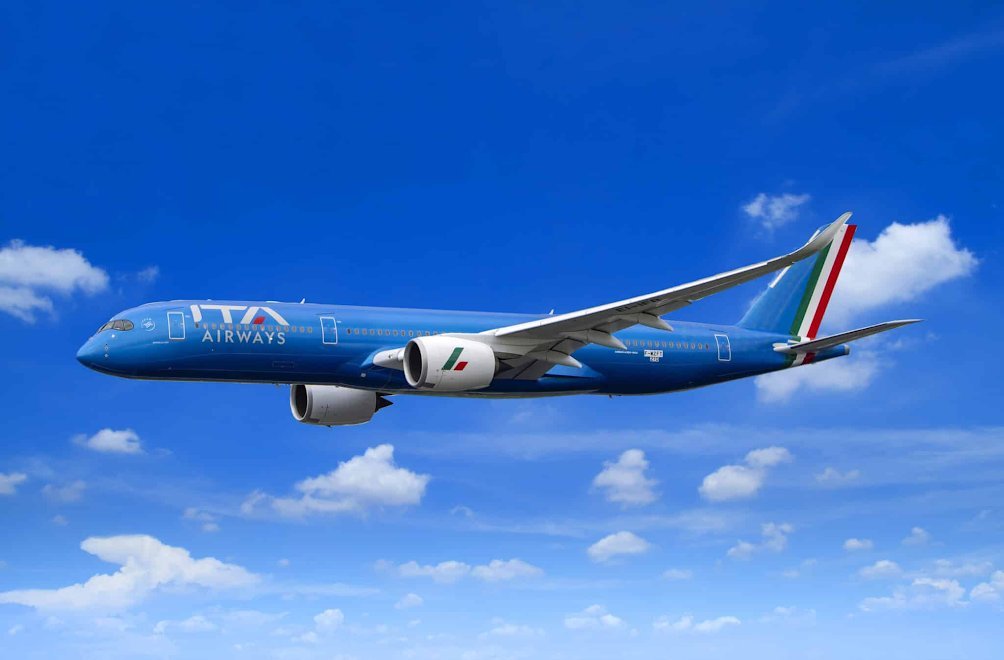
The airline is also working towards launching a Rome–Lima service in summer 2027, potentially using the Airbus A350. The route had originally been considered for 2027 or 2028 but is now being brought forward following discussions with Peruvian authorities and tourism organisations.
The proposed Lima service also comes amid reported interest from Emirates in securing fifth-freedom traffic rights for flights between Milan Malpensa and Lima.
Eberhart expressed reservations about granting additional fifth-freedom rights to non-European carriers, arguing that European airlines should be able to compete under comparable regulatory and commercial conditions. He suggested that existing bilateral arrangements governing such rights could merit legal review.
The expansion into South America is also expected to complement Lufthansa Group’s broader network strategy, including the potential integration of TAP Air Portugal into the group. Eberhart believes ITA and TAP could develop complementary networks, particularly given their different geographical strengths and passenger flows between Europe and South America.
Asia identified as the next long-haul growth opportunity
Looking beyond the immediate South American expansion, ITA Airways is evaluating opportunities in Asia for 2028 and 2029.
Eberhart identified Japan, Singapore and India as potential markets for future development. Osaka is among the Japanese destinations under consideration, alongside opportunities to strengthen existing services.
He explained that a balanced long-haul network requires development in both western and eastern directions to maximise aircraft productivity and improve the commercial performance of the fleet.
The airline will also use the performance of new South American destinations during 2027 to reassess its longer-term network priorities.
Fleet availability and workforce transformation
ITA’s growth plans are being pursued alongside an internal restructuring programme and efforts to improve fleet availability.
The airline continues to experience technical problems affecting aircraft powered by Pratt & Whitney engines. Eberhart reported that 11 aircraft remained grounded at the time of the interview, with approximately 10 expected to remain unavailable during 2027. The disruption could continue until 2030.
To protect long-haul operations, ITA has extended the service of four Airbus A330 aircraft that had been scheduled to leave the fleet. The additional availability is intended to provide greater operational flexibility during maintenance periods and reduce cancellations caused by aircraft shortages.
On the workforce front, the company is pursuing approximately 226 voluntary employee exits while planning to recruit around 400 pilots and cabin crew in 2027. Its longer-term recruitment programme envisages at least 500 permanent hires by 2030.
Eberhart stressed that the proposed departures would be voluntary and form part of a wider transformation involving investment, digitalisation, training and operational growth.
Premium travel and aircraft investment
ITA is also reviewing the configuration of its long-haul fleet in response to growing demand for premium travel.
Eberhart indicated that business-class demand has been particularly strong, raising questions about whether the airline’s existing premium cabin capacity is sufficient.
The company is discussing potential cabin investment with Lufthansa Group for the 2030–2032 period, including the possibility of increasing business-class seating on future Airbus A350 aircraft.
The airline’s premium strategy is intended to improve revenue generation while supporting its position in the competitive European long-haul market.
A pivotal period for ITA Airways
ITA Airways is entering an important phase of development as it seeks to consolidate its financial position, expand its international network and deepen its integration with Lufthansa Group.
Its 2026 and 2027 profitability expectations will depend on its ability to manage fuel expenditure, improve operational reliability, generate additional revenue and realise the benefits of group synergies.
At the same time, Eberhart’s call for temporary relief from EU carbon costs highlights the growing tension between environmental regulation and the competitive pressures facing European airlines.
For ITA, the challenge will be to pursue sustainable long-term growth while maintaining financial discipline in an increasingly demanding global aviation market.