
The 17th edition of the international aviation gathering in Monaco brought industry leaders together to examine commercial resilience, technology, geopolitical risks and the expanding role of cargo connectivity.
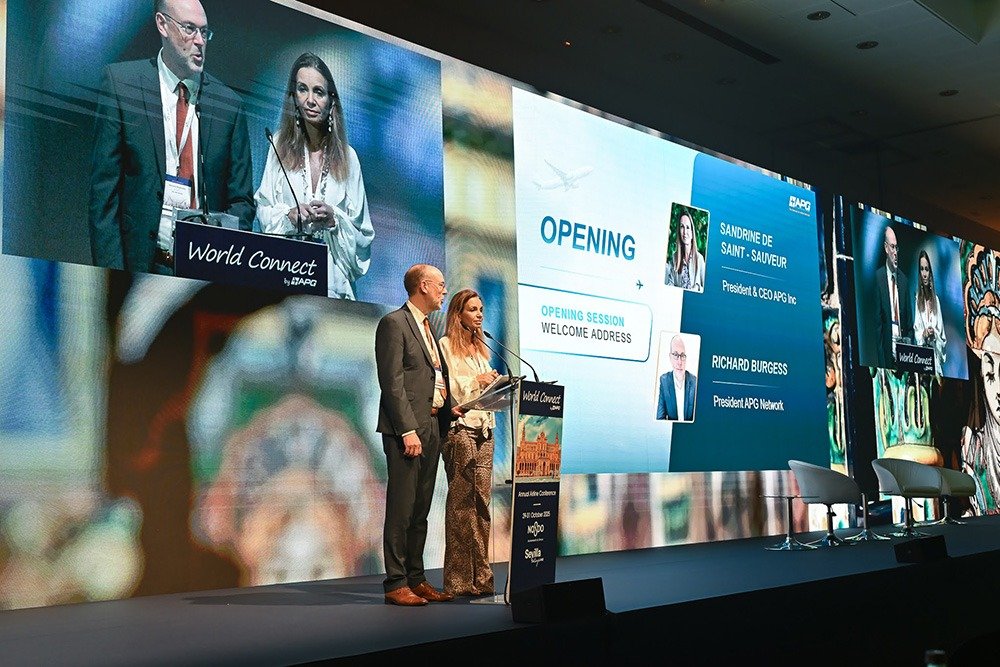
APG World Connect 2026 brought together senior aviation executives, airline representatives and industry specialists at the Fairmont Monte Carlo from November 4 to 6, providing a platform for discussions on the challenges and opportunities shaping the global aviation industry. Under the theme “Navigating Change, Unlocking Growth”, the 17th edition placed particular emphasis on commercial resilience, technological innovation, customer engagement and international connectivity.
Organised by APG, the conference combined strategic discussions with business meetings and networking opportunities. APG had forecast participation of approximately 500 delegates, representing 59 airlines and 85 countries, underlining the event’s international reach.
Related Post




For the air cargo sector, the gathering offered an opportunity to examine how airline partnerships, distribution models and commercial representation can support network expansion and create new opportunities for freight businesses.
Resilience and growth in a changing aviation market
The conference opened with aviation executive Pieter Elbers, whose keynote examined the industry’s ability to adapt to disruption and sustain growth. Drawing on his experience in airline leadership, Elbers addressed the changing geography of aviation, highlighting opportunities across India and Asia, as well as Africa’s longer-term growth potential.
The discussions underlined that growth depends on more than rising demand. Airlines must also develop the infrastructure, workforce, operational processes and commercial partnerships required to translate market opportunities into reliable services.
Operational resilience emerged as a central theme. With airlines facing geopolitical uncertainty, supply-chain pressures, volatile fuel costs and changing customer expectations, the ability to anticipate disruption and respond effectively has become an increasingly important competitive requirement.
Artificial intelligence and the next phase of airline operations
Technology and artificial intelligence featured prominently throughout the programme, with discussions moving beyond automation towards the potential for broader changes in airline operations and business models.
Predictive maintenance, improved aircraft utilisation, disruption management and closer integration between commercial and operational planning were among the areas considered. Speakers also examined how data-driven tools could improve customer personalisation and support more efficient decision-making.
However, the discussions recognised that technology must complement human expertise rather than replace accountability and professional judgement. This is particularly important during operational disruption, when customers require timely information, effective communication and practical assistance.
The wider challenge is to connect the different development timelines of aviation. Digital technologies can evolve rapidly, while aircraft programmes, airport infrastructure, regulation and the transition to lower-carbon operations require longer-term planning and investment.
Customer engagement and distribution take centre stage
A customer-focused panel, moderated by Luis Felipe de Oliveira of Exactly Consulting and Services, brought together Lemma Yadecha Gudeta of Ethiopian Airlines, David Curmi of KM Malta Airlines and Sébastien Guyot of Air France.
The discussion examined how airlines can strengthen customer relationships as distribution channels multiply and passenger expectations continue to evolve. Speakers considered the balance between direct sales and distribution partners, the use of customer data and the role of loyalty programmes in building lasting engagement.
Personalisation was a recurring subject, particularly for airlines serving diverse international markets. The panel also highlighted the importance of reliable service, effective communication and partnerships that extend connectivity beyond an airline’s own network.
The central message was that customer loyalty is built throughout the travel experience, not simply at the point of booking. How an airline responds when a journey is disrupted can be just as important as the service delivered when everything goes according to plan.
Geopolitical uncertainty and the protection of connectivity
The geopolitical session, chaired by Arnaud Vaissié of International SOS, featured Faye Malarkey Black, President and CEO of the Regional Airline Association, and Salvatore Schiacchitano, former President of the ICAO Council.
The panel examined how political instability, security concerns, airspace restrictions, sanctions and supply-chain disruption influence airline operations, network planning and commercial performance.
The speakers highlighted the wider consequences of disruption, including flight rerouting, suspended services, additional fuel consumption and pressure on regional connectivity. Changes affecting major airlines can also have a knock-on impact on smaller carriers and communities that depend on regional and short-haul services.
The discussion also explored the potential contribution of artificial intelligence to safety analysis and predictive maintenance. Panellists emphasised that effective use of technology depends on reliable data, appropriate governance and the continued involvement of experienced aviation professionals.
For airlines and cargo operators alike, the message was clear: maintaining connectivity in an uncertain environment requires sound risk assessment, diversified partnerships and the ability to respond quickly to changing conditions.
Stronger commercial performance through collaboration
A further panel focused on building a stronger commercial aviation industry, bringing together Luís Rodrigues, CEO of TAP Air Portugal; Roberto Alvo, CEO of LATAM Airlines Group; and Tânia Cardoso Simões of EUROCONTROL. Moderated by Luis Felipe de Oliveira, the discussion addressed commercial pressures, operational efficiency, technology and the importance of cooperation across the aviation network.
Fuel price volatility and the need to control operating costs were key concerns. Airlines must balance efficiency improvements, capacity decisions, pricing strategies and investment while maintaining long-term commitments to sustainability.
Alvo discussed the potential for artificial intelligence to transform customer engagement and the way travellers select and purchase air services. The growing influence of digital assistants could change how passengers plan journeys, making trust, accurate information and consistent service increasingly important.
From an airspace management perspective, Cardoso Simões highlighted the importance of airspace redesign, digitalisation and closer civil-military coordination. Better cooperation between airlines, air navigation service providers and governments could improve predictability, reduce unnecessary fuel consumption and support more efficient operations.
The panel also considered sustainable aviation fuel, recognising the importance of long-term environmental objectives alongside the challenges of limited availability and higher costs.
Importantly for the cargo industry, the official programme identified closer cooperation between passenger and cargo teams as one of the priorities for strengthening commercial performance and maximising revenue.
APG’s cargo business gains momentum
One of the notable developments for the air freight community was the growing profile of APG’s cargo activities. The organisation’s cargo offering combines General Sales and Services Agent (GSSA) representation with its interline cargo solution, providing airlines with access to local market expertise and wider distribution opportunities.
The GSSA business supports airlines through commercial representation and services that can include cargo sales, handling coordination, trucking support and Cargo Accounts Settlement System (CASS) management. APG states that its cargo representation network covers more than 65 countries, giving airline partners access to local market knowledge and international commercial support.
Alongside its GSSA activities, APG Airlines Cargo has been developing its interline platform using APG Airlines’ 275 air waybill. The solution allows participating airlines to extend their cargo reach through interline arrangements without establishing their own operations in every market.
Recent agreements illustrate the direction of this development.
In July 2026, APG Airlines Cargo announced an interline cargo agreement with Himalaya Airlines. Under the arrangement, shipments carried on Himalaya Airlines can be issued on APG Airlines Cargo’s 275 air waybill, providing freight customers with access to the participating carrier’s network through the APG platform.
In August 2026, APG announced its appointment as Cargo General Sales Agent for Air Peace Cargo in the United Kingdom. The agreement gives Air Peace Cargo local commercial representation and market support through APG’s network and cargo expertise.
Together, the agreements demonstrate two complementary elements of APG’s cargo strategy: expanding local airline representation in key markets and developing interline connectivity that can offer freight forwarders additional routing and distribution options.
The approach reflects a wider industry requirement. Airlines increasingly need flexible ways to reach new markets, improve cargo sales performance and develop commercial relationships without the cost of establishing a full local operation in every territory.
For freight forwarders, broader interline access can provide additional options for moving shipments beyond the direct networks of individual carriers, subject to the applicable commercial and operational arrangements.
Innovation and improved service delivery
The conference’s business sessions also examined practical applications of innovation across the passenger journey, including baggage tracking, recovery and delivery solutions.
Although these services are primarily associated with passenger operations, they demonstrate the wider value of better shipment and asset visibility, timely information and effective coordination between service providers.
The underlying principle is relevant to air cargo as well: technology delivers meaningful value when it improves transparency, resolves operational problems and strengthens the experience of customers and business partners.
Business connections and the human dimension
Beyond the formal conference programme, World Connect provided opportunities for delegates to exchange ideas, renew business relationships and explore new partnerships.
The event also included a piano performance by Kotaro Shigemori and a fashion show by French designer Christophe Guillarmé, adding an entertainment dimension to the business gathering.
APG leadership, including President and CEO Sandrine de Saint Sauveur, helped bring together the international aviation community for the three-day event. Master of Ceremonies John Melchior guided the proceedings, combining industry experience with an engaging approach to the discussions.
For sponsors and delegates, the networking programme was an important part of the event, providing opportunities to connect with airline decision-makers and industry partners outside the formal sessions.
A broader platform for aviation and cargo partnerships
APG World Connect 2026 highlighted an aviation industry navigating a complex operating environment while continuing to seek new sources of growth. Discussions on technology, customer engagement, geopolitical risks, sustainability and commercial cooperation reflected the interconnected challenges facing airlines and their partners.
For the cargo sector, APG’s expanding GSSA and interline activities were particularly relevant. The agreements with Himalaya Airlines and Air Peace Cargo illustrate how local representation and wider airline connectivity can contribute to the development of cargo distribution networks.
As airlines look for more flexible ways to strengthen revenue, access new markets and improve operational performance, partnerships across the aviation value chain are likely to remain central to future growth.
The event’s central message was therefore relevant beyond passenger aviation: sustainable commercial progress depends on collaboration, adaptability and the ability to turn new connections into practical business opportunities.