

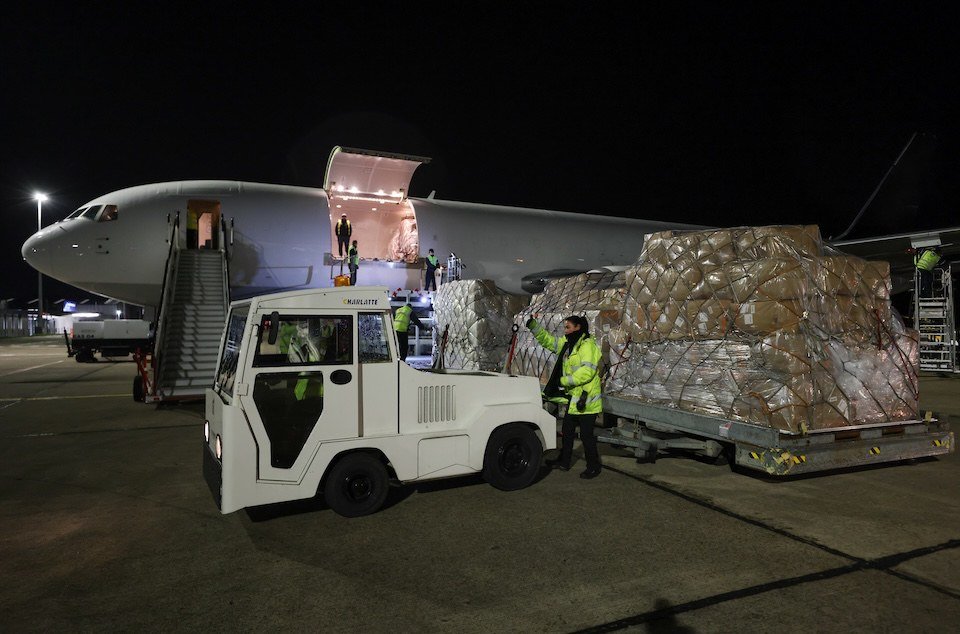
Polish cargo airline SkyTaxi has launched a three-times-weekly Boeing 767 freighter service between Wuxi Shuofang Airport in eastern China and Teesside International Airport in northern England, restoring intercontinental cargo connectivity to the UK airport and targeting growing e-commerce traffic.
Teesside International Airport has secured a new dedicated freighter operation linking the United Kingdom with China, marking an important development in its efforts to expand international cargo activity.
The service, operated by SkyTaxi, connects Wuxi Shuofang Airport in eastern China with Teesside in northeast England. Operating three times weekly with a Boeing 767 freighter, the route is primarily targeting e-commerce shipments destined for the UK market.
Related Post



The launch represents a return to intercontinental cargo operations for Teesside International and provides freight customers with an additional air freight gateway into northern England.
Airport Infrastructure Supports Cargo Expansion
The new China service will complement existing FedEx freight operations at Teesside and forms part of the airport’s wider strategy to establish itself as a growing UK e-commerce and air cargo hub.
Teesside International offers several operational advantages for freight operators, including round-the-clock operating capability, no slot restrictions and an integrated approach to cargo handling, customs support and ground operations.
Its geographical position also provides access to major UK transport corridors. The airport is located close to the A1(M) and A66 road networks, while the East Coast Main Line at Darlington and ports along the River Tees offer additional options for onward freight distribution.
Phil Forster, Managing Director of Teesside International Airport, said the return of regular cargo flights from China was an important step towards connecting the region with global trade and creating opportunities for businesses.
Bob Matharoo, Head of Cargo at the airport, highlighted its integrated handling arrangements and flexible operating environment as advantages for airlines and freight customers.
The airport is also preparing additional infrastructure to accommodate anticipated growth in cargo demand, with two new hangars nearing completion.
The latest agreement adds to a wider programme of investment at Teesside, including a £13.5 million aircraft maintenance, repair and overhaul facility being developed by Willis Aviation Services Limited, aircraft painting facilities operated by Airbourne Colours and a new £7 million hangar under construction by Draken.
The return of regular China freighter services is therefore an important development in Teesside’s ambition to expand its international cargo business, attract additional operators and strengthen its position within the UK’s regional air freight network.