
Air cargo has played a critical role in advancing international wildlife conservation efforts with the successful relocation of Atanasio, a southern white rhinoceros, from Chile to Brazil. One of only three white rhinoceroses born under professional care in Latin America, Atanasio has now joined an international conservation and breeding programme aimed at safeguarding the future of the species.
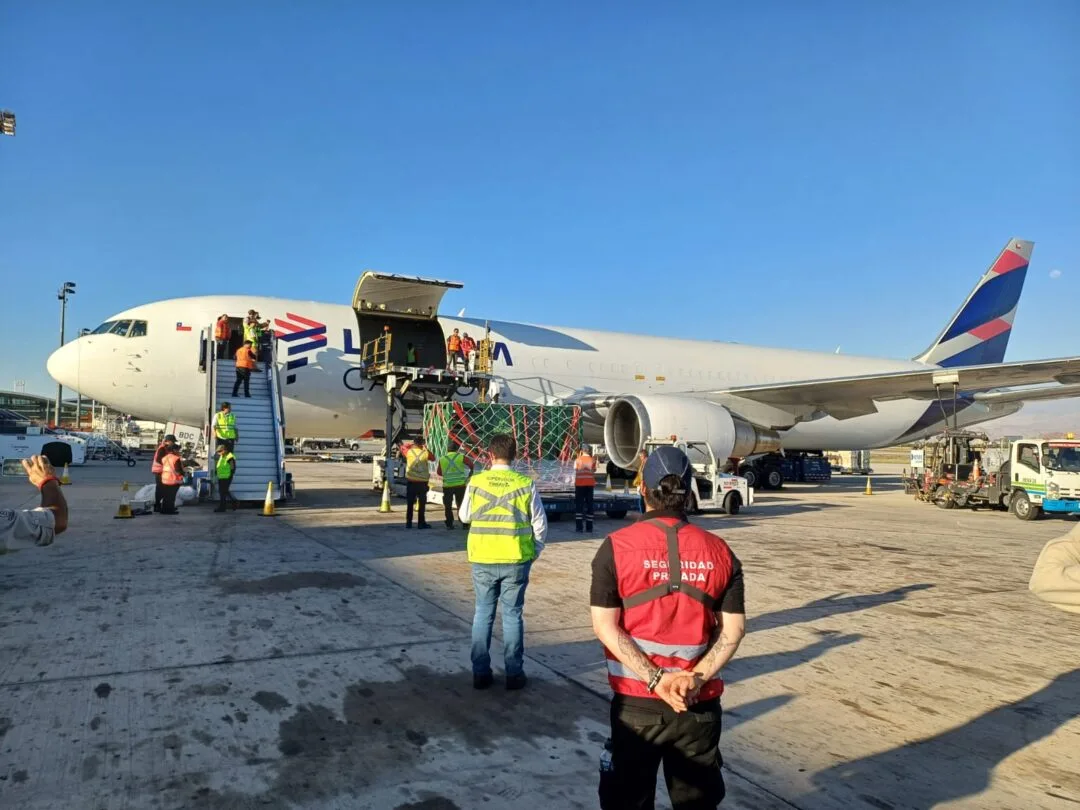
The transfer, completed on December 2, followed more than a year of detailed logistical planning and coordination. The operation was led by specialised logistics provider SPARX, with the air transport carried out by LATAM Cargo Group. The mission required close collaboration across multiple stakeholders to ensure the animal’s safety, welfare and compliance with international transport and veterinary standards.
Born in 2020 at Buinzoo Biopark, Atanasio is five years old and weighs close to two tonnes. He is notable not only for being one of the rare white rhinoceroses born in Latin America under professional care, but also as the first rhinoceros born globally during the COVID-19 pandemic. His relocation forms part of a broader regional conservation effort that has been built over more than a decade through cooperation between zoological institutions and logistics partners.
The air transport operation demanded rigorous preparation. In the months leading up to the flight, Atanasio underwent a structured conditioning programme designed to minimise stress and support his physical well-being throughout the journey. A custom-built transport container was developed to accommodate his size and behavioural needs, with ventilation, stability and animal comfort central to the design.
SPARX managed the end-to-end logistics of the relocation, including regulatory documentation, veterinary coordination, route planning and on-site operational oversight. Each phase of the process was sequenced to maintain strict timelines while ensuring that animal welfare remained the overriding priority. A specialist accompanied Atanasio throughout the journey, providing continuous monitoring during loading, flight and arrival.
On the airline side, the operation required coordinated efforts across cargo operations, ground handling and flight planning teams. Transporting an animal of this scale involved careful weight distribution, handling protocols and contingency planning, reflecting the complexity of live animal movements by air—particularly for endangered species.
Atanasio is the second rhinoceros born in Chile to be relocated internationally as part of a conservation programme. His older sibling was transported in 2022 to join a similar initiative, while a younger calf remains in Chile with its parents. The family’s conservation journey spans more than a decade, beginning with the transport of the parents from South Africa to Chile in 2013—also completed by air cargo.
With an estimated global population of around 20,000 southern white rhinoceroses, each successful breeding and relocation effort carries significant weight. Atanasio’s arrival in Brazil is expected to strengthen collaborative conservation programmes across South America, supporting genetic diversity, knowledge exchange and long-term population management.
Beyond its conservation impact, the operation highlights the role of air cargo in supporting highly specialised, non-commercial movements that demand precision, expertise and responsibility. As wildlife protection increasingly relies on international cooperation, air logistics continues to serve as a vital enabler—bridging distances while meeting the highest standards of care for some of the world’s most vulnerable species.