
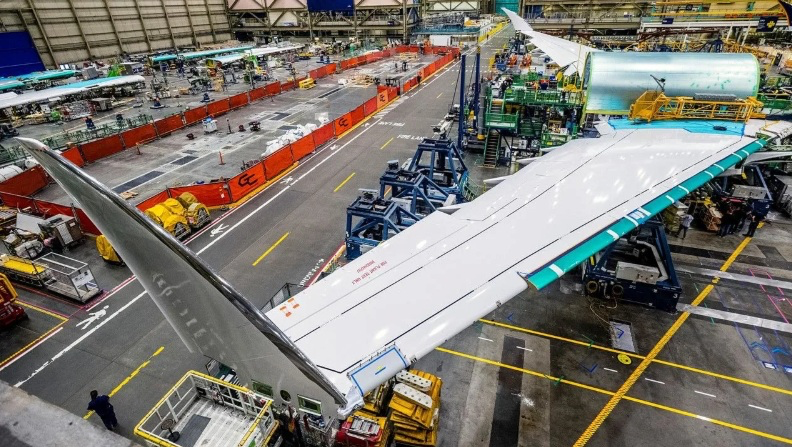
Boeing has reached a significant milestone in the development of its 777-8 freighter (777-8F) as assembly teams successfully joined the aircraft’s mid-fuselage with its composite wings—a critical stage in aircraft production known as the wing-body join. The 235-foot (72-meter) wings rank among the largest components ever integrated at Boeing’s Everett, Washington, facility.
At the 777/777X final assembly site, production teams are simultaneously outfitting the forward and aft fuselage sections with electrical systems, wiring, and other key components. This stage of assembly lays the groundwork for subsequent systems integration and testing, building on the operational and design experience of the legacy 777 Freighter.
Production of the 777-8F began in July 2025. Although the freighter was originally slated to enter service in 2027, the programme’s introduction has been delayed to 2028. Nevertheless, the aircraft has already secured substantial market interest, with dozens of orders from international customers since the programme’s launch in 2022.
The 777-8F is being developed to offer extended range, increased payload capacity, and improved fuel efficiency over the current 777 Freighter. These capabilities are designed to meet growing demand for long-haul cargo operations and provide greater operational flexibility for global freight carriers.
In parallel with production, Boeing is engaging with regulatory authorities to secure exemptions allowing the continued sale of existing 777 freighters beyond 2027, bridging the gap until the 777-8F enters service.
The wing-body join represents a visible marker of progress in Boeing’s broader strategy to modernise its freighter fleet. By combining advanced materials, enhanced payload capabilities, and operational efficiencies, the 777-8F is positioned to address evolving challenges in the global air cargo market while supporting the industry’s long-term growth and sustainability objectives.