
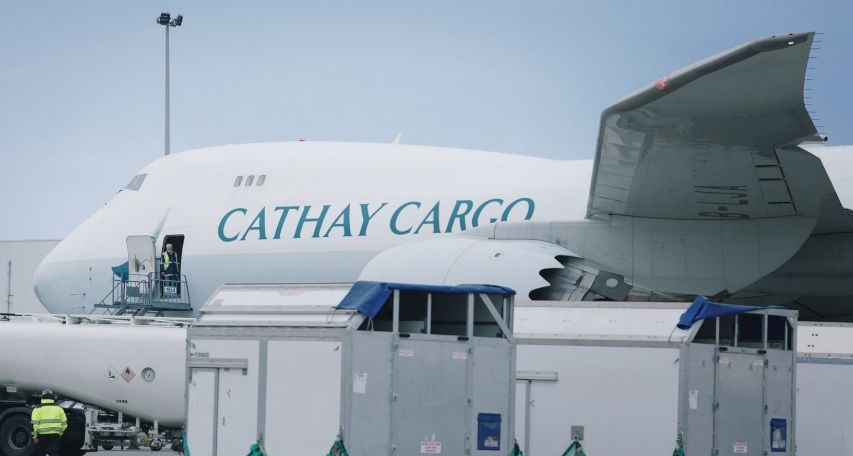
Hong Kong-based carrier Cathay Cargo is actively reviewing alternative routing strategies across the Asia–Europe corridor as capacity constraints intensify בעקבות ongoing operational disruptions linked to the Middle East.
In its latest monthly update, the airline confirmed that adjustments to its network—particularly the suspension of services to key Gulf destinations—have begun to impact payload capacity and operational efficiency. The carrier has temporarily halted passenger flights to Dubai and Riyadh until the end of May, while freighter services to both destinations remain suspended until further notice.
These changes have significantly altered Cathay’s long-haul cargo operations. Previously, a substantial portion of its Asia–Europe freighter services transited through the Middle East. Of the eight freighter flights that once routed via Dubai, five are now operating direct services. While this shift maintains connectivity, it has introduced payload restrictions due to longer flight distances and operational limitations.
To mitigate these challenges, Cathay Cargo is now evaluating alternative mid-point hubs along the Asia–Europe trade lane. The objective is to restore payload flexibility and optimise network efficiency without compromising service reliability.
Fuel Price Surge Adds Cost Pressures
Compounding the capacity challenge is a sharp rise in jet fuel prices, which is placing additional financial strain on airline operations globally.
According to International Air Transport Association data cited by the airline, average global jet fuel prices surged to $197 per barrel in the week ending 20 March, up from $95.95 per barrel just a month earlier. The increase reflects both higher crude oil prices and escalating refinery costs.
Fuel remains a critical cost component for airlines. In 2025, it accounted for approximately 30% of total operating expenses for Cathay Pacific. While the airline employs hedging strategies to manage volatility, current coverage levels—approximately 30% of the crude oil component—do not extend to refinery costs, limiting their effectiveness amid the recent surge.
As a result, Cathay Cargo has joined other global carriers in implementing fuel surcharge increases, passing part of the cost burden onto customers.
Network Resilience and Customer Commitments
Despite these pressures, Cathay Cargo has emphasised its commitment to maintaining operational capacity wherever feasible. The airline is working closely with partners and customers to manage disruptions and ensure continuity of supply chains.
The carrier also underscored the strategic importance of Hong Kong International Airport, which remains the world’s busiest air cargo hub and a critical node in global logistics networks.
Market Volatility Following Early-Year Stability
Cathay Cargo reported a relatively positive start to the year, despite softer demand conditions in February driven by an extended Lunar New Year period, which typically dampens manufacturing and export activity across mainland China and Hong Kong.
However, since late February, escalating geopolitical tensions in the Middle East and the unprecedented rise in aviation fuel costs have introduced significant volatility into the market.
Outlook: Flexibility Key Amid Uncertainty
As the industry navigates a complex operating environment, Cathay Cargo’s focus on alternative routing, cost management, and network resilience reflects broader trends across the airfreight sector.
The search for viable mid-point hubs underscores the importance of flexibility in long-haul cargo operations, particularly as traditional transit corridors face disruption. At the same time, rising fuel costs and capacity constraints are expected to continue influencing pricing dynamics and service strategies in the near term.
With uncertainty likely to persist, the carrier’s ability to adapt its network and maintain service continuity will be critical in sustaining its competitive position across key intercontinental trade lanes.