

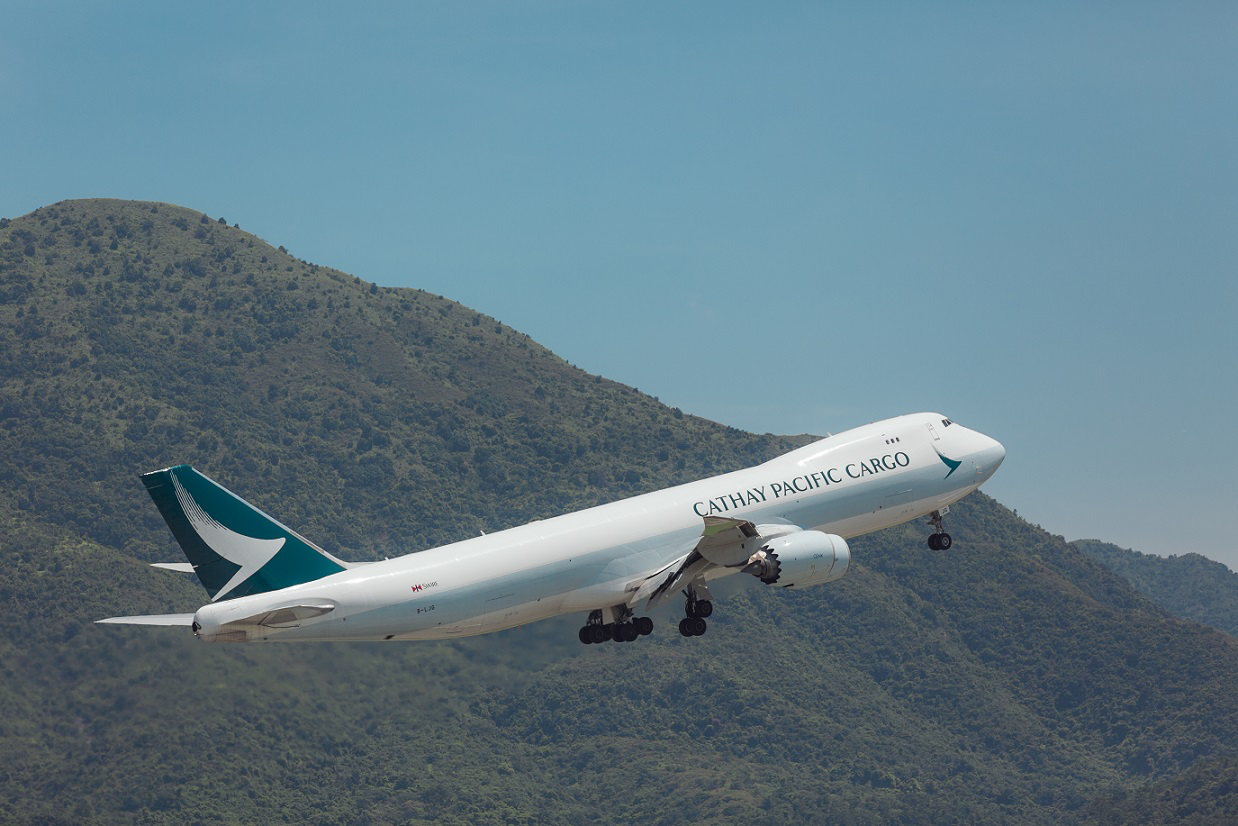
Cathay Pacific has suspended all freighter services to Dubai and Riyadh until May, as escalating geopolitical tensions in the Middle East continue to disrupt global air cargo operations and network planning.
The Hong Kong-headquartered carrier confirmed that the suspension also extends to all passenger services on the same routes over the specified period. The decision reflects a broader risk mitigation strategy adopted by airlines navigating an increasingly volatile operating environment across the region.
In a statement, the airline said the move was taken “in view of the volatile situation in the Middle East,” adding that the suspension aims to provide both cargo customers and passengers with greater certainty in planning amid ongoing disruptions.
Cathay emphasised that safety remains the primary driver behind its operational decisions, noting that it is closely monitoring developments and maintaining flexibility in its response. The carrier added that flights that would typically transit affected airspace are being rerouted to avoid risk exposure.
Prior to the suspension, Cathay Cargo operated dedicated freighter services between Hong Kong and Al Maktoum International Airport (DWC), a key logistics hub serving the Gulf region.
The airline’s decision comes amid a wave of similar operational adjustments across the industry, as carriers reassess their Middle East networks in response to the evolving security situation.
IAG Cargo has announced the suspension of flights between London and several Middle Eastern destinations—including Amman, Bahrain, Doha, Dubai and Tel Aviv—until June, with services to Abu Dhabi halted until October. Additional suspensions affect Madrid routes, with Doha services paused until 31 March and Tel Aviv until 28 March.
Meanwhile, Lufthansa Cargo has confirmed that group-wide operations to and from Tel Aviv are suspended until at least 9 April. The wider Lufthansa Group has also temporarily halted services to Riyadh through early April for operational reasons, although ITA Airways continues to operate scheduled flights on that route.
Further disruptions across the Lufthansa network include suspended services to Abu Dhabi, Amman, Beirut, Dammam, Dubai and Erbil through late March, while Tehran operations are paused until the end of April. The group has also temporarily stopped accepting bookings for several affected destinations, reflecting ongoing uncertainty.
The cumulative effect of these suspensions is increasingly visible across the air cargo market. Capacity constraints are driving freight rate increases, while supply chain planners face mounting challenges in securing uplift and maintaining schedule reliability.
At the same time, tensions are spilling over into commercial dynamics within the sector. Freight forwarders in Hong Kong have expressed concern over rising fuel surcharges imposed by some carriers, adding further cost pressure to an already strained market.
Separately, Oman Air Cargo has introduced a war risk surcharge, underscoring the extent to which geopolitical instability is reshaping pricing structures and operational economics in air freight.
As the situation continues to evolve, airlines are expected to maintain a cautious stance, prioritising safety while adjusting capacity and routing strategies to mitigate disruption across global cargo networks.