

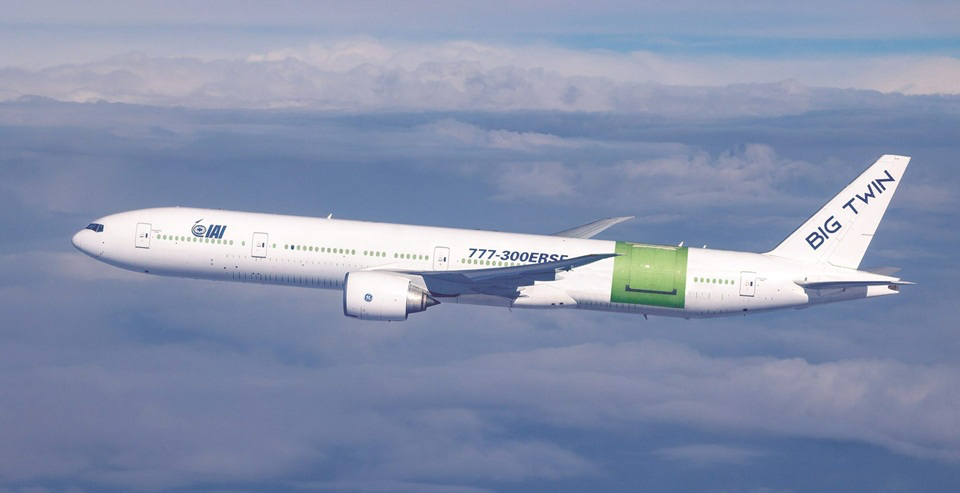
Ethiopian Airlines has signed a landmark lease agreement with Dublin‑based aircraft lessor AerCap for two Boeing 777‑300ERSF passenger‑to‑freighter conversions, positioning the carrier to become the first operator of this high‑capacity freighter type on the African continent.
Under the agreement, deliveries are scheduled for the second quarter of 2028, with the converted widebody aircraft set to significantly expand the airline’s long‑haul cargo capabilities. These freighters are being converted by Israel Aerospace Industries (IAI), which last year secured Supplemental Type Certification (STC) from both the US Federal Aviation Administration (FAA) and the Civil Aviation Authority of Israel (CAAI), authorising the Boeing 777‑300ER passenger jets for dedicated freight service.
Often referred to in industry circles as “The Big Twins,” the 777‑300ERSF conversions deliver larger payload capacity and enhanced economic efficiency compared with smaller twin‑engine freighter types. This makes them particularly well suited to long‑haul sectors and high‑volume cargo routes, serving global markets that demand scale as well as reliability.
Ethiopian Airlines Group Chief Executive Mesfin Tasew described the lease as a “strategic partnership” that will reinforce the carrier’s position in the global air cargo market. “We are delighted to partner with AerCap to bring the first Boeing 777‑300ERSF to Africa,” Tasew said, noting that the additional aircraft will boost cargo capacity and operational efficiency across Ethiopian’s expanding freight network.
Ethiopian’s cargo division has grown steadily in recent years, supported by a diversified freighter fleet that includes Boeing 737‑800P2Fs, Boeing 767‑300P2Fs and a substantial fleet of factory‑built Boeing 777Fs. According to fleet tracking data, the two new 777‑300ERSF conversions will join existing freighters and extend the airline’s reach in long‑haul markets once deliveries begin in 2028.
AerCap’s Chief Executive Aengus Kelly emphasised the importance of this transaction in deepening the long‑standing relationship between the lessor and Ethiopian Airlines. “With 25 % more capacity than today’s smaller twin‑engine long‑haul freighters, the 777‑300ERSF delivers significant cost efficiencies and will position Ethiopian Airlines to further expand its growing cargo platform,” Kelly said.
AerCap itself plays a central role in the Boeing 777‑300ERSF programme, having partnered with IAI on the conversion initiative and delivered the first converted aircraft to launch operator Kalitta Air last year. That milestone demonstrated the technical viability and market demand for aftermarket Boeing 777 freighters—aircraft that combine the reliability and range of the 777‑300ER with dedicated freight design features.
Industry analysts view the Ethiopian deal as a significant development for Africa’s aviation landscape. The introduction of the 777‑300ERSF reflects broader trends in global air cargo: airlines are increasingly seeking converted widebodies that offer lower operating costs per tonne and extended reach, helping carriers to compete in high‑density freight markets without committing to new‑build aircraft.
For Ethiopian Airlines, this investment dovetails with its long‑term strategy to scale both passenger and cargo operations. Already recognised as one of Africa’s largest and most diversified carriers, adding the Boeing 777‑300ERSF will give Ethiopia’s flag carrier a competitive edge in transcontinental freight corridors, facilitating trade and enhancing connectivity between Africa and global markets.