
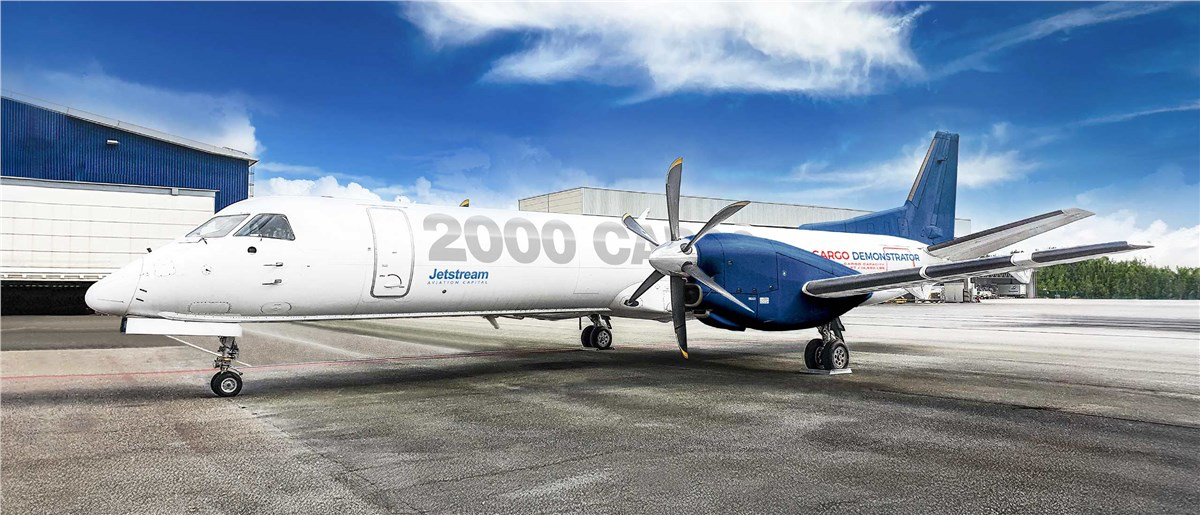
Täby Air Maintenance (TAM), the Swedish maintenance, repair and overhaul specialist, has achieved a major regulatory milestone with the Federal Aviation Administration’s (FAA) approval of its Saab 2000 freighter conversion Supplemental Type Certificate (STC). The announcement, made on 24 March 2026, underscores a growing global market interest in next‑generation regional cargo aircraft and expands the operational footprint of the Saab 2000 into the United States after prior European clearance.
The Saab 2000, a high‑speed twin‑engine turboprop originally developed in Sweden as a regional passenger airliner, has found renewed demand as a freighter platform following the certification. Built by Saab in the 1990s, only a limited number of the 50‑seat aircraft were produced, making it a relatively rare type in contemporary fleets, and its conversion represents a strategic opportunity to revitalise existing airframes for modern logistics needs.
TAM’s Saab 2000 cargo conversion programme received initial approval from the European Union Aviation Safety Agency (EASA) in late 2025, laying the regulatory groundwork for deployments within Europe. With the FAA’s subsequent certification, the configuration now meets the stringent safety and design requirements that permit commercial operations in the United States as well as expansion into other global markets.
The certified freighter configuration is targeted specifically at time‑sensitive logistics segments, including express freight, e‑commerce deliveries, and regional logistics networks where efficient payload performance and short‑haul economics are critical. The Saab 2000 freighter offers a cargo compartment of approximately 55.4 cubic metres and a structural floor capable of carrying significant loads, with a maximum payload capacity of 6,622 kg under typical certification parameters.
Operators in the United States planning to fly under Federal Aviation Regulations Part 135 will see a slightly lower maximum payload limit—approximately 3,402 kg (7,500 lbs)—reflecting specific operational and regulatory constraints applicable to regional freight services.
The conversion itself includes structural and systems upgrades tailored to freight operations. Among these enhancements are a reinforced carbon‑fibre floor structure with an integrated roller‑ball loading system to expedite cargo handling and LED lighting for improved visibility within the cargo bay—features designed to support tight turn‑around schedules demanded by express delivery operators.
TAM’s Saab 2000 freighter programme builds on the company’s established track record in cargo conversions, particularly the successful Saab 340 freighter conversions that have been widely adopted by regional cargo airlines around the world. The expansion into the larger Saab 2000 type reflects growing confidence in the regional turboprop freighter segment as global logistics networks evolve to prioritise flexibility, fuel efficiency and access to smaller markets.
Industry observers note that this FAA certification could facilitate additional orders from lessors and operators seeking versatile aircraft capable of serving niche routes with strong economics—a trend driven by sustained demand from e‑commerce and express distribution sectors. TAM’s dual approvals from EASA and the FAA position the Saab 2000 freighter as a compelling new entrant in an increasingly competitive cargo aircraft landscape.