

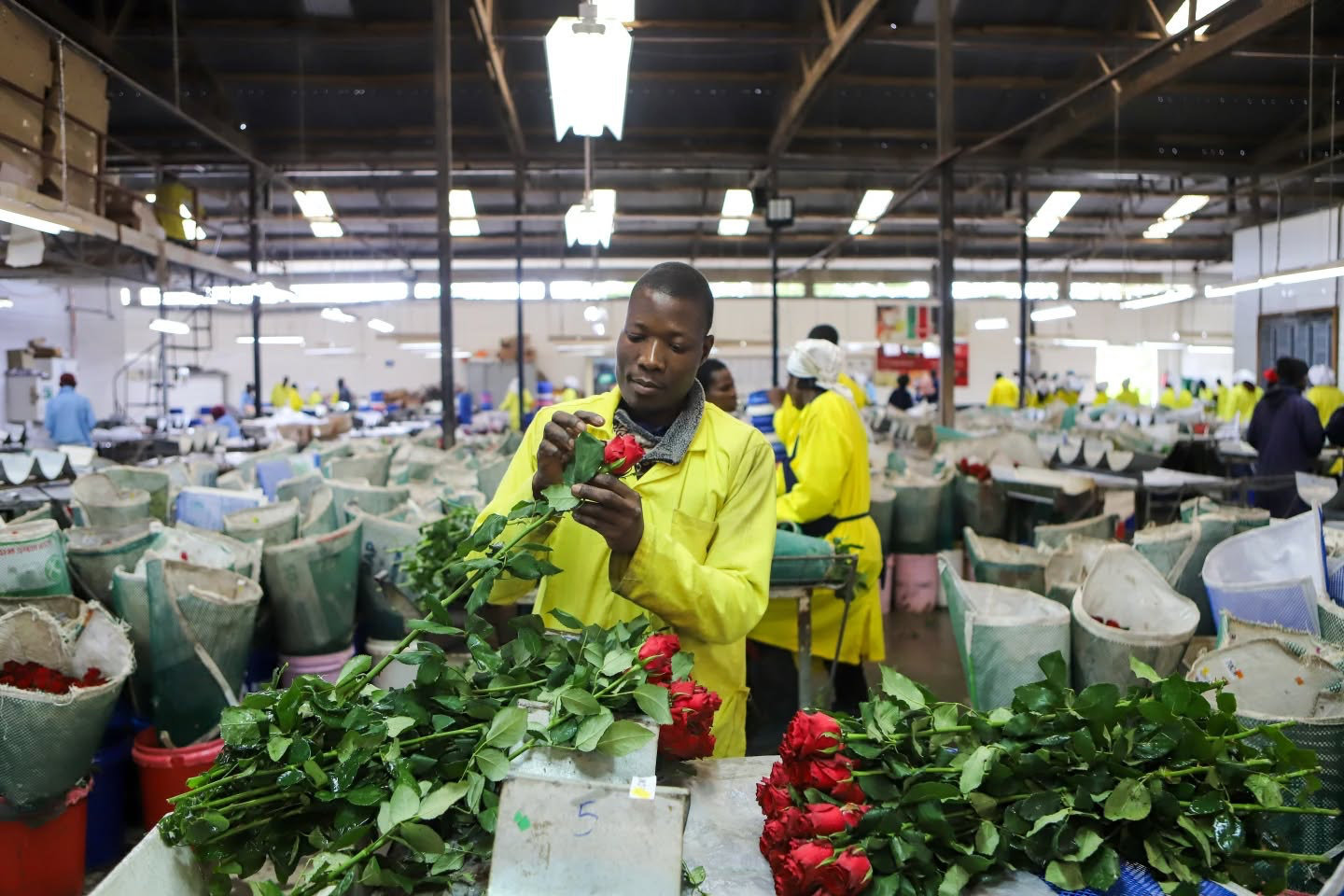
Kenya’s globally significant flower export industry is under mounting pressure as geopolitical tensions linked to the Iran conflict ripple through international air cargo networks, disrupting time-sensitive supply chains and inflating freight costs.
Exporters are reporting weekly losses of up to $1.4 million, as longer flight routes, constrained cargo capacity, and shipment delays erode both product quality and market competitiveness. The disruption underscores the fragility of perishable logistics systems, where even minor delays can translate into substantial financial losses.
According to reporting by the Associated Press, the cumulative impact over recent weeks has been severe. Industry estimates indicate that Kenya’s flower sector has already lost more than $4.2 million within a three-week period, reflecting how rapidly external shocks can destabilize export-driven supply chains.
Growers and exporters cite a combination of operational challenges. Airspace restrictions and rerouted flights have extended transit times to key European markets, while reduced cargo lift has intensified competition for available capacity. At the same time, freight rates have surged, placing additional strain on margins in a sector already sensitive to cost fluctuations.
“We are seeing a reduction in movement, delays in movement of produce, and longer routes, while pricing is extremely high,” said Clement Tulezi, Chief Executive Officer of the Kenya Flower Council.
The impact is particularly acute for Kenya’s horticulture sector, which generates more than $800 million annually and relies heavily on efficient air cargo connections to maintain freshness and meet strict delivery timelines. Flowers, as highly perishable goods, require rapid transit to preserve quality—making them especially vulnerable to disruptions in aviation logistics.
Industry stakeholders warn that continued instability could lead to longer-term consequences, including reduced export volumes, strained relationships with international buyers, and increased insurance and logistics costs. The situation also raises broader concerns about the resilience of global perishables trade in the face of geopolitical volatility.
As air cargo operators adjust routes and capacity in response to evolving risks, Kenya’s flower exporters are left navigating a rapidly shifting logistics landscape—one where reliability has become as critical as cost.