
Jet fuel prices remain a major cost concern for airlines and cargo operators, but the supply disruption triggered by the closure of the Strait of Hormuz has not resulted in fuel shortages severe enough to halt operations at major global aviation hubs, according to Cirium.
While concerns earlier this year centred on the prospect of airlines grounding aircraft and airports running out of fuel, the disruption has instead been concentrated at smaller and secondary airports, according to Mike Malik, Chief Industry Officer at Cirium.
“Since the Strait of Hormuz closed at the end of February, no major hub anywhere has run dry,” Malik said in a Cirium analysis published on September 22. He noted that the situation that emerged has differed significantly from the most severe forecasts made when the strategic waterway closed. Major hubs have continued operating, while fuel shortages have been concentrated at secondary locations where distribution and local storage have proved more difficult. “The failure is real. It is just not the one that was forecast,” Malik said.
Distribution emerges as the critical challenge
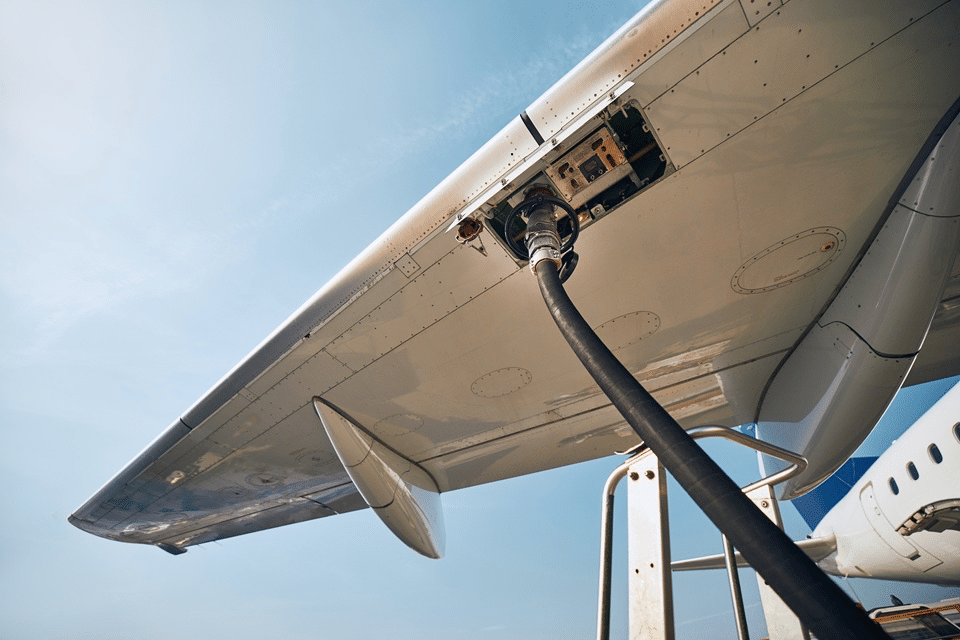
The disruption has highlighted a distinction between overall fuel availability and the ability to deliver fuel to the locations where aircraft need it.
According to Cirium, moving fuel between countries is only part of the challenge. Domestic distribution to airport fuel farms can also become difficult, particularly when labour and logistical resources are constrained.
The impact has therefore been most visible at smaller airports. Cirium cited Brindisi, Pescara, Yangon and Tahitiamong locations affected by fuel restrictions, contrasting them with major hubs such as London Heathrow, Frankfurt and Singapore Changi, which have continued operating.
Brindisi provides a particularly clear example. On April 6, the Italian airport temporarily stopped refuelling commercial aircraft, while six other Italian airports introduced fuel rationing during the same period. Cirium said the restrictions resulted from a supplier shortfall rather than an absence of fuel across Italy.
Italy’s experience illustrates the wider issue: fuel can be available at national level while still failing to reach the airport, fuel farm or aircraft that requires it.
Jet fuel costs remain elevated
Although major hub operations have remained intact, the cost impact of the fuel disruption remains significant.
IATA reported that global jet fuel prices increased 8.3% month on month in August 2026 and were 79.2% higher than a year earlier. The increase has added pressure to airline operating costs and cargo economics, with carriers continuing to use fuel surcharges to recover part of the additional expense.
IATA has previously warned that the disruption to energy and refining markets following the closure of the Strait of Hormuz has created significant regional differences in jet fuel availability and pricing. Its June outlook noted that jet fuel prices had approximately doubled from late February, with supply constraints particularly acute in parts of Europe, the US West Coast and Asia.
For cargo operators, the combination of higher fuel costs and network disruption has made operational efficiency increasingly important, particularly on long-haul routes where fuel represents a substantial component of operating expenditure.
Air cargo demand continues to grow
Despite the fuel shock, global air cargo demand has remained resilient.
IATA’s latest August data showed global cargo demand increased 4.4% year on year, while capacity declined 0.1%. Stronger demand and higher load factors helped airlines offset some of the impact of exceptionally high fuel costs.
The August figure follows a period of relatively strong growth. Global cargo demand increased 4.0% in April, 6.0% in May and 8.5% in June before easing to 3.9% in July and 4.4% in August.
Technology products and urgent shipments have been among the important contributors to demand. In June, IATA reported that air cargo growth was being supported by high-value technology products and urgent shipments, while Asia-North America recorded 14.7% year-on-year growth.
The August market remained particularly strong on the Asia-North America corridor, which grew 13.2% year on year, while Europe-North America increased 4.3%. Within Asia, demand rose 6.1%.
Fuel availability remains a logistics issue
The experience of 2026 suggests that the industry’s fuel risk is not simply a question of whether sufficient jet fuel exists globally. The more immediate challenge can be whether that fuel is available at the right airport, in the right quantity and at the right time.
For major cargo hubs, continued access to fuel has so far allowed operations to remain largely stable despite the disruption. However, restrictions at smaller stations can still affect network planning, aircraft rotations and the ability of carriers to serve thinner markets.
The distinction could become increasingly important if fuel supply constraints persist. For airlines and cargo operators, managing fuel exposure will therefore involve not only procurement and pricing, but also distribution resilience and contingency planning across individual airports.