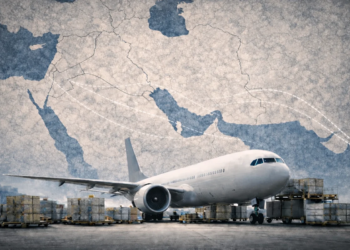


My Freighter has strengthened its European network with the launch of scheduled cargo flights from Hong Kong International Airport (HKG) to Maastricht Aachen Airport (MST) in the Netherlands, routing via its central hub at Tashkent International Airport (TAS), Uzbekistan. The service, operating twice weekly on Boeing 767-300 freighters, aims to provide efficient and flexible connectivity for shippers moving goods between East Asia, Europe, and the Middle East.
Sherzod Akbarov, Cargo Sales Director at My Freighter, explained: “With this new route, we are enabling seamless cargo flow across strategic trade corridors. Leveraging our Tashkent hub and dedicated trucking network, the service ensures fast transit times, efficient handling, and reliable connections to European markets.”
The new Hong Kong–Maastricht route builds on the airline’s existing European operations. My Freighter began flying to MST in August last year, linking Shanghai Pudong (PVG), TAS, Almaty (ALA) in Kazakhstan, and MST. Concurrently, the airline launched twice-weekly PVG–Amsterdam Schiphol (AMS) flights via Tashkent, demonstrating a systematic expansion of its East Asia–Europe network.
In addition to organic growth, My Freighter has broadened its reach through interline partnerships with airlines including Cargojet, Aeromexico, Icelandair Cargo, Biman Bangladesh Airlines, and Air Serbia, allowing for extended cargo connectivity across multiple global markets.
My Freighter operates a dedicated freighter fleet of eight Boeing 767-300Fs, including seven passenger-to-freighter (P2F) conversions and one production freighter. Earlier this year, the airline also added a Boeing 757-200P2F to its fleet, further enhancing regional and intercontinental cargo capabilities. Its passenger fleet, comprising seven Airbus A319, A320, and A321 aircraft, supports cargo operations through bellyhold capacity where applicable.
By combining hub-and-spoke operations through Tashkent with a dedicated trucking network, My Freighter aims to provide shippers with a reliable, flexible alternative to existing air cargo options between East Asia and Europe. The carrier’s strategy highlights a growing focus on mid-capacity freighters serving niche routes, connecting emerging logistics corridors, and supporting e-commerce, pharmaceuticals, and time-sensitive shipments.