
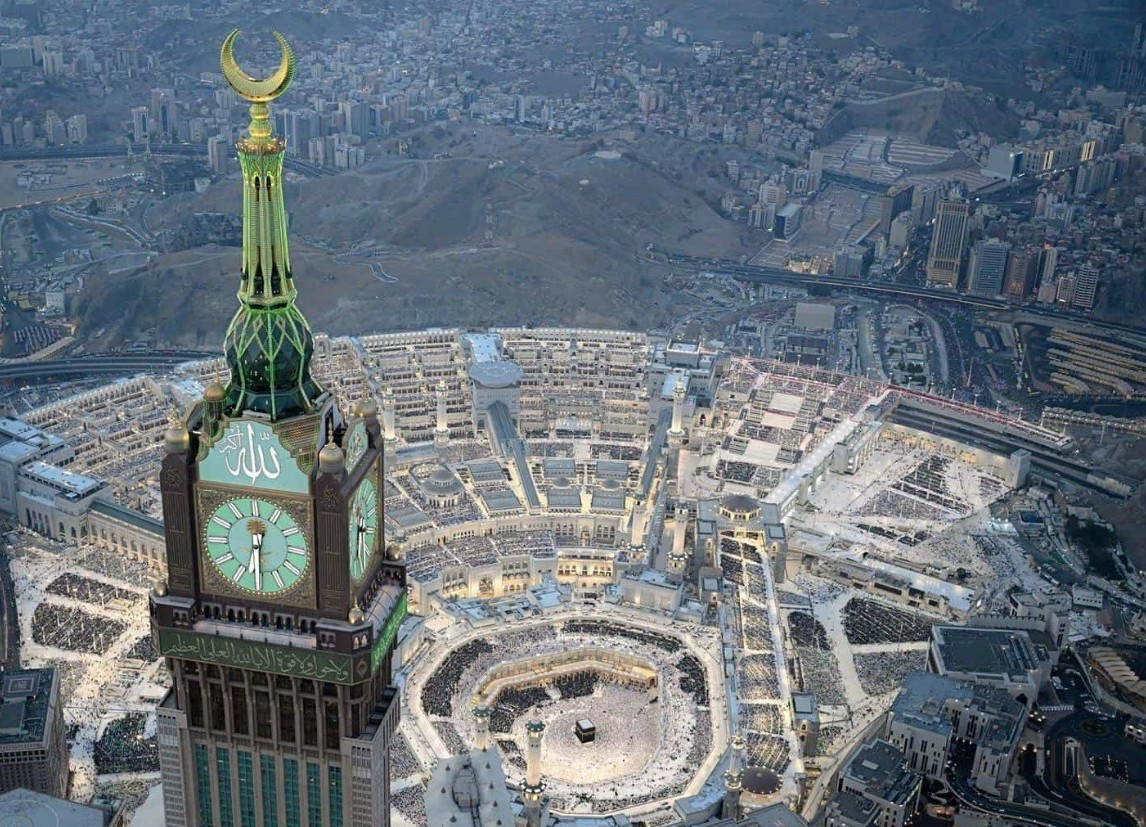
Mecca is set to gain its first international airport following the approval of plans by Saudi authorities to develop a major new aviation gateway aimed at significantly improving access for millions of religious travellers undertaking Hajj and Umrah pilgrimages.
The project, confirmed by the Royal Commission for the City of Makkah and the Holy Sites, represents a major infrastructure milestone for one of the world’s most visited religious destinations, which currently receives more than one million international pilgrims annually.
At present, travellers bound for Mecca arrive via King Abdulaziz International Airport in Jeddah, located approximately 100 kilometres away, before continuing their journey by road to the holy city. The planned airport is expected to eliminate this dependency by enabling direct air access to Mecca, significantly reducing travel time and improving overall passenger flow during peak pilgrimage seasons.
The development forms part of a broader national infrastructure strategy that includes integrated transport systems such as metro connectivity and enhanced urban mobility networks designed to improve movement between holy sites and surrounding regions. Authorities have also been exploring advanced mobility solutions, including experimental concepts such as autonomous aerial taxis for passenger transport and emergency logistics support.
Mecca’s geographical setting, characterised by mountainous terrain, has historically presented operational challenges for aviation development, including turbulence patterns and limited visibility constraints. However, recent advancements in aviation technology, infrastructure engineering, and air traffic management are understood to have mitigated many of these limitations, enabling renewed feasibility for large-scale aviation infrastructure in the region.
According to statements attributed to Saleh Al-Rasheed, CEO of the Royal Commission for Makkah City and the Holy Sites, the strategic framework for the airport has now been formally approved. He confirmed that economic, investment, and development directions for the project have been established, paving the way for implementation through public-private partnership models.
The airport is expected to be developed in line with international aviation standards, with a focus on handling high-density seasonal traffic flows associated with pilgrimage operations. Given the extreme peak demand during Hajj periods, operational planning is likely to prioritise capacity management, passenger throughput efficiency, and multimodal connectivity with surrounding transport infrastructure.
Once completed, the airport is expected to play a transformative role in reshaping pilgrimage logistics, reducing congestion at entry points, and improving the overall travel experience for millions of visitors each year. It also aligns with Saudi Arabia’s broader Vision 2030 strategy, which aims to enhance tourism infrastructure, diversify the economy, and position the Kingdom as a global logistics and travel hub.