
Two specialist aviation training providers, Pika Aero and DGM France, have been recognised for their technological advances in dangerous goods training after receiving the IATA Competency-Based Training and Assessment (CBTA) Center Best Innovation Award.
The award was presented by the International Air Transport Association (IATA) during the 4th IATA CBTA Center Conference, held alongside the 2026 IATA World Cargo Symposium 2026 in Lima, Peru.
The accolade recognises innovative training solutions that enhance industry safety and compliance, with both companies acknowledged for pioneering the use of artificial intelligence (AI) to create more immersive and personalised learning environments for dangerous goods training.
Transforming dangerous goods training through AI
Headquartered in Paris, Pika Aero develops certified digital learning programmes for air transport professionals across critical operational areas including aviation safety, security and dangerous goods handling.
The company received recognition for its AI-driven CBTA-based dangerous goods training platform, which combines short, targeted learning modules with realistic operational scenarios that evolve dynamically based on the trainee’s performance. The technology allows learners to progress through simulated real-world situations, helping to reinforce practical decision-making skills in high-risk operational environments.
Dangerous goods specialist DGM France was also honoured for its AI-powered training solution designed to tailor course content to each learner’s existing knowledge, experience and competency level. The system incorporates post-training validation tools that measure learning progress and identify any remaining competency gaps through structured feedback and assessment.
Supporting competency-based training in aviation
IATA’s CBTA framework is designed to ensure that aviation personnel handling dangerous goods are trained according to the specific functions they perform rather than generic job titles. The approach focuses on developing measurable competencies—knowledge, skills and behavioural attributes—required to safely manage hazardous cargo within the aviation supply chain.
The CBTA Center programme supports airlines, civil aviation authorities and training organisations in implementing competency-based training programmes aligned with the standards set out in the IATA Dangerous Goods Regulations (DGR). Accredited centres are evaluated on training governance, course design, instructional delivery and assessment methods to ensure the highest levels of safety and compliance in dangerous goods handling.
Industry recognition for innovation
Frederic Leger, Senior Vice President for Products and Services at the International Air Transport Association, said the award highlights the growing role of emerging technologies in aviation training.
“As Pika Aero and DGM France have demonstrated, artificial intelligence has become a vital enabler in creating realistic training environments that strengthen safety and enhance regulatory compliance,” Leger said. “We are proud to count both companies among IATA’s CBTA Center network and encourage others to follow their example in raising training standards across the industry.”
Driving immersive learning experiences
Baptiste Sesmat, Director General of Pika Aero, noted that the recognition reflects the company’s commitment to continuously improving aviation training.
“We owe it to our customers, who place their trust in us, not only to provide the highest standards of training but also to push the boundaries of immersive learning,” he said. “Our goal is to create training experiences that closely replicate real operational conditions.”
Meanwhile, Vytautas Volskis, President of DGM France, described the company’s approach as a fundamental rethinking of dangerous goods training methodology.
“We approached dangerous goods training as a system-engineering challenge,” Volskis said. “When CBTA requirements were introduced, we chose not to replicate traditional course models but to develop an entirely new framework. Competence must be designed, measured and continuously refined.”
According to Volskis, the company’s AI-supported CBTA model enables structured personalisation while maintaining strict regulatory governance, ensuring that safety performance is not assumed but demonstrably achieved.
Spotlight on innovation at IATA World Cargo Symposium
The CBTA Center Best Innovation Awards, established by IATA in 2023, aim to highlight technological and methodological advancements that improve training effectiveness within the aviation and air cargo sectors.
Winners are selected through an evaluation process conducted by an independent panel comprising industry experts, IATA representatives and independent validators. Submissions are assessed on criteria including innovation, industry impact, implementation feasibility, user accessibility and evidence-based effectiveness.
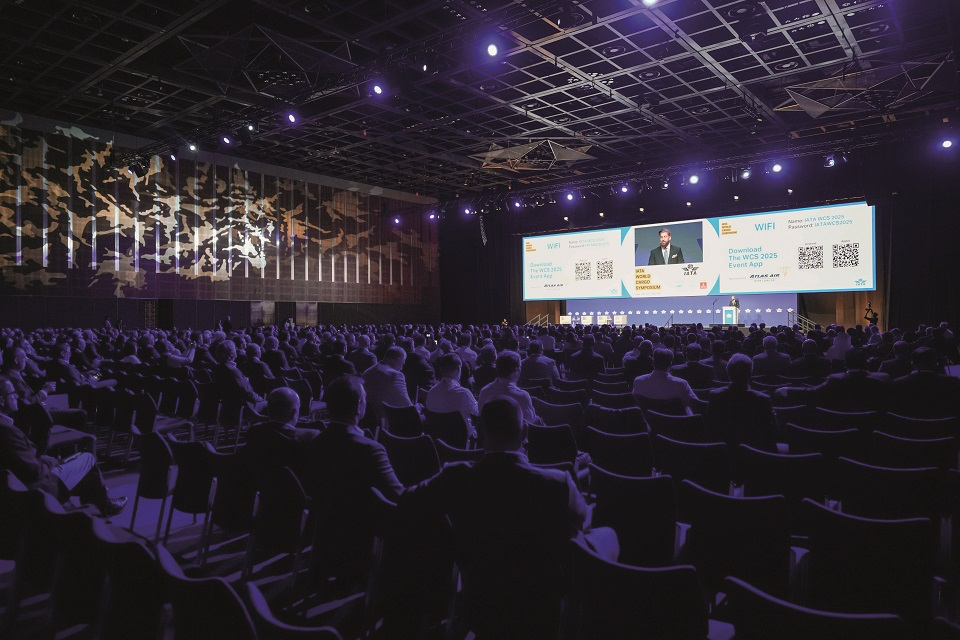
The awards were presented during the 2026 IATA World Cargo Symposium, one of the air cargo industry’s most prominent annual gatherings. The event, held from 10–12 March in Lima, is themed “Advancing Air Cargo in a Dynamic World”, reflecting the sector’s response to rapid digitalisation, shifting geopolitical dynamics and evolving regulatory frameworks.
The symposium opened with keynote remarks from Willie Walsh, Director General of the International Air Transport Association, while Brendan Sullivan, IATA’s Global Head of Cargo, is among the senior industry leaders scheduled to review the past year’s developments and discuss the future direction of the air cargo industry.