
Washington Dulles International Airport is positioning itself as a major East Coast gateway for pharmaceutical logistics through a strategic transatlantic partnership with Brussels Airport, supported by United Airlines and the Virginia Economic Development Partnership (VEDP).
The collaboration, formalised through a memorandum of understanding, aims to establish a dedicated “pharma super-corridor” linking the two airports—creating a streamlined, standardised logistics channel for the movement of biopharmaceutical products between Europe and the United States.
Building a transatlantic pharmaceutical logistics corridor
The initiative is designed to address inefficiencies in current pharmaceutical supply chains, where shipments are often routed through multiple hubs with varying handling standards. By aligning procedures and creating a defined corridor, the partnership seeks to improve consistency, transparency, and reliability for temperature-sensitive and high-value cargo.



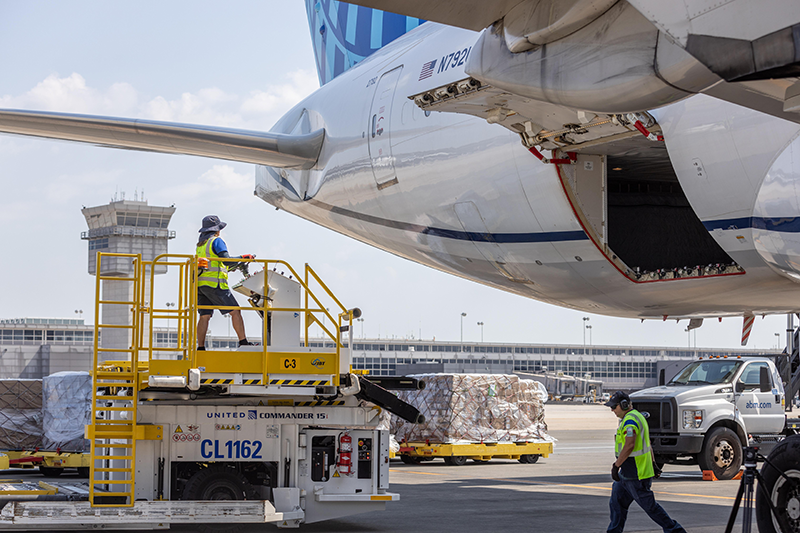
United Airlines will serve as the primary carrier on the route, leveraging its growing transatlantic network and expanding belly cargo capacity to support increased pharmaceutical volumes.
Virginia emerges as a biopharma manufacturing hub
The development comes amid significant investment in Virginia’s life sciences sector. Major pharmaceutical companies—including AstraZeneca, Eli Lilly and Company, and Merck & Co.—have collectively announced investments totalling $12.5 billion and the creation of approximately 1,750 jobs since late 2025.
These investments are accelerating the growth of a regional pharmaceutical ecosystem encompassing manufacturing, research and development, and contract production. With its geographic location offering access to both domestic and international markets, Virginia is increasingly positioned as a strategic node in global pharma supply chains.
Leveraging Brussels’ established pharma expertise
The partnership draws heavily on the established capabilities of Brussels Airport, widely recognised as one of the world’s leading pharmaceutical cargo hubs. Belgium is the fourth-largest exporter of pharmaceutical products globally, with a dense concentration of leading life sciences companies operating in the region.
Brussels Airport has built a specialised ecosystem for pharma logistics, including advanced temperature-controlled infrastructure and industry-leading certifications such as IATA CEIV Pharma. It was also a founding member of Pharma.Aero, reflecting its leadership in developing best practices for the sector.
The airport’s cargo community has pioneered innovations such as preconditioned airside transporters, ensuring continuous temperature control between warehouse facilities and aircraft—a critical factor in maintaining product integrity.
Strengthening collaboration across the cargo ecosystem
In parallel with the airport-level agreement, Air Cargo Belgium has entered into a separate memorandum of understanding with VEDP to further deepen cooperation between industry stakeholders.
This broader collaboration aims to facilitate knowledge sharing, align operational standards, and support the development of an integrated transatlantic pharma logistics network.
Infrastructure expansion supports cargo growth at Dulles
United Airlines is continuing to expand its presence at Washington Dulles, with a new 435,000-square-foot concourse currently under development. Scheduled to open later this year, the facility will enhance passenger capacity and, by extension, increase available bellyhold cargo space.
Since 2022, Dulles has already added more than 26,000 tonnes of belly cargo capacity, supported by network growth and operational expansion. United’s plans to introduce approximately 20 new Boeing 787 Dreamliner aircraft in 2026 are expected to further strengthen cargo capabilities on long-haul routes.
Economic impact and long-term outlook
According to industry analysis, enhanced air cargo capabilities at Dulles could generate up to $138 million in additional pharmaceutical industry revenue across Virginia. The dedicated corridor is expected to play a key role in enabling this growth by improving supply chain efficiency and reliability.
Brussels Airport reports that pharmaceuticals and life sciences already account for nearly 17% of its total cargo volumes, with export levels significantly exceeding the European average. The partnership aims to replicate similar growth dynamics at Dulles, supporting the long-term expansion of Virginia’s biopharma sector.
A model for future pharma logistics corridors
The Brussels–Dulles initiative reflects a broader shift toward structured, corridor-based logistics solutions for high-value and sensitive cargo. By aligning infrastructure, processes, and stakeholder collaboration, the model seeks to reduce complexity and improve performance across global supply chains.
As pharmaceutical manufacturing continues to expand and global distribution networks become more complex, such dedicated corridors are expected to play an increasingly important role in ensuring secure, efficient, and compliant transport.