

New Time-Definite Air Freight Services and Industry-Focused Logistics Solutions Aim to Boost Reliability, Visibility and Cross-Border Efficiency for Automotive and Industrial Customers
UPS has announced a nearly $50 million investment to enhance its logistics infrastructure and industry-specific capabilities across North America, including the launch of new time-definite heavy air freight services connecting Mexico with the United States and Canada. The initiative is designed to help automotive and industrial manufacturers navigate increasingly complex supply chains, improve production continuity and respond more effectively to shifting market, regulatory and geopolitical conditions.
As manufacturers across North America confront mounting supply chain challenges, global logistics giant UPS is expanding its regional capabilities with a strategic investment aimed at improving cross-border connectivity, operational visibility and freight reliability.
Related Post




The company has unveiled plans to invest nearly $50 million in strengthening its logistics network and enhancing specialised services for automotive and industrial customers. Central to the initiative is the expansion of UPS’s North American air freight network to include new time-definite heavy air freight connections to and from Mexico, one of the region’s most important manufacturing hubs.
The investment reflects the growing demand for integrated logistics solutions as manufacturers face increasing pressure from automation, nearshoring trends, geopolitical uncertainty and evolving regulatory frameworks. With production schedules becoming more sensitive to supply chain disruptions, the ability to move high-value and time-critical components efficiently across borders has become a competitive necessity.
Expanding Air Freight Connectivity Across North America
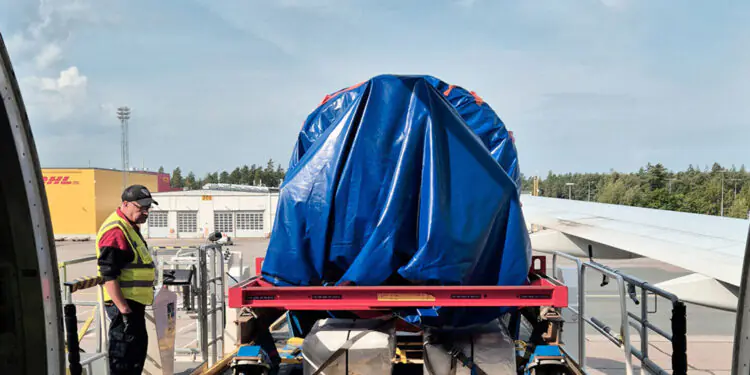
Beginning in August, UPS will introduce a new North American Air Freight service offering one-day, two-day and three-day delivery options for heavy freight shipments moving between Mexico, the United States and Canada.
The service has been specifically designed to support automotive and industrial manufacturers that depend on the rapid movement of components, machinery and production-critical parts. By integrating transportation, customs brokerage and warehousing into a single logistics solution, UPS aims to minimise handoffs, reduce operational complexity and streamline freight flows across international borders.
According to the company, the new service will provide customers with enhanced shipment visibility from origin to destination while helping mitigate delays often associated with cross-border transportation. Improved predictability and real-time tracking capabilities are expected to support manufacturers in maintaining uninterrupted production schedules and reducing inventory-related risks.
The launch comes at a time when Mexico continues to strengthen its position as a major manufacturing and export centre for North America, particularly in the automotive, electronics and industrial sectors. As nearshoring initiatives drive increased investment into Mexican production facilities, demand for reliable and integrated cross-border logistics services has risen significantly.
Addressing the Needs of Modern Manufacturers
UPS executives say the latest investment is designed to address the evolving requirements of industrial and automotive customers operating within increasingly interconnected supply chains.
“Our automotive and industrial customers want an easy button for logistics,” said Matt Guffey, Chief Commercial and Strategy Officer at UPS.
“They need reliability, visibility and a partner that understands their supply chains—end to end, today and tomorrow. We have made strategic investments to build the team and the network that meets their needs, unlike any other in the industry.”
The initiative underscores a broader shift within the logistics sector toward vertically integrated solutions that combine transportation, customs compliance, warehousing and technology-enabled visibility within a single service offering.
For manufacturers, such integration can help reduce administrative burdens, improve responsiveness and create greater control over inventory and production planning.
Technology and Automation Drive Efficiency
Beyond network expansion, UPS is leveraging technology and automation to improve service performance across its logistics operations.
The company reported that approximately 67.5 percent of its facilities now incorporate automated processes, helping to increase operational efficiency, accelerate sorting capabilities and improve throughput across the network.
UPS has also expanded the deployment of RFID sensing technology throughout its logistics infrastructure. The technology enables enhanced shipment tracking and real-time visibility, providing customers with greater transparency throughout the transportation process.
These investments align with broader industry efforts to digitise supply chains and improve decision-making through data-driven logistics management.
In addition, UPS continues to expand service offerings through its subsidiary Roadie, which provides same-day, on-demand and after-hours delivery solutions. The service is particularly valuable for automotive customers requiring urgent movement of replacement parts to dealerships, maintenance facilities and repair centres, often without the need for staff to be present at the time of delivery.
Enhanced Freight Solutions for Industrial Shippers
The company has also strengthened its less-than-truckload (LTL) capabilities through UPS Ground with freight pricing for shipments exceeding 150 pounds. The offering combines the reliability of UPS’s small-package network with freight transportation services tailored to industrial and automotive customers.
UPS further highlighted its ability to provide early-morning deliveries, noting that its network reaches more businesses across the United States by 10:30 a.m. than competing carriers. For manufacturers operating under just-in-time production models, such capabilities can be critical in preventing costly assembly line disruptions.
Dedicated Industry Expertise
Recognising that logistics requirements vary significantly across industries, UPS has established a specialised team comprising more than 300 subject matter experts dedicated exclusively to automotive and industrial manufacturing customers.
The team is supported by thousands of operational employees across the company’s global network and is tasked with developing tailored solutions that address the unique challenges faced by manufacturers managing complex international supply chains.
By combining sector expertise with integrated logistics services, UPS aims to provide customers with greater operational resilience, improved supply chain visibility and faster access to key markets.
Customer Confidence and Supply Chain Predictability
The company emphasised that one of the primary objectives of the investment is to provide customers with greater certainty and planning confidence.
David MacNeil, Chief Executive Officer of WeatherTech, highlighted the importance of predictable logistics performance in supporting customer satisfaction and business continuity.
“When we know what to expect from shipping, it helps us plan with confidence. That clarity allows us to stay focused on delivering a great experience for our customers,” he said.
Such feedback reflects a growing industry focus on reliability and transparency as manufacturers seek logistics partners capable of supporting increasingly sophisticated supply chain strategies.
Strengthening North American Trade Flows
UPS’s latest investment comes amid significant changes in North American manufacturing and trade patterns. Nearshoring, regionalisation and supply chain diversification continue to drive increased freight activity between Mexico, the United States and Canada.
As companies seek to reduce supply chain risk while maintaining access to competitive manufacturing capacity, efficient transportation networks have become a critical enabler of economic growth and industrial competitiveness.
With annual revenues of $88.7 billion in 2025 and operations spanning more than 200 countries and territories, UPS remains one of the world’s largest logistics providers. The company believes its latest investment will strengthen cross-border trade flows, enhance supply chain resilience and support manufacturers seeking greater speed, visibility and control over freight movements throughout North America.
For the automotive and industrial sectors, the combination of expanded air freight connectivity, integrated logistics solutions and advanced digital capabilities represents a significant step toward building more resilient and responsive supply chains in an increasingly dynamic global marketplace.