
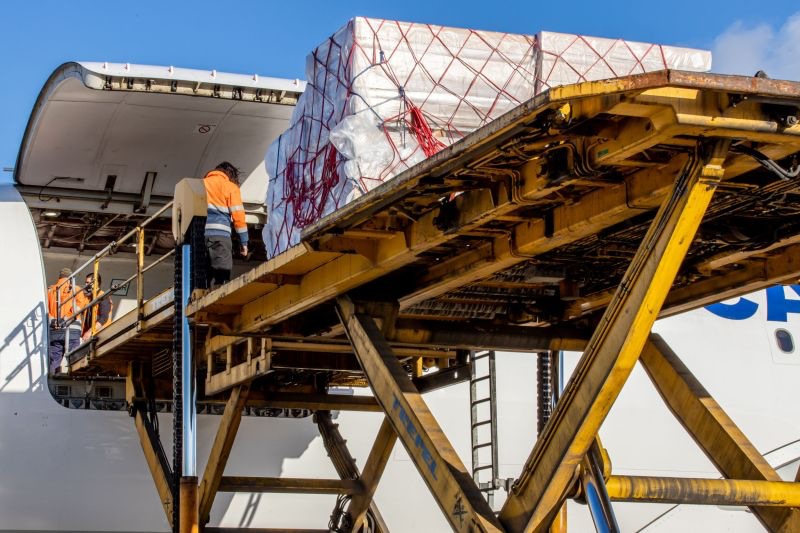
Global air cargo volumes continue to show a marked divergence between the perishables and pharmaceutical sectors, according to newly released insights from strategy consulting firm Aevean. Collectively, food, perishables, and healthcare products account for more than 21% of worldwide airfreight volumes, yet their value and yield dynamics differ sharply.
Maarten Wormer, head of consulting at Aevean, presented the findings on day two of the International Air Transport Association’s (IATA) World Cargo Symposium (WCS), highlighting contrasting trends across these high-profile cargo verticals.
Food and Perishables: Stable Volumes, Limited Value
Food and perishables constitute 17% of global air cargo by weight but account for only 1% of total cargo value, resulting in a negative yield premium of 38%. Despite the absence of overall growth in 2025, Wormer described the sector as “highly resilient,” with its share of global airfreight consistently ranging from 17% to 19% since 2019. Monthly volumes remain subject to seasonality.
Related Post


Regionally, the Asia-to-Europe trade lane posted a 14% increase, underscoring strong demand in that corridor. Latin America continues to dominate perishables exports, moving 1.3 million tonnes in 2025—equivalent to 26% of the global total—primarily consisting of flowers, fruits, and vegetables. Trade between Latin America and Europe expanded 10% year-on-year, supported by the Mercosur trade agreement, while the Latin America–North America corridor saw a modest 1% decline. Intra-Asia volumes have now matched Latin America’s largest trade lanes.
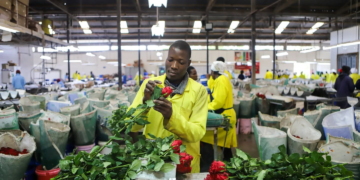
Cut flowers remain a critical driver for air cargo, with six out of every ten flowers shipped globally originating from Latin America. In addition, global salmon demand contributed approximately 250,000 tonnes to air cargo volumes between 2016 and 2025.
Pharmaceuticals: High Value, Selective Growth
In contrast, healthcare and pharmaceutical products represent just 4% of global airfreight by weight but account for 11% of cargo value, achieving a yield premium of 39%. The sector experienced modest 2% growth in 2025, largely driven by Latin American exports, which grew 23% year-on-year. Other regions remained flat.
Wormer noted a distinct trend toward higher-value pharmaceutical products, including biologics, reagents, and specialized medications. While volumes of biologics and reagents fell by 3%, their value rose by 4% and 8% respectively, reflecting a shift toward premium, high-yield cargo. Switzerland is expanding its market share in biologics, and India is increasing its vaccine exports.
Tariff-induced supply chain adjustments also influenced trade flows. For example, pharmaceutical exports from the Dominican Republic to the United States rose 267% year-on-year, whereas exports from China to the U.S. declined by 12%, highlighting the impact of cost-avoidance strategies on route planning.
Outlook
The data emphasizes the stability of the perishables sector alongside the lucrative potential of pharmaceuticals. While food and perishables maintain steady volumes with regional variability, the pharma sector offers high-value cargo opportunities for carriers, reinforcing its strategic importance in global airfreight.