
The British International Freight Association (BIFA) has intensified its dialogue with European policymakers to address operational challenges faced by UK freight forwarders under the Windsor Framework, the post-Brexit trade arrangement designed to facilitate the flow of goods between Great Britain and Northern Ireland.
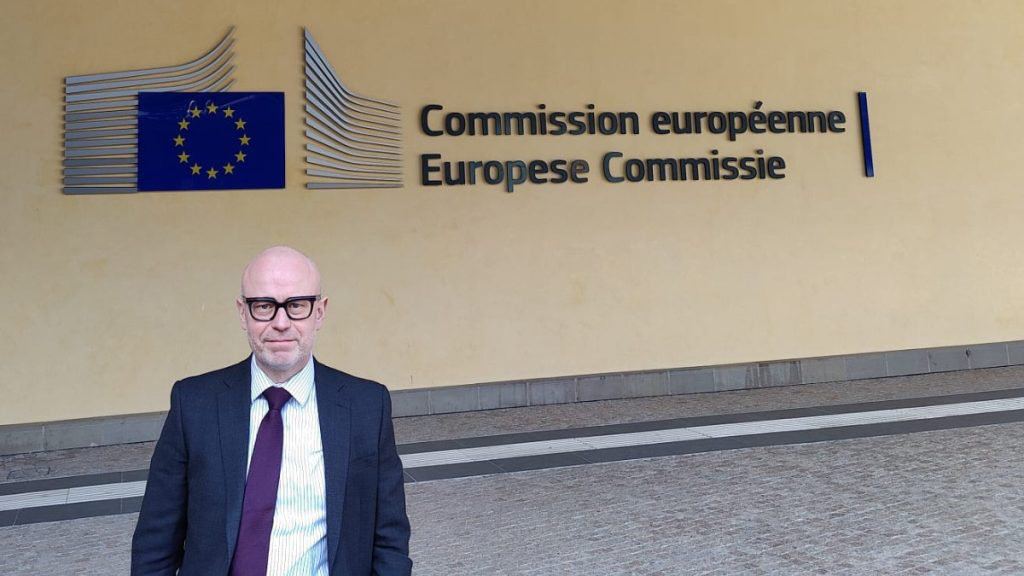
Pawel Jarza, a member of BIFA’s Policy and Compliance team, recently met with representatives of the European Commission in Brussels to provide industry insights and highlight the practical realities of moving goods across the Irish Sea. The discussions form part of ongoing engagement between the freight forwarding community and policymakers aimed at assessing how the Framework functions in practice and identifying areas for improvement.
Operational Realities for Freight Forwarders
Since its introduction in 2023, the Windsor Framework has simplified several trade procedures, including the removal of mandatory export declarations for goods moving from Great Britain to Northern Ireland. Despite these advances, freight forwarders continue to operate within a complex regulatory environment, BIFA notes.
Related Post



Key challenges addressed during the Brussels meeting included:
- Navigating dual tariff regimes: Determining whether goods are considered ‘at risk’ of entering the EU market remains a persistent concern for operators.
- Additional declarations: Safety, security, and regulatory compliance requirements, such as those imposed under Import Control System 2 (ICS2), add layers of operational complexity.
- Small parcels and lower-value consignments: Detailed provisions of the Framework can create practical hurdles for operators handling high volumes of low-value shipments.
Jarza emphasised the importance of ground-level feedback from freight forwarders:
“Freight forwarders operate at this border every day and have first-hand knowledge of what works and what does not. If members encounter systemic issues, it is important that they let us know so we can raise these with government departments and the European Commission, and where possible propose practical solutions.”
Commitment to Ongoing Dialogue
BIFA reiterated the need for continued collaboration between the freight forwarding sector and regulators to ensure the Framework operates as effectively as possible. The association stressed that industry insight is critical in fine-tuning the practical implementation of post-Brexit arrangements, particularly as cross-border trade continues to grow in scale and complexity.
Looking Ahead: AI and Technology Initiatives
In parallel with policy engagement, BIFA confirmed the formation of a new artificial intelligence (AI) and technology working group in February 2026. The initiative responds to increasing member interest in the opportunities and challenges posed by AI and digitalisation in freight forwarding.
The working group aims to examine AI adoption from a freight forwarder perspective, providing insights into automation, predictive analytics, and technological solutions that could improve operational efficiency and compliance with complex trade regulations.
By combining advocacy on regulatory frameworks like the Windsor Framework with a forward-looking focus on technology and innovation, BIFA is positioning UK freight forwarders to navigate both current operational complexities and future industry transformation.