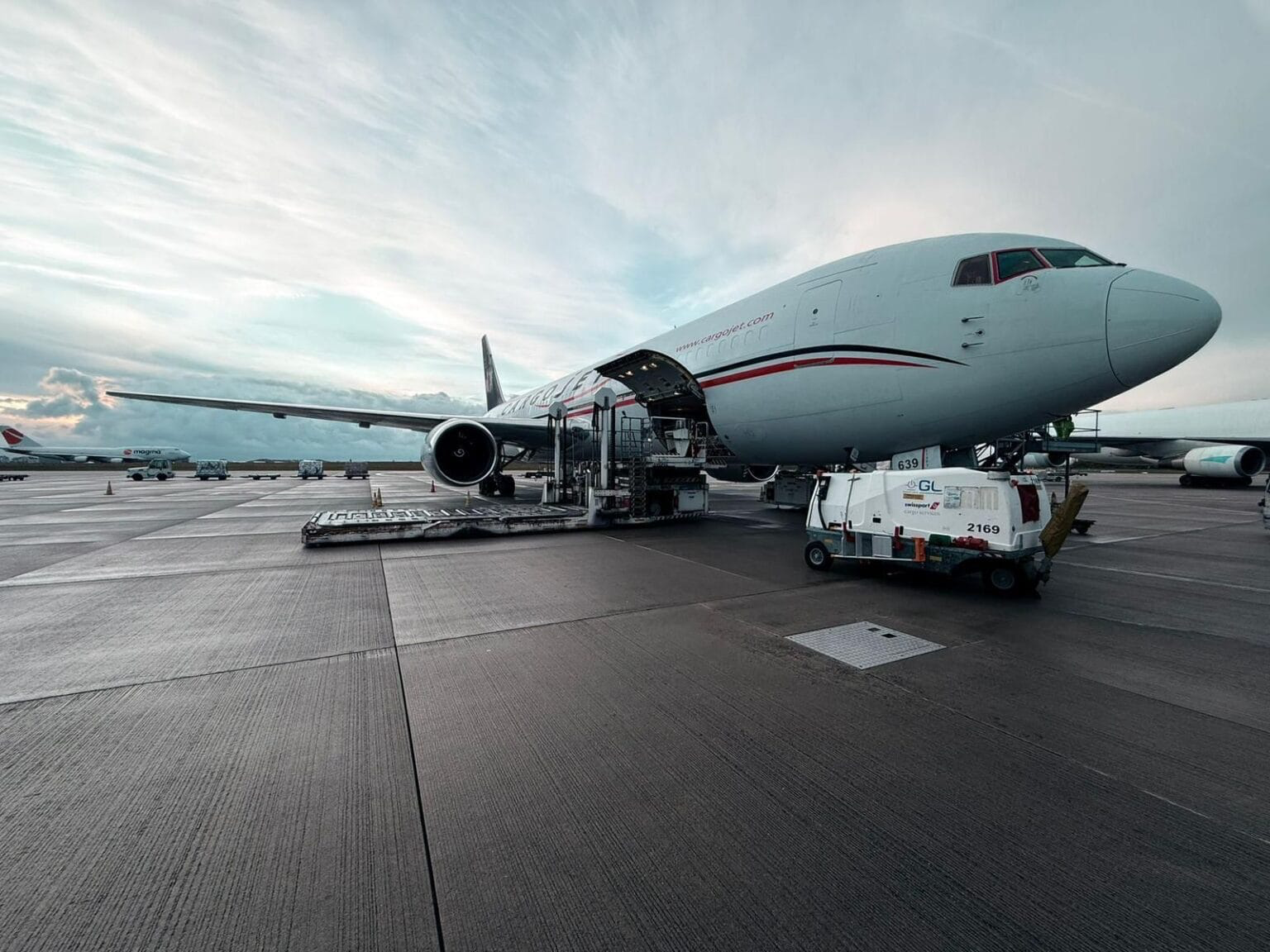
As festive-season demand for premium seafood surged across Europe, Liege Airport handled a major influx of live lobster shipments, underscoring the growing importance of specialized air cargo logistics for temperature-sensitive and high-value perishables. Over two holiday weekends, approximately 160 tonnes of live lobsters were flown into the Belgian cargo hub from Halifax, with ground handling operations led by Swissport.
The operation involved four dedicated cargo flights, including two regularly scheduled weekly services and two additional flights deployed to meet seasonal demand. Each aircraft transported roughly 40 tonnes of live lobsters, reflecting the strong appetite for fresh North Atlantic seafood during the European holiday period.
Coordinated Logistics for High-Value Perishables
Handling live animals in air cargo requires precise logistics coordination and strict environmental controls. Upon arrival at Liege Airport, shipments were transferred directly from aircraft to the airport’s inspection facility, minimizing exposure to non-controlled temperatures and ensuring compliance with European import regulations.



According to Dirk Goovaerts, CEO Continental Europe, Middle East, Africa, India & Global Cargo Chair at Swissport, the rapid transfer process is essential to maintain product integrity.
“On arrival, lobster shipments are transferred directly from the aircraft to the airport inspection centre for immediate breakdown and checks,” Goovaerts said. “This efficient process minimises time outside temperature-controlled environments and helps protect product integrity and compliance requirements.”
Pre-Arrival Coordination Key to Speed
Efficient handling begins even before the aircraft lands. Canadian cargo carrier Cargojet, which operated the flights from Halifax, sends pre-arrival alerts at departure. This early notification enables Swissport’s airside teams and airport inspection authorities to prepare resources and ensure rapid processing once the aircraft arrives.
“Cargojet provides a pre-alert at departure, which allows our airside team and the airport inspection centre to prepare in advance,” Goovaerts explained. “This early coordination ensures the shipment can move directly from aircraft to inspection with minimal delay.”
Such pre-planning is particularly critical during peak seasons when cargo volumes increase significantly and turnaround times must remain tight to preserve the quality of live seafood shipments.
Resilient Demand for Live Seafood Air Cargo
Although full seasonal data has yet to be finalized, Swissport expects lobster volumes to remain strong, reflecting robust market demand and the continuing reliance on air freight to move premium perishables between continents.
“Market data indicates that volumes of lobsters transported by air into Europe remain robust, with predictable seasonal peaks around key festive periods,” Goovaerts said.
The shipment volumes highlight the resilience of live lobster transport as a high-value air cargo segment, particularly during holiday periods when European consumers seek premium seafood products.
Managing Peak-Season Complexity
Handling live animal cargo during peak travel periods presents operational challenges for airports and ground handlers. Temperature control, regulatory inspection, staffing levels, and time-sensitive cargo flows must all be managed simultaneously.
“Planning and people make the difference,” Goovaerts added. “Peak periods require precise resource allocation, with sufficient staffing and inspection capacity in place so shipments can be processed immediately on arrival.”
For Liege Airport, a major European cargo gateway known for its 24-hour operations and strong specialization in freight logistics, the successful handling of the lobster shipments demonstrates the airport’s ability to support complex perishable supply chains.
As global trade in high-value seafood continues to expand, the seasonal movement of live lobsters from Canada to Europe remains a prominent example of how air cargo infrastructure, specialized handling, and international coordination combine to keep time-critical supply chains moving.