
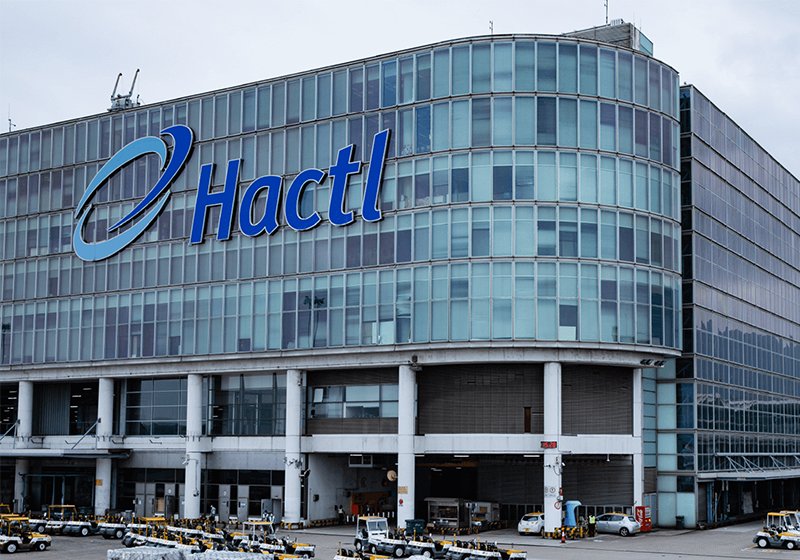
As the global air cargo industry accelerates its transition toward lower-carbon, digitally connected and socially responsible operations, Hong Kong Air Cargo Terminals Limited (Hactl) is positioning sustainability not as a corporate obligation, but as a core operating philosophy. Marking its 50th anniversary, the Hong Kong-based cargo handling specialist has released its Sustainability Report 2025, presenting a detailed account of how environmental stewardship, workforce wellbeing, digital innovation and governance are being integrated into every layer of its business model.For an organisation handling a substantial share of cargo moving through one of the world’s busiest international freight gateways, the report signals a broader strategic evolution: sustainability is now directly linked to resilience, competitiveness and long-term value creation.
Building sustainable growth on nearly five decades of cargo expertise
Established in 1976 at Hong Kong’s former Kai Tak Airport, Hactl has grown into one of the world’s most sophisticated independent air cargo handlers. Today, the company serves more than 100 airlines and over 1,000 freight forwarders, logistics providers and supply chain partners from SuperTerminal 1 at Hong Kong International Airport.Opened in 1998 with an investment of approximately USD1 billion, SuperTerminal 1 remains one of the largest and most technologically advanced multi-level cargo terminals globally, offering annual handling capacity of up to 3.5 million tonnes.The facility includes storage capacity for 3,500 Unit Load Devices (ULDs), a loose cargo storage system accommodating 10,000 stillages, more than 400 pallet build-up and breakdown stations, specialised cargo zones and over 300 covered truck docks—supporting the efficient handling of complex cargo flows across global trade lanes.Hactl manages virtually every cargo category, including pharmaceuticals, perishables, dangerous goods, lithium batteries, live animals, high-value shipments, oversized cargo and aero engines, reinforcing its strategic role in global supply chain continuity.
Related Post



Sustainability embedded into operational strategy
According to the 2025 report, Hactl’s sustainability strategy is no longer structured as a standalone ESG programme, but embedded directly into operational planning, investment decisions and workforce development.The company states its ambition is to become “the most sustainable air cargo handling operation in the world,” supported by policies focused on climate resilience, circular economy practices, social inclusion, ethical governance and continuous performance measurement.
Workforce safety, inclusion and talent development
People remain at the centre of Hactl’s sustainability agenda.The company reported a 69 percent reduction in workplace injuries since 2018, alongside 39,498 training hoursdelivered during the latest reporting period—reflecting sustained investment in operational competence, safety culture and leadership development.In an industry facing ongoing skills shortages, Hactl also highlighted strong workforce retention, with 40 percent of employees having served more than ten years. Gender diversity continues to improve, with women now holding 45 percent of senior management positions.To support frontline teams operating in demanding ramp and warehouse environments, Hactl introduced cooling vests and expanded employee wellbeing initiatives, while unveiling Hactl Think Park, a redesigned learning and innovation hub created around sustainable workplace design principles.
Climate action aligned with science-based targets
On the environmental front, Hactl continues to align its decarbonisation roadmap with internationally recognised science-based targets.The company has committed to reducing absolute Scope 1 and Scope 2 greenhouse gas emissions by 50.4 percent by 2030, using 2018 as its baseline, while continuing to evaluate longer-term pathways toward net-zero operations.During 2025, Hactl expanded the deployment of renewable diesel across selected ground support equipment as part of a phased transition toward lower-carbon ramp operations.Its sustainability roadmap also prioritises electrification of ground assets, energy-efficient infrastructure upgrades, renewable energy integration, supplier engagement and broader circular economy initiatives.
Smart cargo terminal driving operational efficiency
Digitalisation remains a central pillar of Hactl’s sustainability transformation.At the core of its operational ecosystem is COSAC-Plus, the company’s proprietary cargo management platform, which supports paperless workflows, cargo visibility, process automation and real-time operational coordination.The platform is certified to ISO/IEC 27001:2022, ensuring cybersecurity and data resilience as cargo processes become increasingly digitised.In partnership with HKT, Hactl has also deployed Hong Kong’s first private 5G-enabled air cargo terminal—an infrastructure upgrade designed to support next-generation automation across SuperTerminal 1.The deployment powers autonomous electric tractors, AI-enabled security robots, smart cargo locating systems and real-time machine-to-machine communications, enabling faster decision-making, reduced energy waste and improved operational resilience.According to Hactl, the private 5G network provides ultra-low latency connectivity while allowing greater control over bandwidth, cybersecurity and future scalability.
Specialist cargo excellence and global compliance
Hactl continues to maintain one of the most comprehensive compliance portfolios in the cargo handling sector.The company was the first organisation globally accredited under the IATA Safety Audit for Ground Operations (ISAGO), the first in Hong Kong to secure WHO Good Distribution Practices certification, and the first cargo handling operator worldwide to achieve all four IATA CEIV certifications—covering Fresh, Pharma, Lithium Batteries and Live Animals.These credentials support Hactl’s growing role in high-value, high-risk and temperature-sensitive supply chains, particularly in healthcare, electronics and e-commerce sectors.
Community engagement and circular economy initiatives
Beyond terminal operations, Hactl’s sustainability efforts increasingly extend into social impact and circular economy programmes.Among the year’s flagship initiatives were the tenth anniversary of its Green Week programme, a record-scale menstrual equity campaign supporting migrant domestic workers in Hong Kong, and continued expansion of its zero-waste uniform upcycling project aimed at reducing textile waste.These programmes reflect a broader effort to engage employees, customers, supply chain partners and local communities in shared sustainability outcomes.
Looking ahead
As cargo volumes continue to grow and environmental expectations intensify across global aviation, Hactl’s 2025 sustainability strategy reflects a clear message: operational excellence and sustainability are no longer separate ambitions.For Hactl, the next phase of growth will be defined by how effectively technology, people and partnerships can deliver measurable environmental performance while maintaining the speed, reliability and security demanded by global supply chains.