
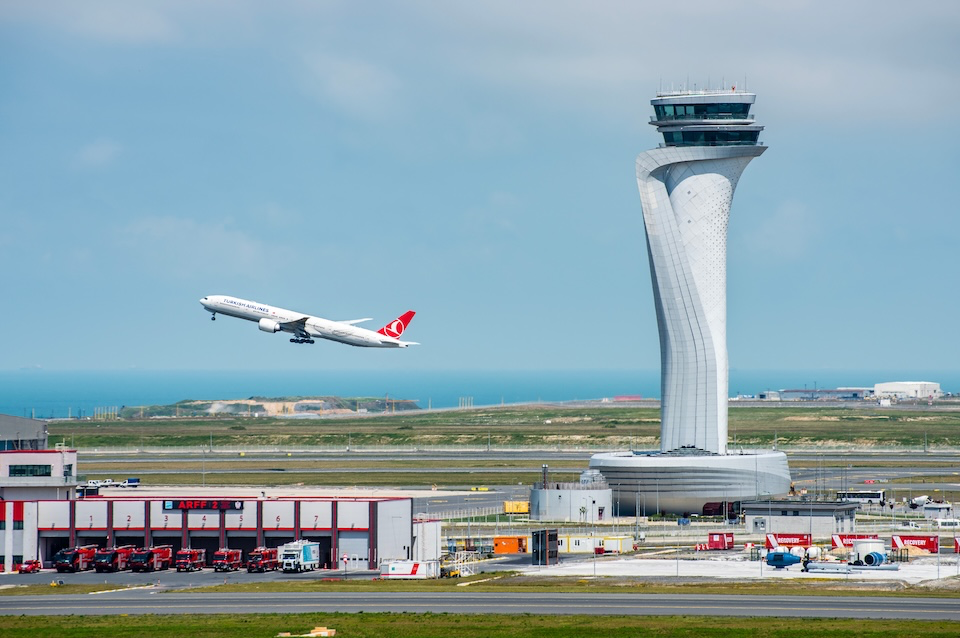
Istanbul has moved to the top of Europe’s air cargo rankings in the first half of 2026, as geopolitical disruption in the Middle East reshaped international freight routes and encouraged carriers and forwarders to seek alternative gateways.
Istanbul Airport has emerged as one of the principal beneficiaries of the changing air cargo landscape, strengthening its position as a major intercontinental freight hub linking Europe with Asia, Africa and markets beyond.
Data from Airports Council International Europe (ACI EUROPE) indicate that Istanbul recorded double-digit year-on-year cargo growth during the first half of 2026. The airport handled more than one million tonnes of freight during the period, according to the figures cited in the latest traffic data, putting it ahead of Frankfurt and reinforcing Istanbul’s growing role in the European cargo network.



The development comes against a backdrop of continuing disruption to Middle East aviation and air freight operations. ACI EUROPE has reported that the conflict that began in late February has had a particularly pronounced effect on the non-EU European aviation market, while changes to airspace availability and network capacity have forced airlines to adjust routings and schedules.
For air cargo, the consequences have extended beyond individual airlines and airports. Changes in flight paths, reduced capacity on some Middle East services and the need to maintain reliable links between Asia, Europe and Africa have increased the strategic importance of hubs capable of supporting long-haul operations without relying on disrupted routings.
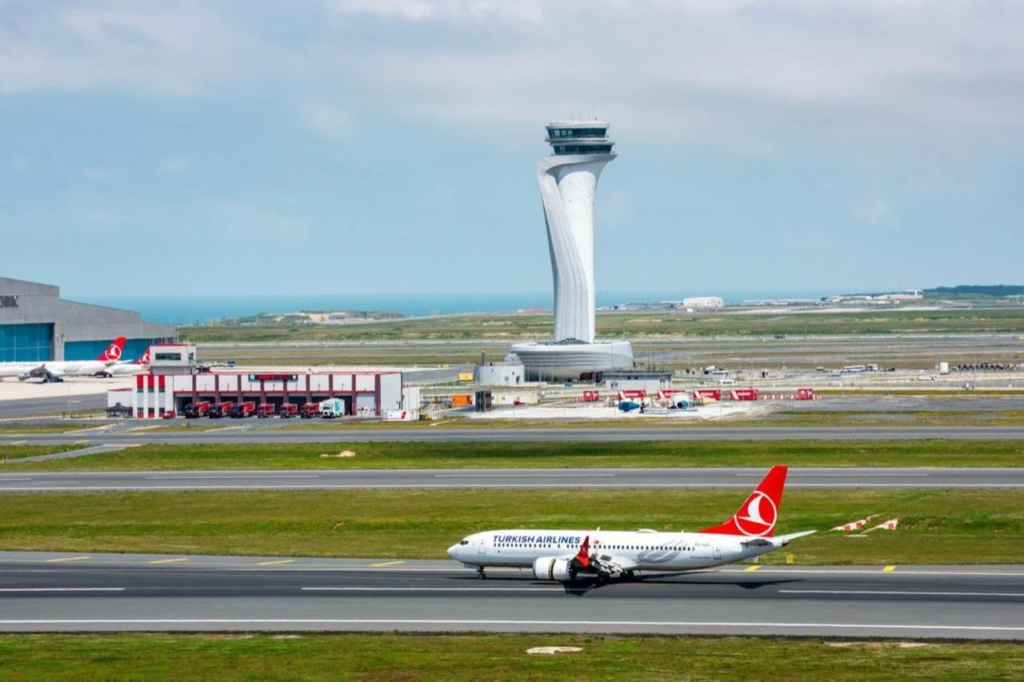
Istanbul gains ground
Istanbul’s rise is significant because the Turkish gateway had already established itself as one of Europe’s largest cargo airports.
ACI EUROPE’s full-year 2025 data showed Frankfurt finishing the year as Europe’s leading cargo airport with approximately 1.99 million tonnes, while Istanbul ranked second with 1.97 million tonnes. The Turkish hub had been just behind Frankfurt, leaving relatively little distance between the two airports before the first-half shift in 2026.
The first six months of 2026 have changed that balance.
Istanbul’s cargo performance has been supported by its geographical position and the breadth of its airline network. The airport sits at the intersection of major trade lanes between Europe and Asia and provides an alternative routing point for cargo that might otherwise have moved through Middle Eastern hubs.
The effect was already visible at the beginning of the year. ACI EUROPE reported that European freight traffic increased 6.4% year on year in January, with Istanbul among the strongest performers in the top 10, recording 17.1% growth.
That momentum continued as geopolitical conditions deteriorated.
Rather than simply reflecting underlying organic demand, Istanbul’s performance illustrates how quickly air cargo networks can reorganise when airspace restrictions, security considerations and changes in airline capacity alter established trade routes.
Frankfurt remains a major cargo powerhouse
Frankfurt has not experienced a collapse in cargo activity. Rather, its growth has been considerably slower than Istanbul’s.
Fraport, the operator of Frankfurt Airport, reported that cargo volumes comprising airfreight and airmail reached approximately 1.0 million tonnes in the first half of 2026, an increase of 1.0% year on year. June alone recorded 177,676 tonnes, up 2.0% compared with the same month a year earlier.
The German hub faced several operational headwinds during the period.
Six days of industrial action at Lufthansa in April affected both passenger operations and cargo activity. Fraport reported that cargo volumes fell 0.6% in April to 168,526 tonnes, with the decline attributed in part to strikes at Lufthansa Cargo and reduced belly-freight capacity on passenger aircraft.
Frankfurt’s performance has also been influenced by broader economic conditions in Europe and changes in the operating environment for Lufthansa and Lufthansa Cargo.
Despite these pressures, the airport remains one of the continent’s most important cargo gateways, supported by its extensive European road-feeder network, large customer base and the presence of Lufthansa Cargo.
The contrast with Istanbul is therefore less a story of Frankfurt losing its relevance than one of Istanbul gaining ground at an unusually rapid pace.
Middle East disruption changes the European cargo map
The geopolitical situation has become an increasingly important factor in determining how international air cargo moves between continents.
ACI EUROPE’s traffic reporting has highlighted the impact of the Middle East conflict on European aviation, particularly outside the EU+ market. The disruption has affected flight operations and capacity while encouraging airlines to reassess routings and network structures.
For cargo operators, the consequences can be particularly pronounced.
Freight schedules are built around predictable transit times, aircraft availability, airport handling capacity and access to connecting networks. When a major air corridor becomes less attractive or operationally constrained, cargo can move quickly towards alternative hubs.
Istanbul is well positioned to capture some of this traffic because of its location between European production centres and the major markets of Asia, Africa and the Middle East.
The shift also demonstrates the value of hub diversification. Forwarders and shippers increasingly need alternatives that can provide reliable connectivity when geopolitical events disrupt established gateways.
Amsterdam and Leipzig also post strong growth
Istanbul and Frankfurt are not the only European airports benefiting from changes in the cargo market.
Among the major European cargo hubs, Leipzig/Halle and Amsterdam Schiphol have also recorded strong first-half growth. ACI EUROPE’s May data showed Leipzig among the fastest-growing major cargo airports, with freight volumes increasing 14.1% year on year, while Amsterdam recorded 10.2% growth that month.
The figures underline the broader resilience of European air cargo despite economic uncertainty and geopolitical disruption.
Leipzig has developed a particularly strong position in express and freight operations, while Amsterdam benefits from its extensive international network and established cargo ecosystem.
The growth across multiple gateways suggests that the current market is not simply a matter of traffic moving from one airport to another. Instead, the European air cargo system is undergoing a wider redistribution of volumes as airlines, logistics providers and shippers respond to changes in trade patterns, capacity and operating conditions.
Liege highlights the strength of European exports
Another important indicator comes from Liege Airport in Belgium.
The cargo-focused airport handled 697,816 tonnes in the first half of 2026, an increase of 11.3% compared with the same period last year. Cargo aircraft movements rose by only 3.3% to 14,354, meaning cargo tonnage grew considerably faster than aircraft activity. The airport attributed the difference partly to improvements in operational efficiency and aircraft utilisation.
Exports were particularly strong.
Liege reported a 19% increase in export volumes, compared with 6% growth in imports. Export traffic to Asia increased 17%, while volumes to North America surged 51%.
The figures are significant because they point to another feature of the European cargo market: growth is not being driven solely by inbound e-commerce or consumer demand.
European manufacturers and exporters are also generating substantial outbound air freight demand.
Liege Airport’s first-quarter figures had already shown a 20% increase in export activity, demonstrating that the airport’s export momentum was established before the first-half results were published.
E-commerce remains a powerful driver
E-commerce continues to support cargo volumes at several European hubs, although regulatory changes are beginning to influence the market.
Frankfurt has identified e-commerce as an important contributor to its cargo performance, while also noting that momentum was affected by the European Union’s decision to introduce new charges affecting low-value consignments.
At Liege, the airport is also monitoring the impact of new European e-commerce legislation that came into force on 1 July 2026. The airport has cautioned that it is still too early to determine the long-term effect on cargo volumes.
The regulatory changes could alter the economics of cross-border small-parcel shipments, potentially encouraging some operators to consolidate shipments, establish additional European distribution centres or consider alternative modes of transport.
For airports heavily exposed to e-commerce, the second half of the year will therefore provide an important test of whether the sector’s strong volume growth can be sustained.
A reshaped European cargo hierarchy
The first-half results point to a European air cargo market that is becoming more fluid.
Istanbul’s rapid growth has pushed it into the leading position, while Frankfurt continues to operate at close to one million tonnes for the half year. Amsterdam and Leipzig are recording double-digit growth, and Liege is expanding rapidly through a combination of export demand, e-commerce and operational efficiency.
The common thread is adaptability.
Air cargo hubs are increasingly being judged not simply by their annual tonnage, but by their ability to respond when trade lanes change, capacity becomes constrained or geopolitical events disrupt established routes.
Istanbul’s latest performance is a clear example of that dynamic. Its location, connectivity and growing cargo infrastructure have allowed the airport to absorb additional demand at a time when the Middle East conflict has forced the industry to reconsider traditional routing patterns.
Whether Istanbul can retain the European cargo lead through the remainder of 2026 will depend on how long these network changes persist, as well as on the performance of Frankfurt and other major European gateways.
What is already clear, however, is that Europe’s air cargo map is becoming more competitive — and increasingly shaped by geopolitics as well as by conventional trade and demand fundamentals.