
Global logistics operator DHL Group has outlined a differentiated approach to jet fuel security across its international aviation network, underscoring a structural imbalance between its fully integrated hub operations and more exposed spoke locations, particularly across parts of Asia.
Speaking during the Group’s first-quarter 2026 earnings call, CEO Tobias Meyer detailed how fuel resilience varies significantly across DHL’s global footprint, with strategically developed hubs offering stability through integrated infrastructure, while smaller stations remain dependent on local supply conditions and regulated markets.
Hub-Based Control Versus Network Exposure
DHL’s aviation strategy is anchored by a network of major global hubs, including Leipzig/Halle Airport, Cincinnati/Northern Kentucky International Airport, Hong Kong International Airport, and Bahrain International Airport, where the company maintains closer operational integration and more predictable fuel supply arrangements.
Related Post



According to Meyer, these hubs benefit from dedicated infrastructure and long-term coordination with fuel suppliers, allowing the company to maintain higher visibility over availability and continuity. This model significantly reduces operational uncertainty and supports consistent long-haul and intercontinental flight scheduling.
By contrast, DHL’s spoke locations—particularly in parts of Asia—operate under more fragmented supply conditions, where fuel availability is determined by local suppliers within regulated markets, limiting flexibility and procurement options.
“We have more visibility and more certainty about supply continuing at our hubs compared to spoke locations where we are very much dependent on local fuel availability,” Meyer noted, highlighting the operational asymmetry between core hubs and secondary airports.
Regional Constraints and Operational Workarounds
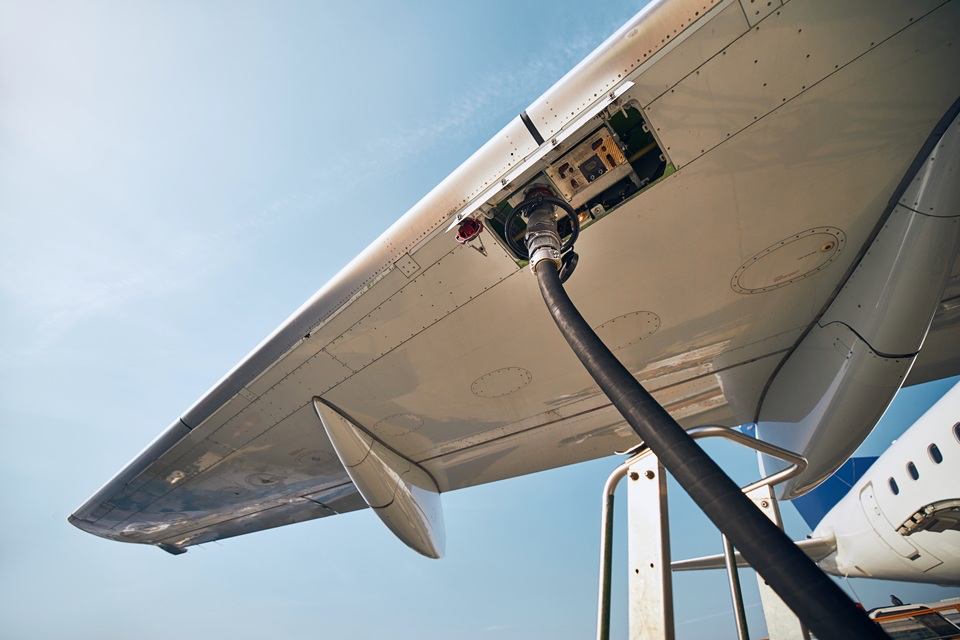
The company confirmed that several Asian airports have recently experienced fuel constraints, including restrictions on additional uplift capacity and structural shortages affecting scheduled operations. In response, DHL has increasingly relied on tanker uplift strategies, whereby aircraft are refuelled with sufficient reserves on inbound legs to support outbound departures.
While effective for regional and short-haul networks, Meyer acknowledged that such strategies are not viable for long-haul intercontinental operations due to weight and range limitations.
Despite these constraints, DHL maintains that its overall position remains comparatively strong within the aviation logistics sector, citing its integrated network design and proactive fuel planning mechanisms.
Market Pricing and Procurement Dynamics
On fuel procurement strategy, Meyer confirmed that DHL largely operates on spot market pricing, even where longer-term agreements exist, reflecting prevailing industry structures in jet fuel supply chains.
“We pay generally the spot price. That is the usual way jet fuel supply works,” he said, noting that contractual frameworks provide limited insulation from broader market volatility.
This exposure comes at a time when global energy markets remain tight, with structural imbalances between supply and demand continuing to influence aviation fuel availability across key regions.
Geopolitical Risk and Network Resilience
DHL also reaffirmed its operational resilience amid ongoing geopolitical instability, particularly in the Middle East, where airspace disruptions and military activity have periodically affected aviation flows.
The company confirmed that its aircraft and airfreight ground infrastructure remain fully operational, with contingency routing established through King Khalid International Airport and Muscat International Airport to maintain connectivity into Gulf markets.
During recent airspace closures affecting Bahrain, DHL temporarily shifted operations away from its regional hub at Bahrain International Airport, redistributing aircraft into Riyadh and Muscat to sustain service continuity.
The company also leveraged its integrated road network across the Gulf region to maintain connectivity between the UAE, Qatar, Bahrain, and Kuwait, where airspace restrictions had limited aviation access.
“In Express, our regional hub in Bahrain was significantly impacted, but we were able to reroute operations and maintain service levels through Riyadh, Muscat, and our ground network,” Meyer explained.
He added that the ability to integrate air and road logistics across the region provided a competitive advantage, noting that not all operators were able to replicate similar network flexibility under disruption conditions.
Industry Implications
The developments highlight a broader structural reality in global air cargo: resilience is increasingly determined not only by fleet capacity or demand strength, but by access to fuel infrastructure and network redundancy across geopolitical zones.
As fuel supply volatility persists and geopolitical risks continue to reshape aviation corridors, integrated logistics operators with diversified routing capabilities and strong hub infrastructure are expected to retain a strategic advantage in maintaining service continuity.