Multimodal Air Cargo Operation Connects Europe, Kenya and Bunia Through Strategic Airline and Logistics Partnerships
Astral Aviation has commenced the transportation of 100 metric tonnes of humanitarian relief supplies to Bunia in the Democratic Republic of the Congo (DRC), deploying a carefully coordinated multimodal airfreight solution that combines long-haul intercontinental transport with regional freighter distribution. The operation, supported by Network Airline Services, Scan Global Logistics and AVICO Logistics, demonstrates how collaborative cargo networks are overcoming infrastructure constraints to deliver critical aid to some of Africa’s most challenging humanitarian destinations.
In a major humanitarian logistics initiative, Kenya-based cargo carrier Astral Aviation has begun the delivery of 100 metric tonnes of essential relief supplies from Nairobi to Bunia in the eastern Democratic Republic of the Congo, reinforcing the vital role of air cargo in supporting emergency response and humanitarian assistance across Africa.
Related Post
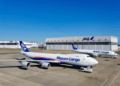

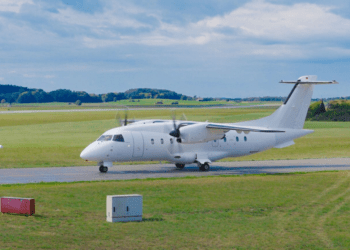
The operation involves a complex, multimodal transportation chain designed to ensure the efficient movement of aid cargo from Europe to one of the continent’s most logistically demanding destinations. The shipment originated in Europe and was first transported from Liège, Belgium, to Nairobi aboard a Boeing 747 freighter operated by Network Airline Services, a long-standing interline partner of Astral Aviation.
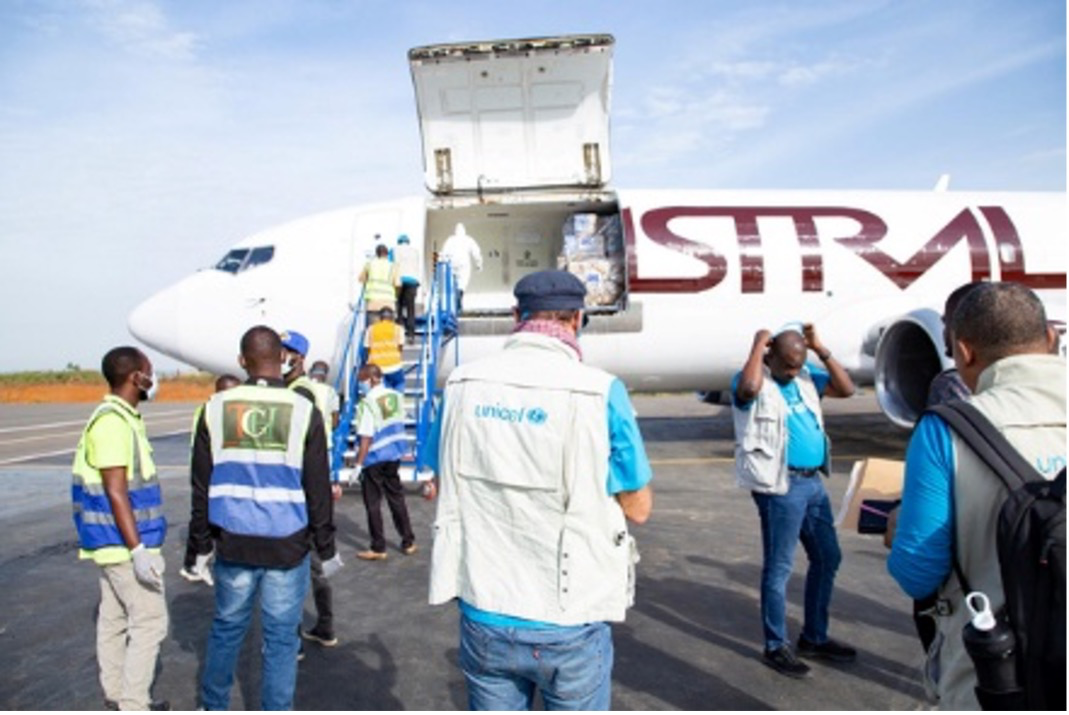
Upon arrival in Kenya, the relief supplies were transferred through dedicated ground handling operations before being loaded onto Astral Aviation’s Boeing 737-400 Freighter for the final sector into Bunia, a region where airport infrastructure limitations restrict access for larger widebody cargo aircraft.
Innovative Air Cargo Solution Overcomes Infrastructure Constraints
The mission highlights the importance of tailored logistics planning in humanitarian air cargo operations, particularly when delivering aid to remote or infrastructure-constrained locations.
Bunia Airport is unable to accommodate widebody freighters such as the Boeing 747, creating significant challenges for organisations seeking to move large volumes of relief cargo directly into the region. To address this limitation, Astral Aviation and its partners developed a multimodal airfreight model that combines the long-haul carrying capacity of a Boeing 747 Freighter with the flexibility of a regional Boeing 737-400 Freighter.
This integrated solution enables large-scale humanitarian shipments to be transported efficiently from Europe into East Africa before being redistributed through Astral Aviation’s regional cargo network to the final destination.
The approach not only maximises operational efficiency but also ensures that critical humanitarian supplies can reach communities that are often inaccessible through conventional logistics channels.
Collaboration at the Heart of Humanitarian Logistics
The operation has been executed in close collaboration with global logistics specialists Scan Global Logistics and AVICO Logistics, whose expertise in humanitarian and project logistics played a key role in coordinating the complex international movement.
The project serves as a strong example of how strategic partnerships between airlines, freight forwarders, ground handlers and humanitarian organisations can facilitate rapid and reliable delivery of aid into challenging environments.
According to Astral Aviation Chief Executive Officer Sanjeev Gadhia, the success of such missions depends on close cooperation across the entire logistics value chain.
“This operation highlights the importance of strong partnerships across the air cargo and logistics value chain,” said Gadhia.
“No single organisation can address humanitarian challenges alone. The successful movement of these relief supplies from Europe to Eastern DRC reflects the power of collaboration between airlines, freight forwarders, logistics specialists, airport stakeholders and humanitarian partners working towards a common objective.”
Industry experts note that humanitarian logistics increasingly relies on such collaborative models as aid organisations seek faster and more resilient methods of delivering assistance to regions affected by conflict, displacement, natural disasters and public health emergencies.
Extensive Experience in Humanitarian Airlift Operations
Astral Aviation has established itself as one of Africa’s leading cargo airlines supporting humanitarian and emergency response missions across the continent.
Over the years, the carrier has transported critical medical supplies, vaccines, personal protective equipment (PPE), emergency relief cargo and healthcare materials during major humanitarian crises, including Ebola outbreaks, the COVID-19 pandemic and cholera response programmes in multiple African countries.
Anthony Mwangi, Head of Charters at Astral Aviation, noted that the airline’s experience in operating under challenging conditions has enabled it to develop specialised capabilities for humanitarian air cargo missions where speed, reliability and operational flexibility are essential.
Such expertise has become increasingly valuable as humanitarian organisations continue to face growing logistical challenges in delivering aid to remote and underserved communities.
Safety and Regulatory Compliance Remain Paramount
Given the sensitive nature of humanitarian operations and the international movement of relief cargo, compliance with aviation safety, security and public health regulations remains a critical component of the mission.
Astral Aviation confirmed that it has worked closely with aviation authorities, airport operators, public health agencies and ground handling partners in both Kenya and the Democratic Republic of the Congo to ensure full compliance with all operational requirements.
According to Philip Omondi, Head of Safety and Quality at Astral Aviation, the carrier has maintained strict adherence to aviation safety, cargo security and biosecurity protocols throughout the operation.
The company also emphasised its commitment to safeguarding crew welfare while maintaining the highest standards of cargo integrity and handling performance.
Strengthening Humanitarian Supply Chains Across Africa
The mission comes at a time when humanitarian organisations are increasingly seeking resilient and flexible supply chain solutions capable of responding rapidly to emergencies across Africa.
Air cargo continues to play a critical role in humanitarian logistics, particularly in regions where road infrastructure, political instability or geographic barriers limit the effectiveness of alternative transportation modes.
Gadhia believes the project demonstrates the importance of combining African aviation expertise with international logistics partnerships.
“Africa’s challenges require African solutions supported by global partnerships,” he said.
“This mission demonstrates how cooperation between international logistics providers and African cargo airlines can create resilient supply chains capable of delivering humanitarian assistance to communities that need it most.”
Air Cargo as a Lifeline for Humanitarian Response
As humanitarian needs continue to grow across parts of Africa, the role of dedicated cargo airlines in supporting relief operations has become increasingly significant.
The successful launch of this 100-tonne airlift highlights the value of integrated cargo networks, specialised freighter aircraft and collaborative logistics partnerships in ensuring that essential supplies reach vulnerable populations quickly and efficiently.
For Astral Aviation, the operation further reinforces its position as a key enabler of humanitarian logistics on the continent, supporting international aid efforts through reliable air cargo services that connect global supply chains with communities in need.
As the deliveries continue into Bunia, the mission stands as a powerful example of how innovation, partnership and aviation expertise can combine to overcome logistical barriers and deliver life-saving assistance where it is needed most.