

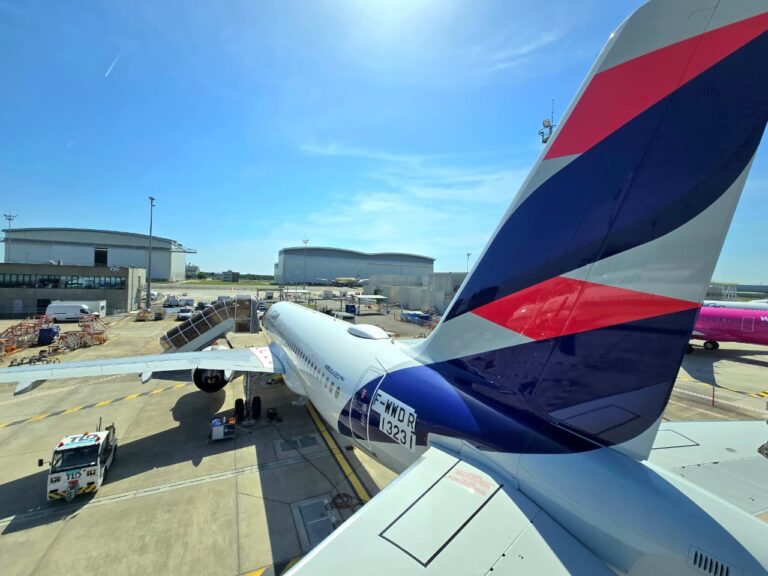
LATAM Airlines Group continues to advance its fleet renewal and growth strategy. During the first half of the year, the group took delivery of 13 next-generation aircraft—seven Airbus A320neo, four Airbus A321neo and two Boeing 787-9 Dreamliners—and expects to receive another 28 aircraft before the end of 2026. By year-end, LATAM will have incorporated more than 40 next-generation aircraft, strengthening its operational efficiency and its ability to further connect South America with the world.
By the end of 2026, LATAM expects to have 410 aircraft received, reinforcing its position as one of the world’s largest commercial airline fleets. During the second half of the year, the group will continue receiving Airbus A320neo, Airbus A321neo and Boeing 787-9 Dreamliner aircraft. For the first time, deliveries will also include the Embraer E190-E2, which will strengthen LATAM’s domestic network in Brazil by providing greater operational flexibility to serve different markets.
“Fleet renewal is one of the most important investments we are making as a group because it allows us to grow more efficiently and better meet the region’s connectivity needs. South America has domestic markets with tremendous growth potential, and having a more flexible and diversified fleet gives us the capabilities we need to capture those opportunities”, said Sebastián Acuto, Vice President of Fleet and Projects at LATAM Airlines Group.
The fleet renewal plan will continue in 2027 with the delivery of additional aircraft, including LATAM’s first Airbus A321XLR. This aircraft will enable the group to expand its medium-haul nonstop network, creating new connectivity opportunities across South America.
Looking ahead, LATAM expects to add up to 130 additional aircraft from multiple sources by the end of the decade. As a result, more than 50% of the group’s fleet will consist of next-generation aircraft by 2030. According to manufacturers’ data, these aircraft reduce CO₂ emissions by between 20% and 25% compared to previous-generation models while improving fuel efficiency, supporting LATAM’s commitment to achieve net zero emissions by 2050.